
A weak author box feels like a stock photo taped to a sales page. A strong one feels like a handshake.
In 2026, readers want more than a smiling headshot. They want proof, plain disclosure, and a reason to trust your advice. A solid affiliate author box template does that fast. It shows who you are, why you know this topic, how you make money, and what readers should do next.
What a trust-building author box needs in 2026
Readers scan author boxes like they scan product labels. If the label looks vague, they move on.
That matters even more now because affiliate sites face tighter scrutiny. Current 2026 guidance around material connections is simple: say when you may earn a commission, say it clearly, and place it where readers can see it before they act. That lines up with practical advice in this affiliate disclosure writing guide and this WordPress disclosure and rel=”sponsored” guide.
Your box should cover five basics:
- Real identity: a real name, face, role, or named editor
- Topic fit: why you write about this niche, not every niche
- Proof of experience: years, tests run, results, certifications, or hands-on use
- Clear disclosure: plain words, near the top of the box
- Reader-first CTA: a helpful next step, not a hard sell
If the box reads like an ad, readers skip it. If it reads like a receipt of experience, readers trust it.
Keep the tone calm. Say what you do. Say who you help. Say how you earn. Then point readers to something useful.
If your author box includes product links or tool mentions, placement still matters. This affiliate link placement map is a good reminder that trust drops fast when links feel jammed in.
Copy-and-paste affiliate author box templates for different site types
Use these as a base, then swap in your own proof points. Keep most author boxes between 45 and 90 words.
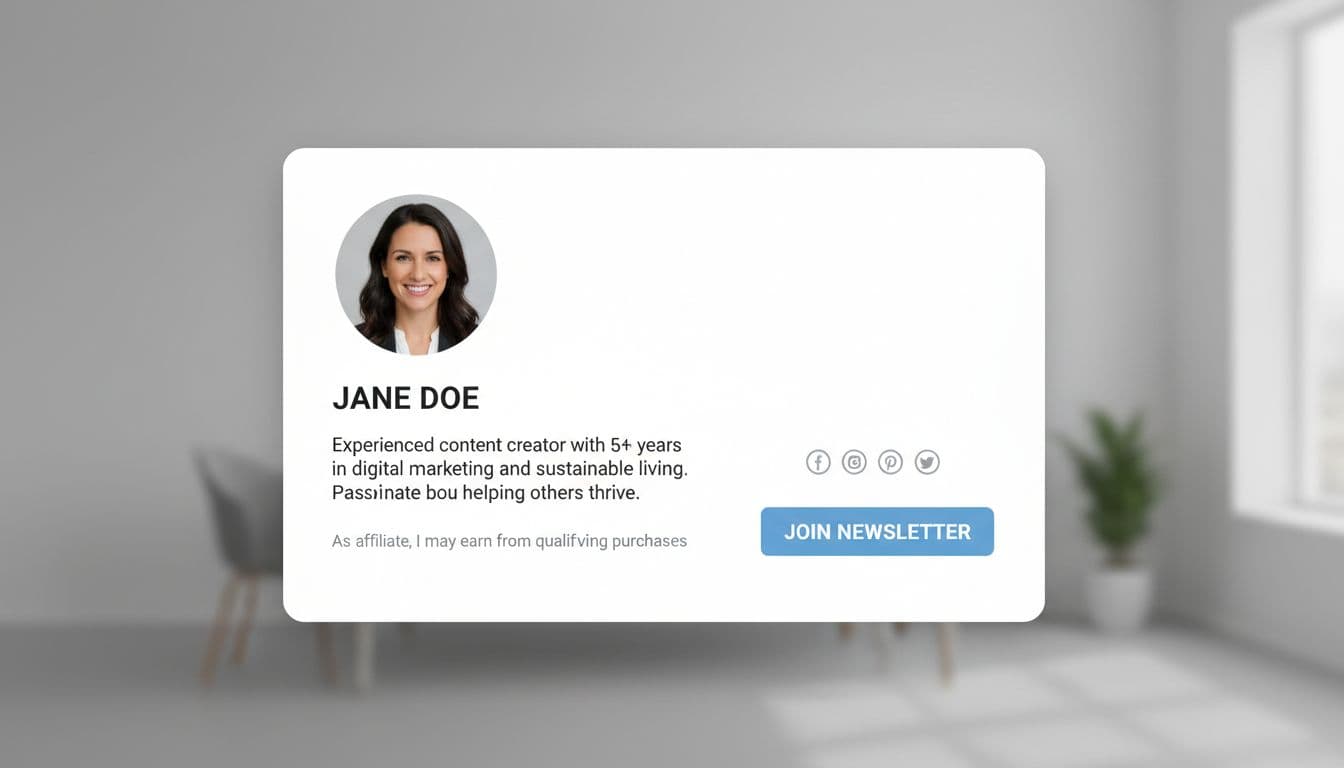
Blog author box template
Hi, I’m [Name], a [topic] blogger who helps [audience] get better results without wasting money. I’ve spent [X years] testing [tools/products/topics] and turning that research into simple guides. Some links on this site are affiliate links, so I may earn a commission at no extra cost to you. Start with my [beginner guide/recommended tools].
Best for tutorial blogs and mixed content sites. Add one proof point, such as “tested 23 email tools” or “built 3 niche sites.”
Niche affiliate site template
I’m [Name], and I publish hands-on content for people who want help with [niche]. I focus on [one problem] and only recommend tools that fit that job. I may earn from some links here, but my reviews are based on real use, side-by-side checks, and reader feedback. See my top picks for [use case].
This works when your site serves one clear audience. If your niche still feels broad, tighten it first with this guide to choose your affiliate niche.
Review site template
I’m [Name], lead reviewer at [Site Name]. Over the last [X years], I’ve tested [category] for price, ease of use, support, and real-world value. Some links are affiliate links, which means I may earn a commission if you buy through them. I don’t accept better ratings in exchange for payment. Read my review method or compare my current top choices.
This version builds trust because it shows a process, not just an opinion. For extra strength, link to a review policy page.
Personal brand template
I’m [Name], a [creator/consultant/founder] who uses [tools/topic] in my own business. I share what’s worked, what failed, and what I’d tell a friend to buy first. Some links are affiliate links, so I may earn a small commission at no extra cost to you. Want the short version? See my favorite tools.
Personal brands do well with voice and specificity. A line like “used daily in my newsletter business” hits harder than “passionate about marketing.”
Team or pseudonymous brand template
[Brand Name] is a research-led site run by a small editorial team. This page was written by [Writer Name/pen name] and reviewed by [Editor Name or role], who has [X years] in [niche]. We may earn from some links, but we publish the same ratings whether we earn a commission or not. Meet the team or see how we test products.
A pen name can still work, but a faceless box usually doesn’t. Add a reviewer, editor, or team page so the brand feels accountable.
Good CTAs stay low-pressure. Try lines like See my testing method, Read the beginner guide, or Compare my top recommendations.
Formatting tips that make the box look more believable
Design matters because readers judge trust in seconds. A cluttered author box feels like a popup in disguise.
Use one clear headshot or one brand mark. Put the disclosure in the first or second sentence. Keep badges to a minimum. If you have credentials, name only the ones readers care about. If you have social links, use two or three, not seven.
For broader context on how affiliate content expectations keep shifting, this affiliate marketing guide for 2026 is a useful pulse check.
Here’s a quick checklist you can use today:
- Name and role are visible
- Niche expertise is clear in one line
- Disclosure appears before any CTA
- One proof point is included
- CTA helps the reader, not just the conversion
- Links go to a bio, method page, or best starting point
- The same box appears across the site, with small page-level tweaks
If you’re adding author boxes to older content, pair that update with safe affiliate updates for rankings. Trust is easier to build when the whole page feels consistent.
Conclusion
Your author box is small, but it carries a lot of weight. In 2026, the best boxes feel human, clear, and honest about money. Add real identity, tight niche proof, and a plain disclosure, then give readers one useful next step. Trust starts before the click, and your author box is often where that starts.