
Bad breadcrumbs act like hallway signs that point nowhere. Good affiliate breadcrumbs show search engines where a page lives, what topic owns it, and how it connects to your money pages.
That matters more in 2026 because affiliate sites often grow sideways. You add roundups, alternatives pages, single reviews, and “best for” posts, then Google has to sort the mess. If your structure feels fuzzy, breadcrumbs can tighten it fast.
Why affiliate breadcrumbs help crawlers understand money pages
Breadcrumbs do two jobs at once. First, they help users move up the site without hunting through menus. Second, they give crawlers a clean topical path from broad topics to commercial pages.
On affiliate sites, that second part is the win. Every breadcrumb link reinforces parent-child relationships. So a page like “Best Email Marketing Tools for Beginners” doesn’t sit alone. It sits inside a clear topic stack.
Breadcrumbs don’t boost rankings by magic. They reduce ambiguity.
If Google can see that a money page belongs under a category and sub-category, it has more context. That context supports crawling, internal link flow, and topical grouping. It also helps when your main navigation can’t expose every deep page.
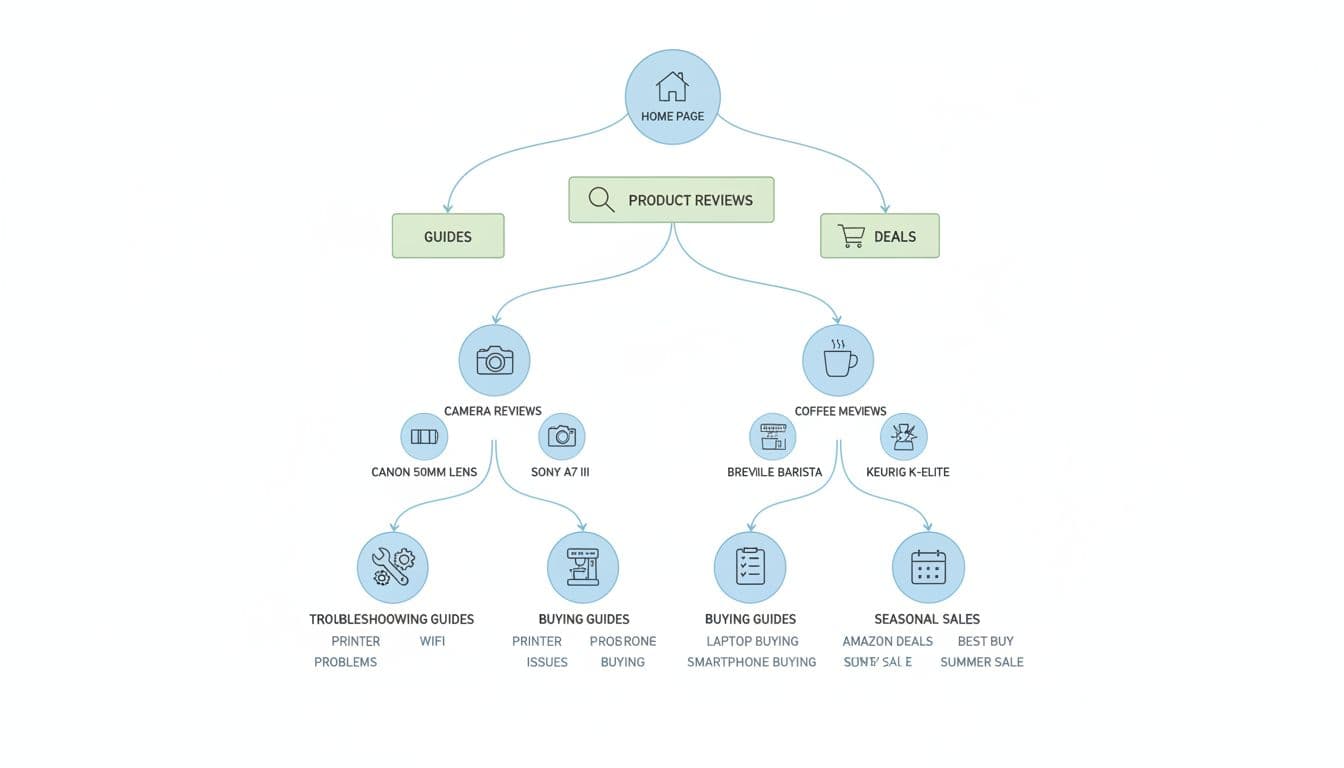
Think of breadcrumbs like address lines on a package. “Best CRM for Freelancers” is the apartment number. “CRM Software” is the street. “Business Tools” is the city. Without that chain, the page can still exist, but it’s harder to route.
As of 2026, the best setup is still simple. Show visible breadcrumbs on the page, and keep their structured data aligned with the same path. Use them on commercial pages, category pages, and supporting content. Don’t hide them only in schema.
They also pass repeated internal link context toward parent hubs. That helps your category pages collect more signals, which can then support the deeper pages beneath them. Still, breadcrumbs are not a replacement for contextual links inside the body. They work best when both systems point in the same direction.
Design breadcrumb paths that match your site structure
The biggest mistake is fake hierarchy. If a page doesn’t belong under a parent, don’t force it there to make the trail look longer.
A strong breadcrumb path mirrors search intent and site architecture. So start with your real content model. If you haven’t cleaned that up yet, tighten your categories first with better affiliate keyword selection strategies.
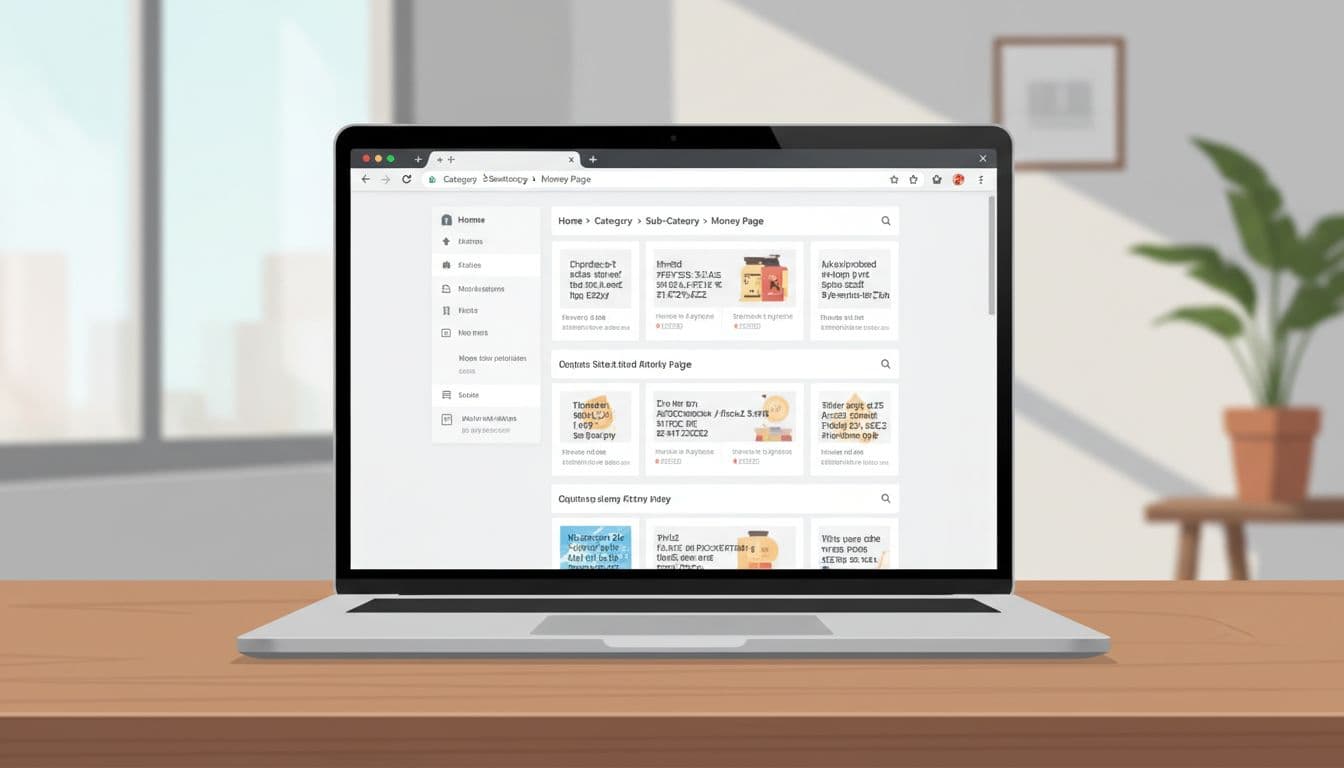
This quick map works for most affiliate site structures:
| Page type | Good breadcrumb path |
|---|---|
| Broad roundup | Home > Web Hosting > Best Web Hosting |
| Use-case roundup | Home > Web Hosting > Small Business Hosting > Best Web Hosting for Small Business |
| Alternatives page | Home > Email Marketing > ConvertKit Competitors > Best ConvertKit Alternatives |
| Single review | Home > SEO Tools > Rank Tracking Tools > Ahrefs Review |
The takeaway is simple, each page should have one logical home.
That means your breadcrumb labels should describe topics, not vague archive buckets. “Blog,” “Reviews,” and “Resources” rarely help much. They’re broad and often repeat across unrelated pages. A better parent would be “Keyword Research Tools” or “Passive Income Courses.”
Here are two practical examples:
Good path: Home > Side Hustles > Print-on-Demand > Best Print-on-Demand Sites
Weak path: Home > Blog > Reviews > Best Print-on-Demand Sites
Good path: Home > VPNs > Streaming VPNs > Best VPN for Netflix
Weak path: Home > Tools > Best VPN for Netflix
Also, keep depth reasonable. Three to four levels is enough for most affiliate sites. If you need six levels to explain a page, your structure is probably bloated.
One more point matters here. Breadcrumbs should support your main commercial paths, not conflict with them. If your “best for beginners” page lives under one parent in the breadcrumb and another parent in the URL, you’re sending mixed signals.
Implement affiliate breadcrumbs without creating mixed signals
WordPress makes breadcrumb output easy, but easy doesn’t always mean clean. Most SEO plugins can generate breadcrumbs, yet the real work is picking the right source for the trail.
If you use WordPress, choose one system. Many site owners use Yoast SEO, Rank Math, or SEOPress. Any of them can work. The important part is choosing the primary taxonomy or page parent once, then using it across templates.
For custom themes, keep the rule even tighter. Pull the breadcrumb path from the canonical location of the page, not from whatever category was last assigned by an editor. If you run custom post types for reviews or comparisons, map each one to a single primary term.
If one URL can show three different breadcrumb trails, crawlers get three different stories.
Also, add BreadcrumbList schema that matches the visible trail. Don’t output one path in HTML and another in schema. That mismatch creates noise. In the same way, don’t let tag archives or thin filter pages appear as breadcrumb parents unless they deserve to rank.
This is where audits matter. If your site has overlapping categories, fix them before you scale. A fast content cannibalization audit guide can expose pages that sit in the wrong branch or compete with their siblings.
Use this short checklist on your next pass:
- Pick one primary parent for every money page
- Use topic labels, not generic archive names
- Match the visible trail and schema
- Keep one breadcrumb system live, not two
- Link supporting articles into the same parent hubs
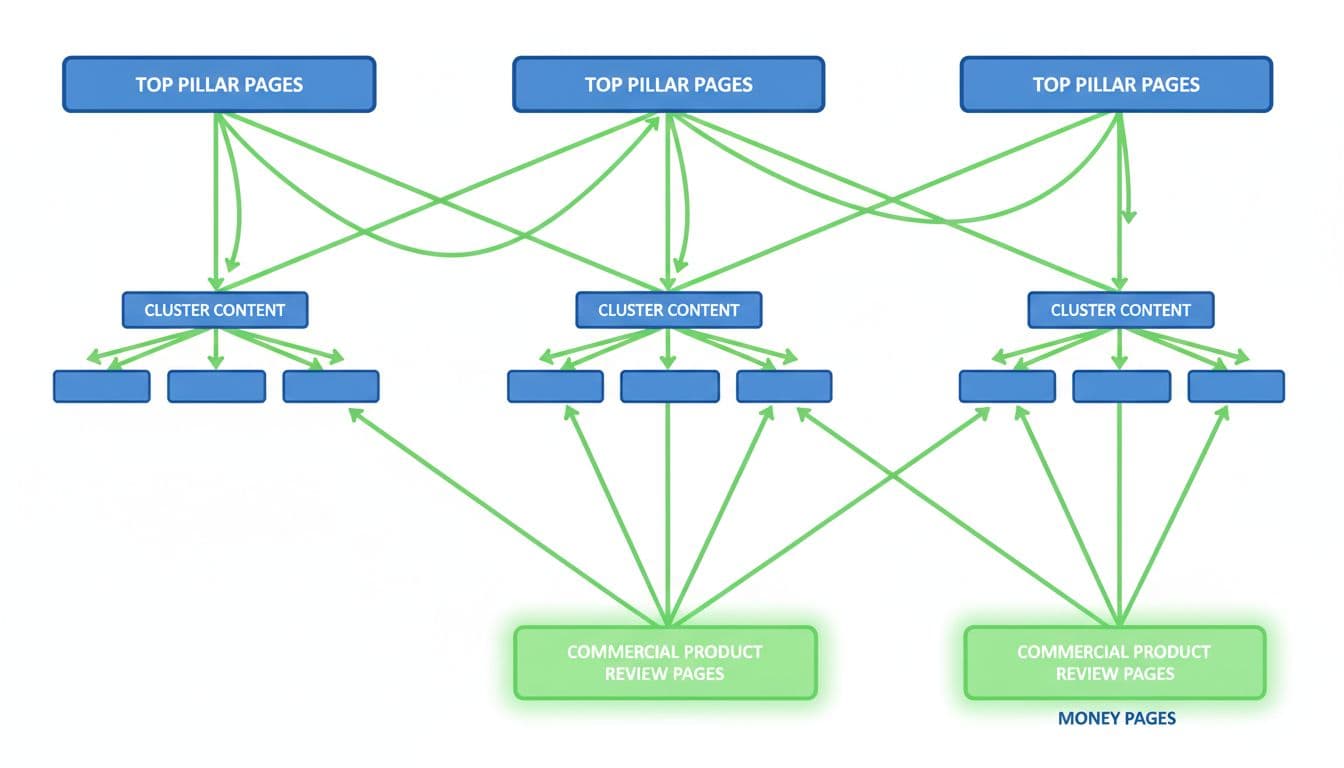
When breadcrumbs, internal links, and page intent line up, your money pages stop looking isolated. They become part of a clear cluster, and that’s much easier for crawlers to process.
A breadcrumb trail won’t save a weak site structure. But it can sharpen a good one, and that often makes the difference between a page that floats and a page that sticks.
Start with your top three commercial pages today. If each one can’t answer “where do I belong?” in a single clean path, fix that first.