
A good category page is like the aisle sign in a busy store. It doesn’t just list products, it helps shoppers choose fast. In 2026, category page seo matters even more for affiliate blogs because Google can satisfy “basic” questions right on the results page.
So the pages that win are the ones that make a decision easier. They show real selection logic, clear comparisons, and clean site structure. This playbook walks you through building category pages that rank, earn clicks, and convert without looking like thin affiliate content.
1) Pick the right category target (and prove it’s helpful)
Before you design anything, decide what your category page is. For most affiliate sites, the best-performing “category” is really a commercial hub page like “Best Wireless Earbuds”, not a WordPress archive that dumps posts by date.
In 2026, Google’s systems reward pages that feel complete. That means your category page should do three jobs at once:
- Help a buyer choose (quick picks, tradeoffs, who it’s for).
- Help Google understand the topic (clear headings, internal links, structured layout).
- Help readers trust you (experience, criteria, disclosures).
If you’re unsure which categories deserve a hub page, start with a fast SERP reality check and intent match. This internal guide on SERP checks for affiliate keywords is useful when you’re deciding between broad “best” pages and tighter “best for X” angles.
Also, avoid the “doorway” trap: twenty near-identical pages like “Best Earbuds Under $50”, “Best Earbuds Under $60”, and “Best Earbuds Under $70”, all with the same picks. Consolidate where the intent overlaps, then make the page deeper.
For additional context on modern category optimization patterns, compare your plan to this 2026 product category SEO guide.
If a category page can’t explain “how to choose” in plain words, it’s usually too thin to deserve rankings.
A quick pre-build checklist:
- Unique intro copy (short above the fold, more depth lower on the page).
- Editorial selection criteria (how you picked winners).
- Clear internal links to reviews and “best for” sub-pages.
- Freshness plan (what triggers updates, and how often).
- Visible disclosure before the first affiliate link.
2) Category page SEO layout that ranks and converts (without feeling spammy)
A high-performing affiliate category page has a simple flow: answer fast, compare cleanly, then support the decision. Don’t bury the product list under a wall of text. Instead, give a short intro, show the picks, then add the deeper guidance below.
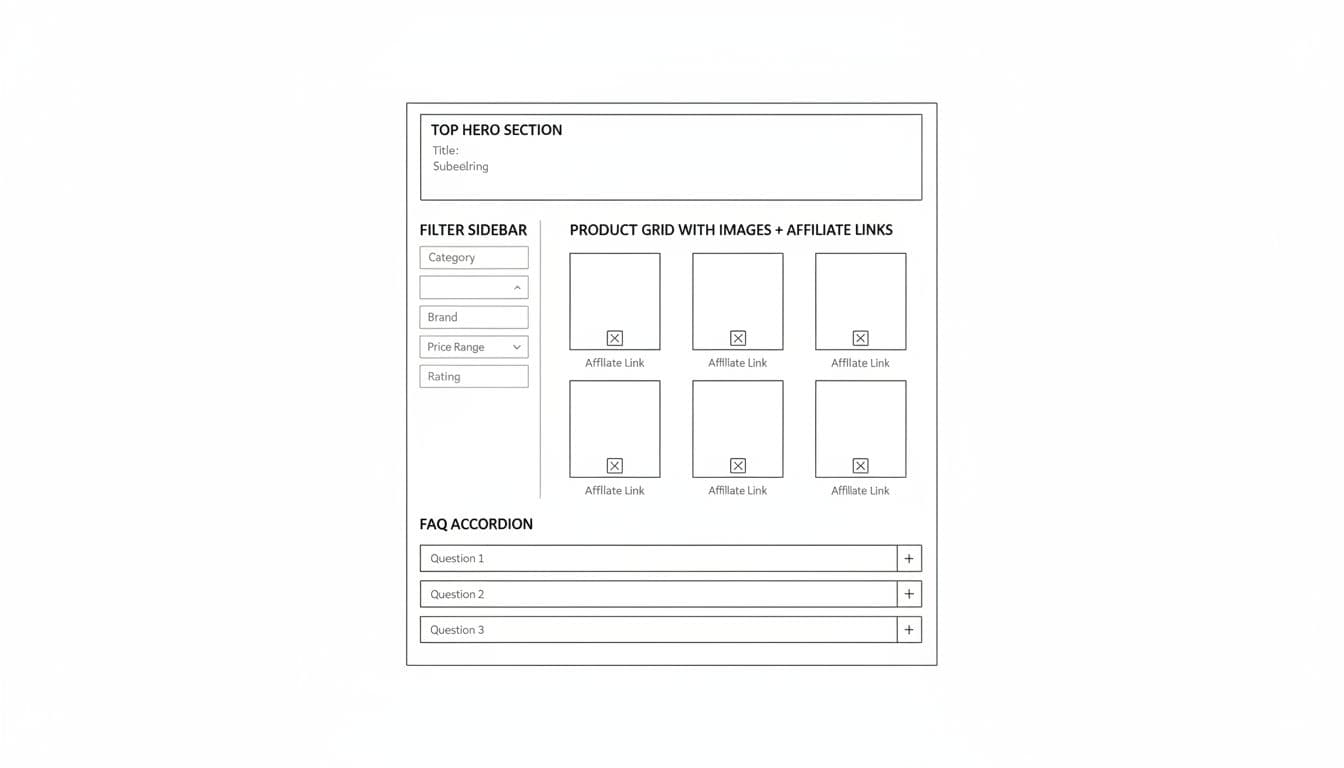
Here’s a practical module order that works well for “Best Wireless Earbuds”:
- Above-the-fold intro (50 to 90 words) plus a one-line disclosure.
- Quick comparison table (5 to 8 picks max).
- Top pick and alternatives with short “best for” labels.
- Buying guide (comfort, codec support, ANC, mic quality, battery).
- FAQ section based on real questions people ask.
- Update notes (what changed, when, and why).
One small but important affiliate detail: your page should show you had a method. Add 3 to 6 “rules” you used to choose winners. That’s easy for humans to trust, and it’s also the kind of detail AI summaries can’t fake well.
Use this do and don’t table as a guardrail:
| Do on affiliate category pages | Don’t do on affiliate category pages |
|---|---|
| Put products high on the page | Hide products below a huge essay |
| Explain selection criteria in plain language | Copy brand specs and call it a review |
| Keep tables scannable and limited | Stuff tables with 20 columns nobody reads |
| Use a clear disclosure near the first link | Bury disclosures in the footer only |
| Link out to detailed reviews for proof | Repeat the same blurbs across many pages |
Copy templates you can reuse (and tailor)
Template: category intro copy (short, above the fold)
“I tested and compared [product type] for [primary use case]. Below are the picks that made the cut in 2026, plus quick notes on who each one fits best. This page contains affiliate links, which means I may earn a commission at no extra cost to you.”
Template: editorial criteria block (3 to 5 bullets)
- “I prioritized [factor 1] because it affects [outcome].”
- “I rejected models that [common dealbreaker].”
- “I only included picks with [minimum standard].”
Template: FAQ answers (2 to 4 sentences each)
- “If you want the best for calls, focus on mic pickup and wind reduction.”
- “If you commute, prioritize ANC and comfort over max bass.”
If you’re building this style across older content, this guide to preserving rankings with new links helps you update pages without breaking intent.
For a second perspective on category page structure and content blocks, this category page SEO checklist is a solid benchmark.
3) Technical and internal linking hygiene (so Google crawls, indexes, and trusts the page)
Once your page is helpful, protect it with clean technical signals. Category pages often fail because of duplication, weak crawl paths, or messy filters.
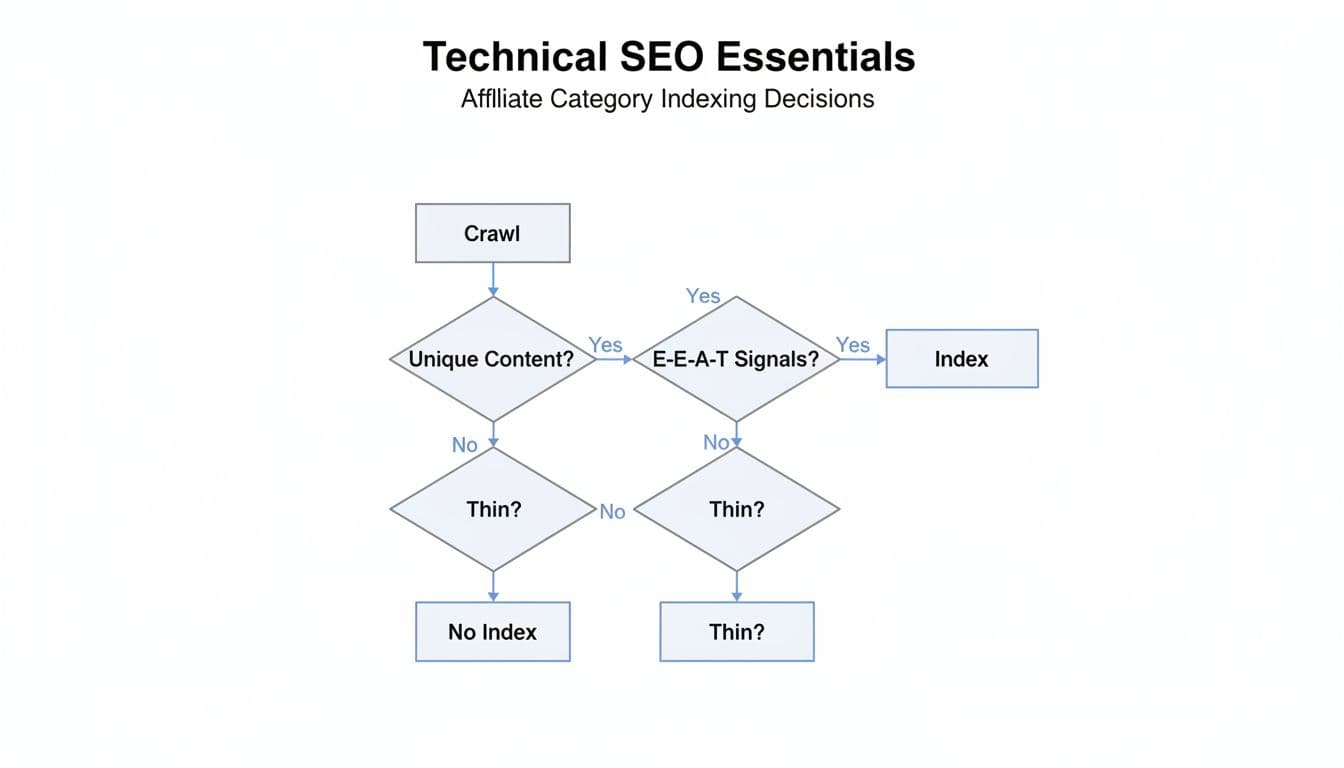
If you use filters or faceted URLs (price, brand, color), be careful. Those combinations can explode into near-duplicate pages. In many setups, you’ll want only a small set of filter URLs indexable, and the rest controlled with canonicals, noindex, or parameter rules (match this to how your CMS generates URLs).
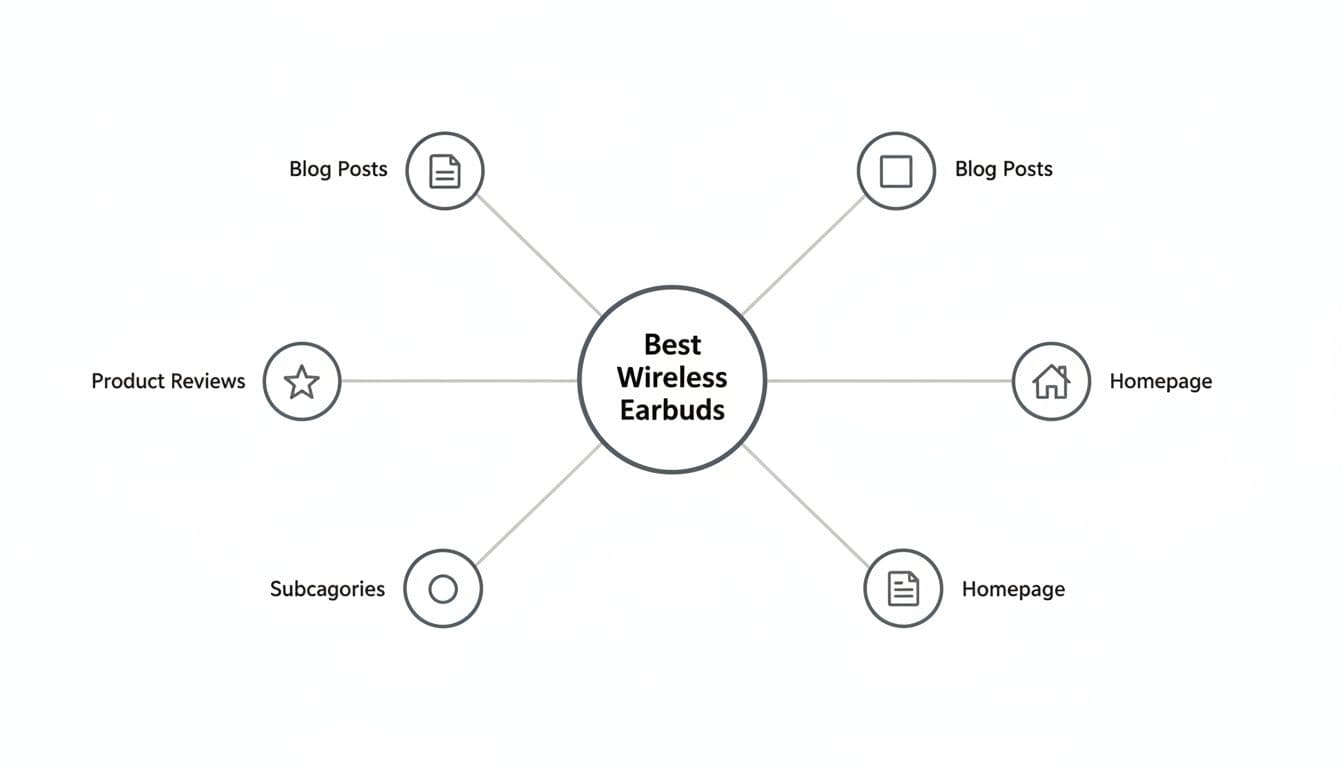
Internal linking is your silent ranking boost. Treat the category page like a hub:
- Link down to individual reviews and “best for” pages.
- Link up with breadcrumbs so the hierarchy is obvious.
- Link across to related hubs (earbuds, headphones, speakers).
Add structured data where it fits (and validate it). Common patterns include BreadcrumbList for navigation and ItemList for “top picks” sections. Follow Google Search Central documentation for eligibility rules and rich result testing.
Finally, keep the page honest over time. Stock changes can wreck user trust overnight, especially on affiliate roundups. Use a simple process for swaps and messaging, like this guide on swap rules for unavailable links.
The easiest way to lose a strong category page is to let half the “top picks” go out of date.
A lightweight monthly maintenance checklist:
- Re-check top picks for availability and major model updates.
- Refresh the comparison table first (most readers scan it).
- Update “last updated” notes only when you changed something real.
- Fix broken affiliate links and avoid redirect chains.
- Add 1 to 3 internal links to new supporting reviews where relevant.
Conclusion
Category pages don’t rank because they exist. They rank because they help a buyer make a choice, then back that choice with proof. Start with a clear intent, build a scannable layout, and lock in clean technical signals. Pick one money category this week and rebuild it as a true hub page, then measure clicks, scroll depth, and conversions for 30 days.