
If your affiliate site isn’t growing its organic traffic through search engine optimization, it’s often not a “content quality” problem. It’s a content gap analysis coverage problem. You’re missing the pages that make Google (and people) trust you as a real resource.
That’s why affiliate content gap analysis looks different in 2026. You can’t just find a few keywords and publish more “best” posts. The evolving content strategy demands competitor-style hubs that show depth, clear internal paths, and real experience.
Why competitor hubs are the best dataset in 2026
A competitor hub is a cluster of pages built around one topic, like “email marketing,” “keto snacks,” or “budget laptops.” Also known as topic clusters, competitor hubs help sites earn topical authority. In 2026, hubs matter because search results reward sites that cover a topic end to end, not sites that pop up with one isolated review.
AI overviews and summary panels drive zero-click search, changing the click pattern. Many searchers get a quick answer without clicking. So when they do click, they are usually in one of two modes based on search intent: they want informational gain for deeper proof, or they want help choosing. That’s where hubs win, because your supporting articles feed trust into your money pages.
Competitor hubs also reveal page patterns that keyword tools miss, for example:
- The angles that rank (beginner guide vs problem fix vs comparison)
- The “supporting evidence” sections that show experience (photos, test notes, screenshots)
- The internal link paths that guide readers from learning to buying
If you want a current view of how gap work is shifting for AI-driven search, Yotpo’s breakdown is a useful reference: content gap analysis tips for AI search.
If your hub can’t answer “Why should I trust you?” in two clicks, it won’t hold rankings for long.
The 7-step workflow for affiliate content gap analysis (using hubs)
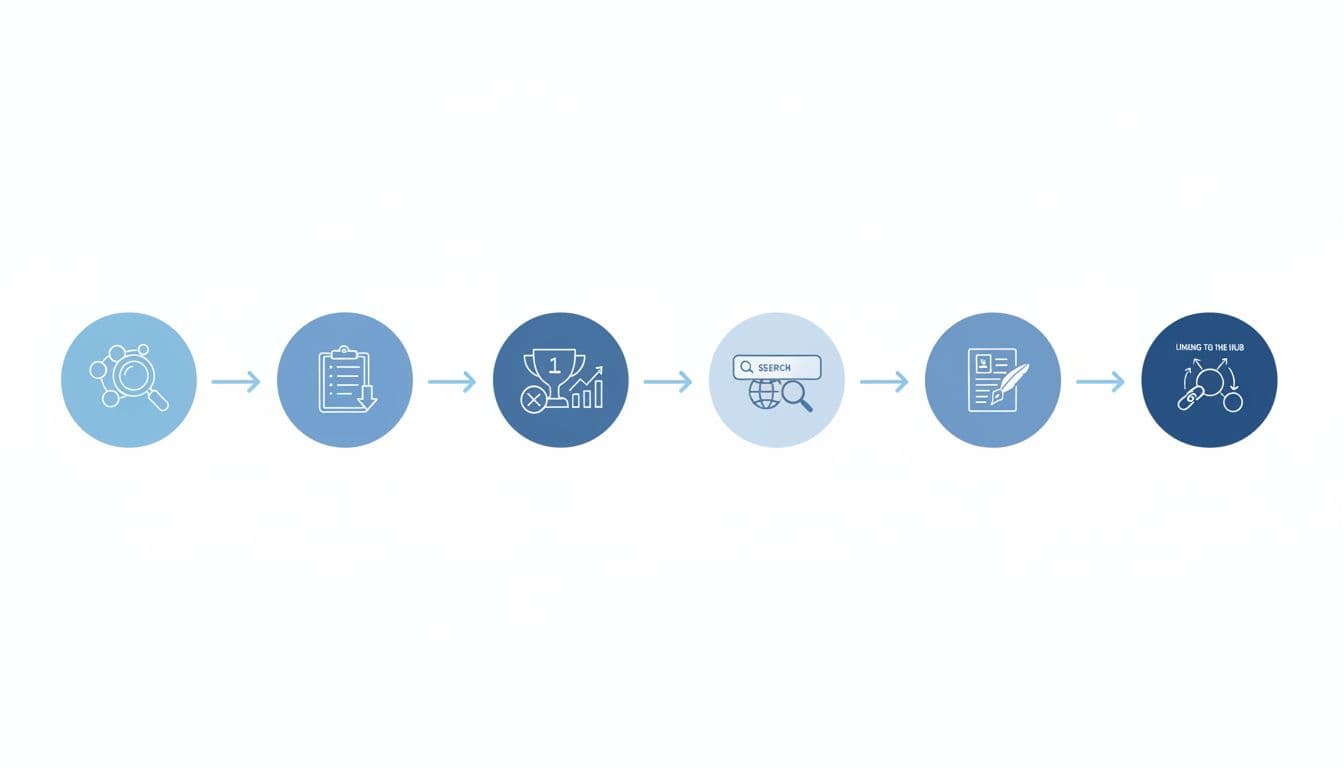
Use this as a repeatable playbook. Run it per hub, not per site, so you stay focused.
- Pick 3 competitor hubs you’d be happy to “borrow the blueprint” from as part of your competitor analysis. Choose sites ranking across informational and commercial queries, not just one viral post.
- Map each hub’s spine (hub page, category pages, top supporting articles). Capture URLs, titles, and how they interlink.
- Extract topic candidates, including missing keywords that competitors are ranking for, from competitor headings, FAQs, and recurring subtopics. Add “problem-first” topics, not just product terms.
- Tag each topic by intent (learn, compare, decide, buy) along the buyer’s journey and where it fits in your hub (pillar, cluster, money page).
- Score the gaps using one simple table (template below). Keep scores honest, not optimistic.
- Validate in the SERP before writing. Look for page types, formats, structured data, search results patterns, and what Google is highlighting (videos, “People also ask,” shopping modules, short answers).
- Publish into a hub plan, then add internal linking on day one. Update older pages to point to the new ones.
Quick checklist before you score anything:
- You can name the hub’s main entity (what it is, who it’s for, why it matters).
- You have at least one money page target (review, “best,” or comparison).
- Competitors show repeated subtopics across multiple pages (a sign of demand).
- You can add experience signals (testing notes, photos, setup steps, results logs) to meet EEAT standards.
Score and Prioritize Keyword Gaps with a Simple Template
In your content gap analysis, a scoring sheet keeps you from chasing shiny topics. It also helps teams agree fast and boosts search engine optimization.
For extra context on building a gap process that’s less keyword-only and more opportunity-first, see: Gap Analyst Playbook.
Use this table template (copy it into Sheets). It helps identify missing keywords for the hub:
| Topic / Page | Intent (Commercial/Transactional) | Est. Volume | Keyword Difficulty (KD) | SERP features to beat | Monetization fit | Hub relevance | Notes (pattern you saw) | Gap score (1 to 5) |
|---|---|---|---|---|---|---|---|---|
How to score it without overthinking:
- Intent: Distinguish commercial intent from transactional intent. If the SERP is mostly guides, don’t write a roundup first.
- SERP features: If short answers dominate, you need a better “answer-first” section plus deeper proof.
- Monetization fit: If you can’t name the affiliate offer or upgrade path, lower the score.
- Hub relevance: A great keyword that doesn’t strengthen your hub is a distraction.
After you score, pick a mix: 1 pillar upgrade, 2 to 4 support clusters, and 1 money page. That blend builds authority and revenue together.
Worked example: competitor hub gaps in the keto supplements niche
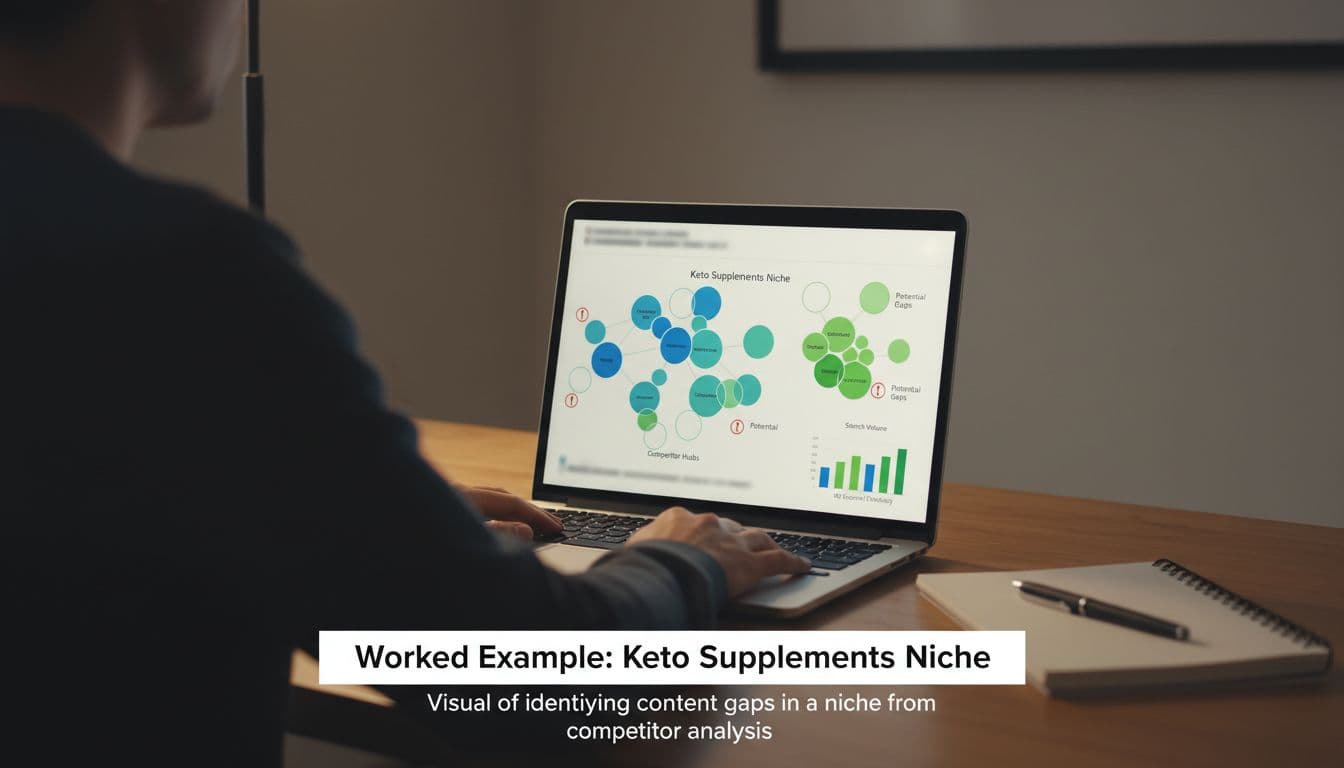
Imagine you run a keto affiliate site. Competitor A has a hub called “Keto Supplements,” plus clusters like electrolytes, magnesium, MCT oil, and ketone testing. Competitor B ranks with “symptom fix” posts that funnel into product pages.
After conducting a content audit of the niche, you map both hubs and notice repeated topics, but also holes:
- Lots of “best electrolyte” pages, but weak coverage on dosage by activity (runners, strength training), where informational gain can be achieved by providing unique dosage timing advice.
- Many ketone supplement reviews, yet few pages explain exogenous ketones vs MCT oil in plain language, revealing a semantic gap between related topics.
- Several “keto cramps” posts, but thin advice on magnesium types and timing.
Now validate gaps with a SERP review (search intent validation is the most skipped step, where many teams pay later). Open the top 10 results and, during this search results review, record patterns while noting missing keywords:
- What format ranks (short definition, long guide, comparison table, video)?
- Are the ranking pages updated recently, with author bios and cited sources?
- Do results show “People also ask” boxes that suggest subtopics you should cover?
- Do top pages include original experience (photos, logs, tests), or are they generic?
Don’t write until you can explain the SERP’s “winning formula” in one paragraph.
From there, you plan a hub that matches intent:
- Pillar: “Keto supplements guide (what helps, what’s hype)”
- Cluster: “Electrolytes for keto runners (dose, timing, watch-outs)”
- Cluster: “Magnesium for keto cramps (types, side effects, who should skip)”
- Money page: “Best keto electrolyte powders (tested picks, pros, cons)”
Hub architecture, internal linking, and measurement that compounds
Internal linking rules for hub pages
Think of your hub like a well-marked trail. Every link should help the reader move forward.
Practical rules:
- Link down the funnel from informational posts to comparisons and reviews.
- Link sideways between closely related cluster posts (electrolytes, magnesium, sodium).
- Link up to the pillar page using consistent, descriptive anchors.
When you build money pages, keep the structure consistent to improve user experience so clusters can point to them cleanly. This guide is a solid reference for layout consistency: templates for affiliate review posts.
Pitfalls to avoid in 2026
- Cannibalization: Two posts targeting the same intent split rankings. Fix it by merging, then 301 or canonical.
- Thin “gap fill” content: A 900-word summary won’t beat pages with proof. Add real-world steps, photos, and decision help.
- Over-automation: LLM prompts can speed research, but they can also flatten your voice and remove experience. Edit hard, then add what only you know.
- Ignoring SERP features: If the SERP favors videos or short answers, your page needs an answer-first section and better formatting.
30/60/90-day KPIs to track
You don’t need a fancy dashboard, but you do need clean tracking. If your affiliate clicks are messy, use this walkthrough: GA4 affiliate sales tracking.
Here’s a simple KPI set that matches how hubs mature:
| Timeframe | What to track | What “good” looks like |
|---|---|---|
| 30 days | Indexing rate, SERP impressions, internal link coverage, avg position trend | Most pages indexed, SERP impressions rising, clear hub-to-cluster links |
| 60 days | Clicks to cluster pages, click-through rates on money pages, affiliate click events | Cluster posts start earning clicks, money pages get early click-through rates lift |
| 90 days | Top 20 keyword count, conversion rates, revenue per hub | Hub pages drive organic traffic to money pages through search engine optimization improvements, conversions spread across the cluster |
Conclusion
Competitor hubs show you what Google already trusts, and what buyers already need for affiliate marketing success. When you run affiliate content gap analysis hub by hub as your repeatable content strategy, you stop guessing and start building a site that feels complete.
Pick one hub, score the gaps, validate the SERP, then publish with strong internal links. After 90 days, you’ll see sustained growth in organic traffic and visibility in search results, plus know which hub deserves your next round of content.