
Publishing affiliate content without QA is like shipping a product without testing the “Buy” button. The page might look fine, but one broken link, one vague disclosure, or one outdated price can cost you trust and commissions.
This affiliate content checklist is a practical pre-publish gate for reviews, comparisons, and “best of” posts. A rigorous QA process with this checklist helps you produce unignorable content that stands out in search engine results and is more likely to be cited in AI Overviews. It includes quick tests, pass or fail rules, and the last 10 minutes mini-checklist teams can run every time.
Your pre-publish QA gate (what “ready” looks like)
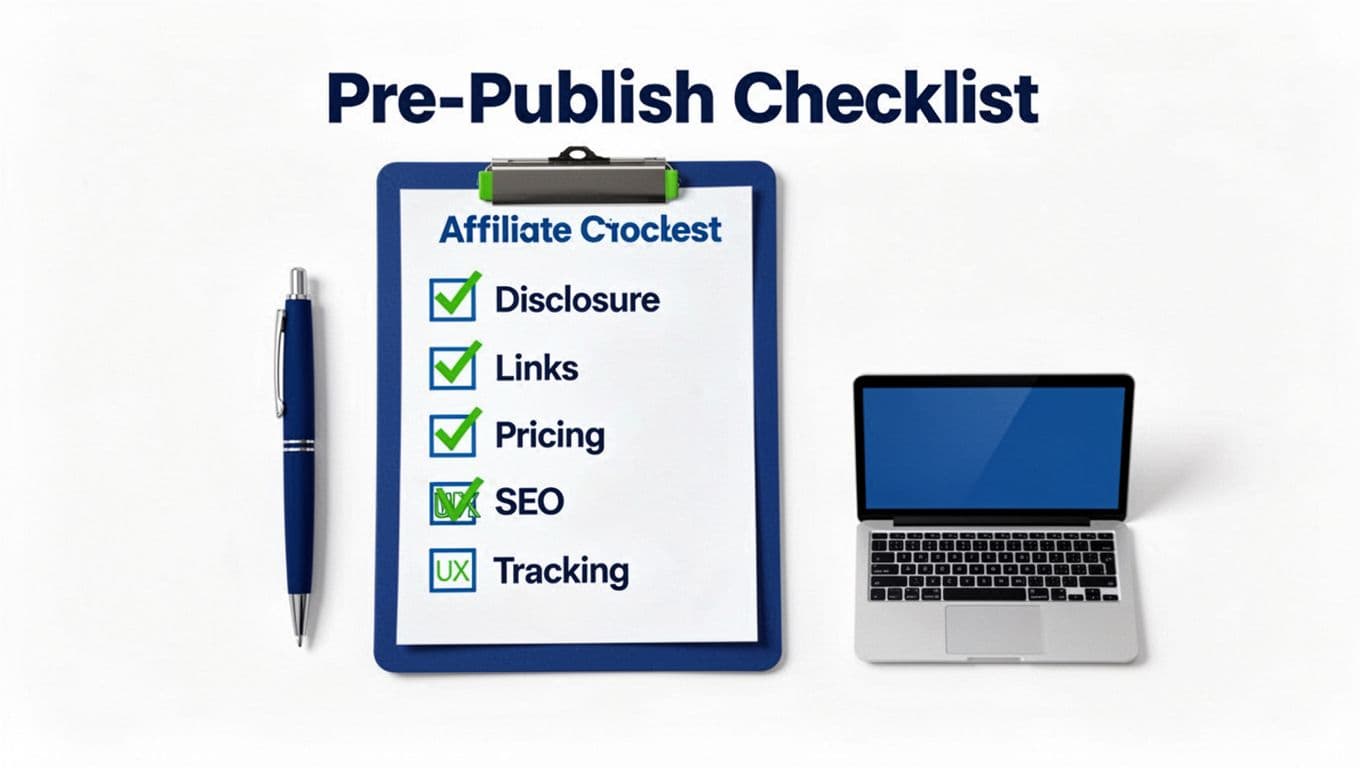
Before you scan for typos, decide what “pass” means. A high-quality product review relies on first-hand experience to prove value to the reader. QA works best when it’s binary. If it fails, it doesn’t ship. That one habit keeps small issues from piling into lost revenue.
A clean QA gate covers three areas:
- Trust: readers understand what you recommend and why.
- Compliance basics: disclosures are obvious where clicks happen.
- Monetization mechanics: links track, offers match the page, and claims are current.
Use this pass or fail table as your baseline. It’s short on purpose, because it’s meant to run on every post, not just the “important” ones.
| QA check | Quick test | Pass | Fail |
|---|---|---|---|
| Disclosure visibility | Mobile view, top of post | Seen before first affiliate link | Only in footer, sidebar, or About page |
| Link destination | Click every affiliate link | Lands on the promised page | 404, wrong product, or redirect loop |
| Offer match | Compare CTA text vs landing page | Same plan, price range, or trial | CTA promises something that isn’t there |
| Claims and screenshots | Spot-check 3 claims | Matches source today, original proof intact | Feature removed, UI changed, old guarantee |
| UX spam check | Scroll the page once | Links feel helpful, not pushy | Link clusters, repeated buttons back-to-back |
| Tracking sanity | Test click with your method | Click recorded where expected | Click disappears, wrong tag, or mixed networks |
Two common QA misses show up even on strong sites: old screenshots and “almost clear” disclosures. Fix those, and your content instantly feels more credible. These checks directly improve your conversion rate by removing friction.
Performing an affiliate program audit on the offers you promote ensures your affiliate marketing program strategy is sound. If your team also vets offers before writing, pair this with Goho Money’s affiliate program vetting checklist so you don’t publish content for a program that later blocks your traffic source.
Affiliate Disclosure QA that doesn’t scare readers away
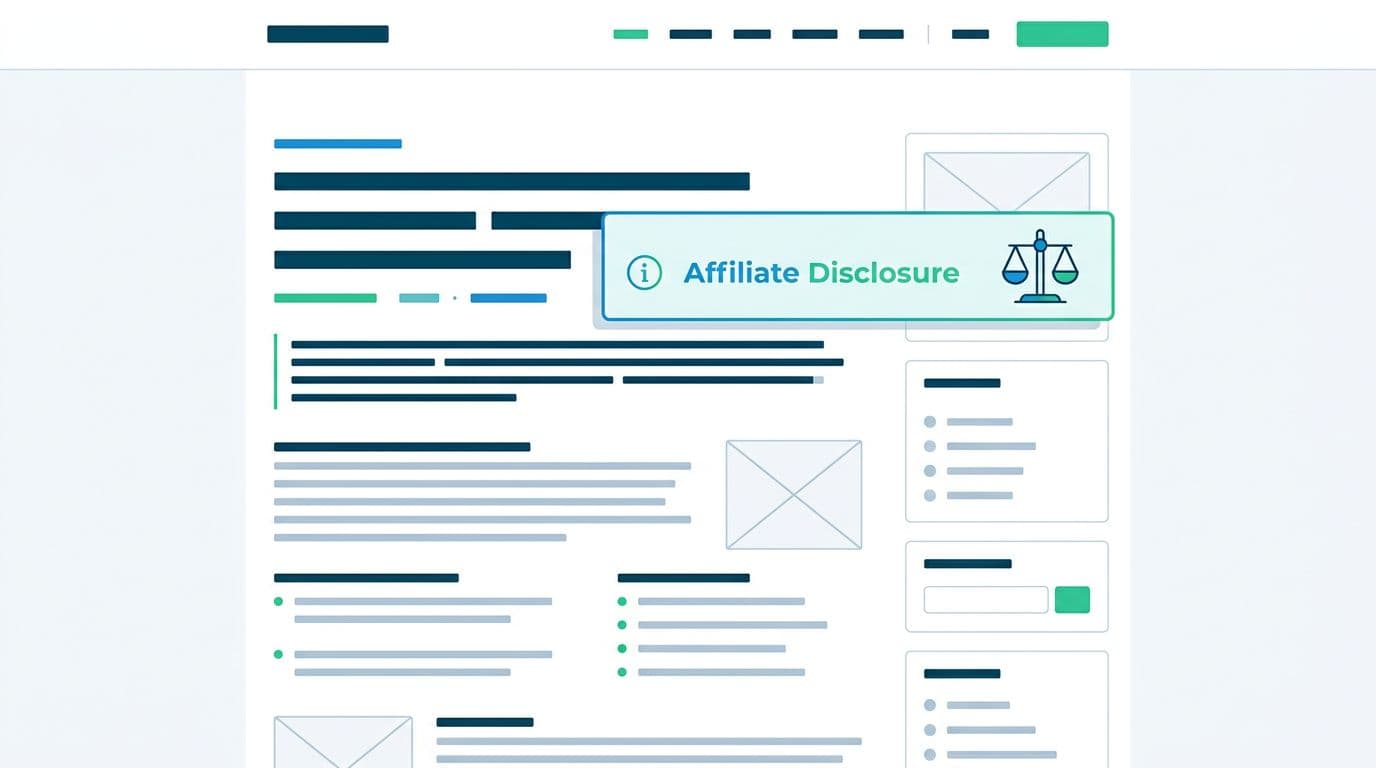
Most affiliate disclosure problems come down to placement. Clear disclosures form a key part of regulatory compliance and are often required by a program’s terms and conditions. If the disclosure appears after the reader clicks, it’s too late. The standard you’ll hear again and again is clear and conspicuous, meaning a normal person notices it fast and understands it without decoding jargon. If you want deeper context for review workflows, see FTC endorsement content review guidance.
Placement rules (simple, repeatable, mobile-first)
Use these as pass or fail rules:
- Put a disclosure near the top, before the first affiliate link.
- Repeat a one-liner inside high-intent blocks (top pick boxes, tables, big buttons, product review final verdicts).
- Don’t rely on a “disclosure page” link alone.
Showing human expertise through honest labeling like this helps create unignorable content.
Gotcha: “Affiliate link” by itself is often unclear to readers. Say what happens, in plain words.
Compliant disclosure examples you can copy
These are short enough to use above a button or in a comparison table intro:
- “Disclosure: If you buy through my link, I may earn a commission at no extra cost to you.”
- “Some links are affiliate links, I may earn a commission if you purchase.”
- “I earn from qualifying purchases when you use links on this page.”
For more variations, swipeable formats, and button-friendly lines, keep a saved set from affiliate disclosure examples.
Common disclosure QA mistakes (quick spot-check)
A few patterns show up repeatedly:
- Disclosure is below a comparison table where skimmers click first.
- Disclosure is hidden in tiny, light-gray text on mobile.
- Wording is vague (“may contain links” or “for your convenience”).
- Affiliate disclosure exists in the intro, but not near buttons or “Top Pick” boxes.
When in doubt, compare your draft to a current third-party summary like FTC affiliate disclosure compliance guidance (2026), then document what you used as your internal standard.
Link QA, pricing checks, and tracking (the stuff that breaks quietly)
Link QA and tracking quick tests
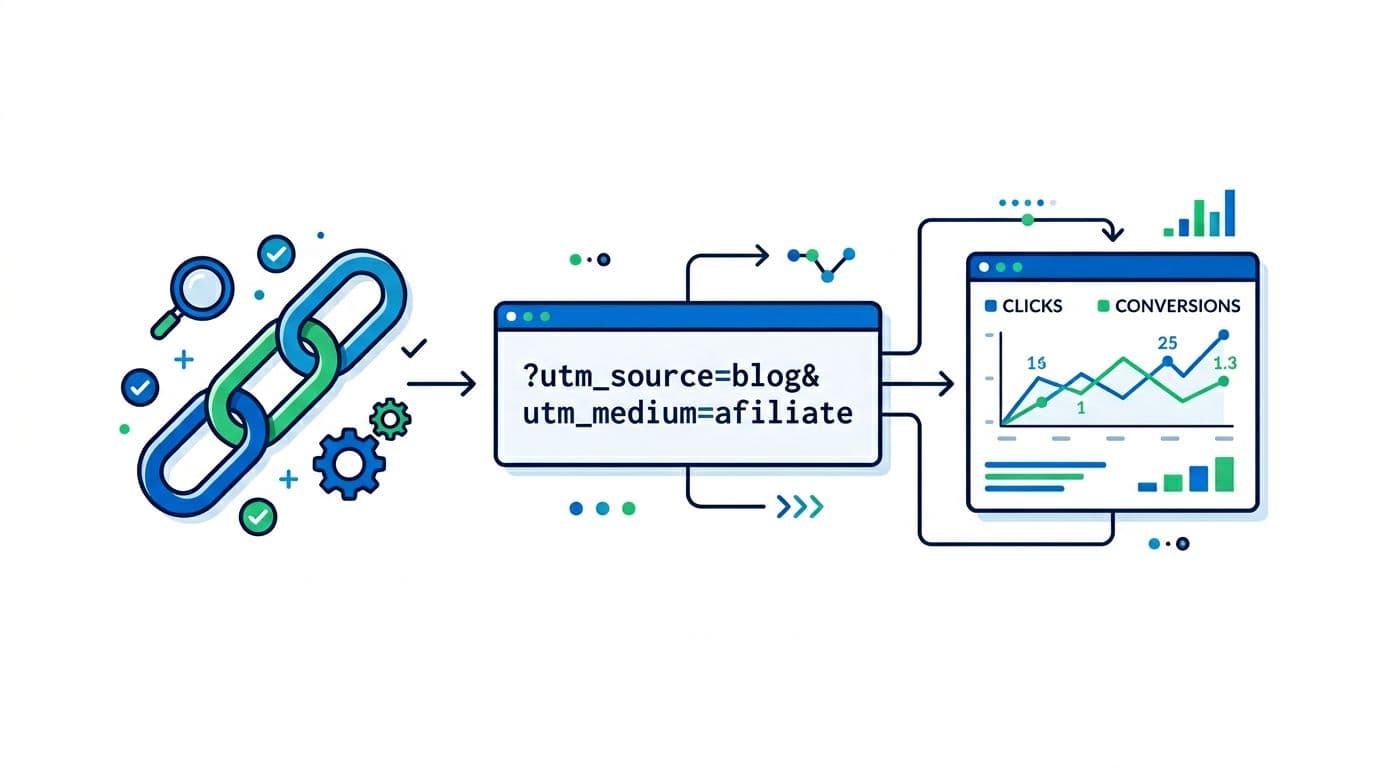
Broken affiliate links are obvious. The sneakier problem is “working” links that go to the wrong place, drop tracking and attribution, or send readers to a different offer than your copy implies. Inaccurate tracking also raises fraud prevention risks and can inflate your customer acquisition cost.
Run this workflow:
- Open an incognito window (so logins and cookies don’t mask issues).
- Click each affiliate link, then verify the landing page matches your CTA (trial, pricing, plan name) and tracking and attribution parameters stay intact.
- If you use redirects or link shorteners, confirm there’s only one clean hop with tracking preserved.
- Confirm you aren’t mixing affiliate marketing programs in one “money moment” (one button goes to Program A, another to Program B) unless you explain why.
If you want cleaner placements that don’t feel like a link dump and help build unignorable content, use the layout ideas in Goho Money’s affiliate link placement map.
Pricing and availability verification (fast, documented, repeatable)
Prices change. Features move to higher tiers. Free trials get pulled. That’s normal, but it becomes your problem if your page states the old deal like it’s still live.
A simple verification workflow that teams can document:
- Check the offer page the same day you publish.
- If you mention a price, earnings per click, average order value, commission structure, or recurring commissions, confirm the numbers and any “starting at” terms.
- If the offer varies by region, avoid hard numbers and use “check current pricing.”
- Add a quick “Last verified” note in your internal QA log (not necessarily on-page).
Using original data from product testing helps with SEO optimization and answer engine optimization for better visibility in AI Overviews, creating unignorable content that stands out. For disclosure and endorsement summaries by format, cross-check with a current overview like FTC rules for affiliate marketing (2026), then align your wording to the official sources and the program’s own terms.
The last 10 minutes before publish (mini-checklist)
- Disclosure appears above the first affiliate link on mobile (pass or fail)
- Every button goes where the button text promises (pass or fail)
- No two affiliate links sit back-to-back without context
- Top pick sections include a one-line disclosure nearby
- Three key claims were re-checked today (price, feature, eligibility)
- One screenshot was confirmed current (or removed)
- Click tracking method is consistent across the post
- Payout threshold and onboarding sequence links checked (if applicable)
- QA notes saved (date, checker, any exceptions)
To keep teams aligned and ensure your media kit reflects these QA standards, use a lightweight sign-off:
| Role | Name | Date | Status |
|---|---|---|---|
| Owner | Approved / Needs changes | ||
| Editor | Approved / Needs changes |
Conclusion
A solid affiliate content checklist is the foundation of any professional affiliate marketing program. It keeps your posts honest, clickable, and consistent. Better still, it turns “I think it’s fine” into a clear pass or fail process you can repeat. Consistent QA like this leads to higher conversion rates and truly unignorable content that readers trust. Save the tables, document your QA, and treat every publish like a release, not a hope. What’s one check you’ll add to your workflow this week?