
If your affiliate efforts feel like posting into a void, you’re not alone. Most beginners don’t fail because they lack hustle, they fail because they publish random content with no path to a decision.
This affiliate content plan is a 30-day sprint that turns “I hope this works” into a simple system: pick one offer, publish a small set of high-intent pages, add clean tracking, then promote without breaking platform rules.
The 30-day sprint overview (one page you can follow)
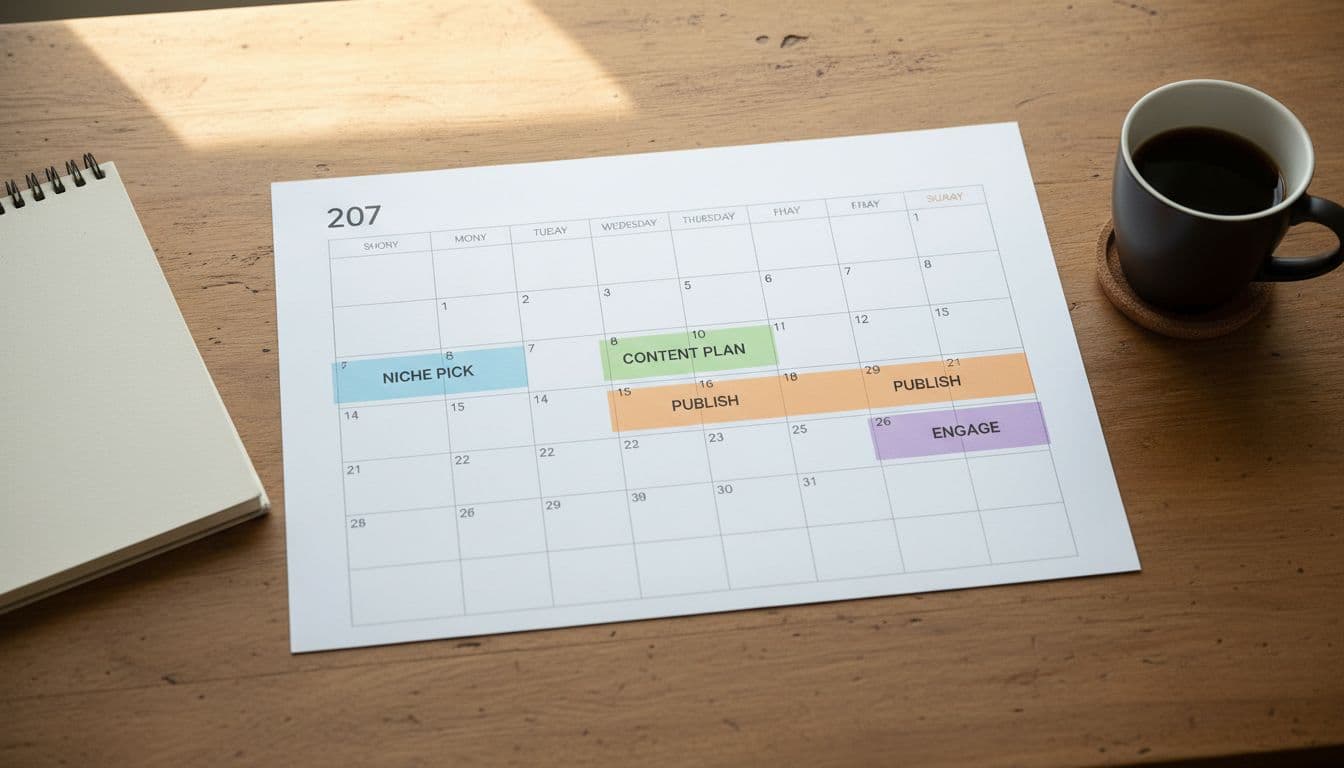
Here’s the sprint in one view. Keep it boring and repeatable. Your first commission usually comes from a review or comparison that matches a real “I’m about to choose” moment.
| Days | Main outcome | Deliverables | Time (total) |
|---|---|---|---|
| 1 to 3 | Pick a winnable offer | One niche, one primary product, one backup | 3 to 5 hours |
| 4 to 7 | Build the content targets | Keyword list, outlines, disclosure setup, tracking sheet | 4 to 6 hours |
| 8 to 20 | Publish your “money pages” | 1 review, 1 comparison, 2 supporting tutorials, 1 alternatives page | 12 to 18 hours |
| 21 to 30 | Promote and tighten | Internal links, better CTAs, proof blocks, light repurposing | 6 to 10 hours |
Minimum viable output (MV0): 5 solid pieces of content plus one comparison table. That’s enough to earn, even with small traffic.
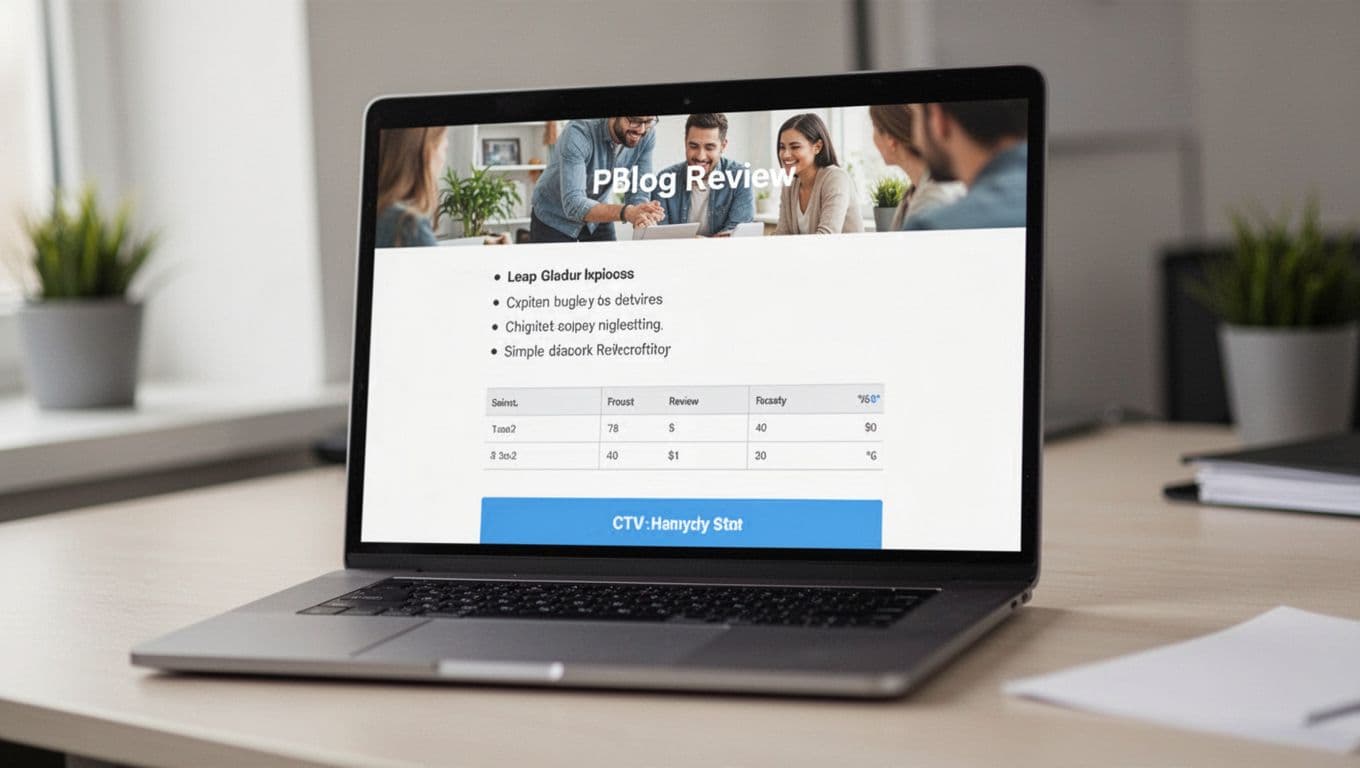
If you want visuals that make posts easier to skim, plan to add: a sprint calendar graphic, a simple funnel diagram, and a review-page layout mockup (examples are included below).
Days 1 to 7: Choose one offer, set rules, and track clicks
Pick an offer that fits your audience (not the highest commission)
Start with a product you can explain to a friend in 20 seconds. If it takes a long pitch, it will take a long post, and you’ll stall.
Before you join anything, skim an affiliate program vetting checklist and confirm three basics: payout timing, allowed traffic sources, and whether the product actually solves a problem your audience already has.
Also watch for commission “leaks.” Some programs pay on last click, so coupon sites or toolbars can steal credit late in the flow. This guide helps you recognize red flags early: spot last-click attribution traps.
Required tools (free or low-cost)
You don’t need a big stack. You need consistency.
- A writing home: Google Docs or Notion (free)
- A simple tracker: Google Sheets (free)
- Analytics: Google Search Console and GA4 (free)
- Design: Canva free (or similar)
- A proofreading tool: basic Grammarly tier (optional)
- A “tools list” if you want ideas: affiliate content creation tools roundup
Simple tracking that helps you learn fast
Use one spreadsheet with columns for: URL, content type, primary query, affiliate link destination, link location (top, mid, table, CTA), clicks, and commissions. Keep link labels consistent so you can see patterns.
Gotcha: don’t change five things at once. Change one element per page (CTA copy, link spot, or comparison row order), then wait.
Days 8 to 20: Build a content funnel (so clicks feel natural)
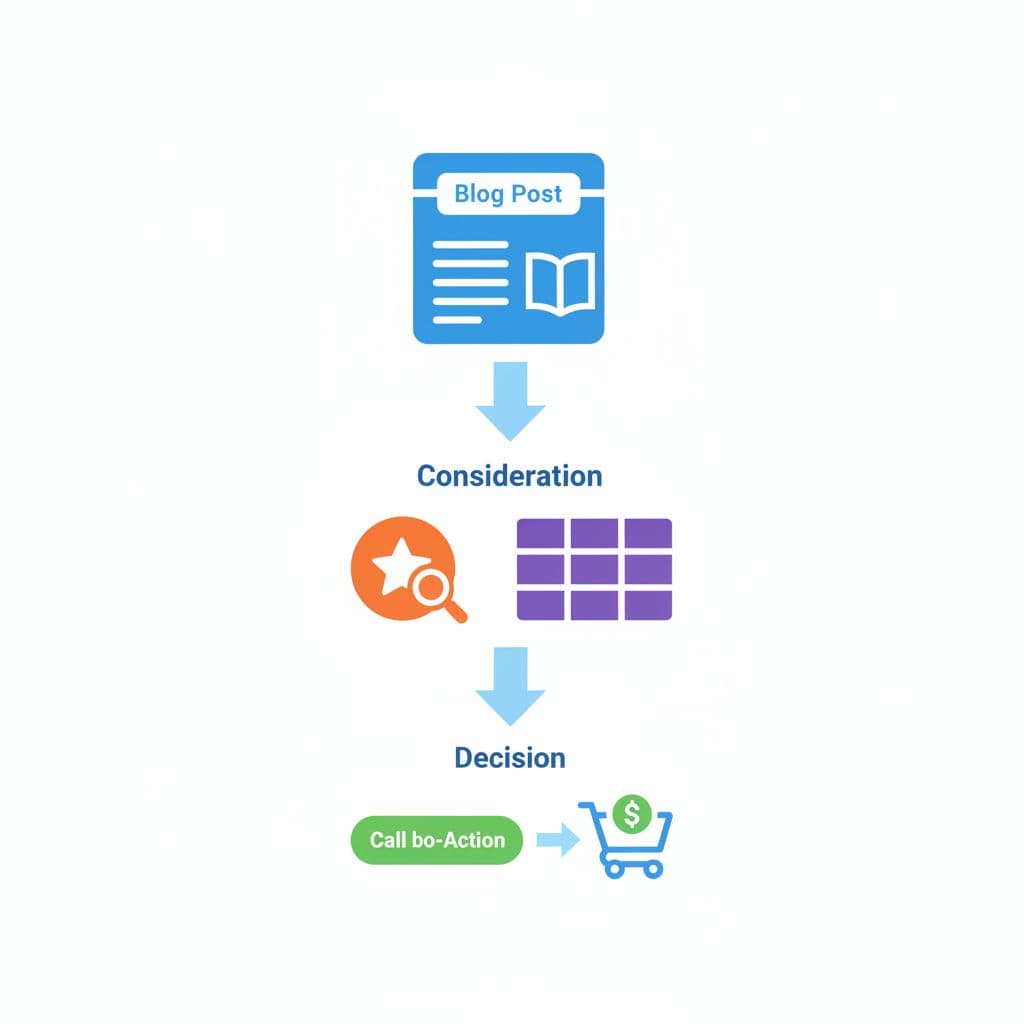
Most first commissions come from “middle” or “bottom” content, not viral tips. So your sprint builds a small funnel:
- Decision pages (publish first): Review and comparison
- Support pages (publish next): How-to tutorials and “alternatives” posts that feed into decision pages
When you’re ready to place links, use a reader-first structure. This internal guide is a strong reference: where to place links for clicks. It helps you avoid link dumps that feel pushy.
Copy/paste templates (use as-is, then personalize)
1) Content brief template
Working title:
Reader: (who is this for, in one sentence)
Search intent: (learn, compare, buy, fix)
Core promise: (what they can do after reading)
Primary recommendation: (one product)
Alternatives (max 2):
Proof I can include: (test note, screenshot, photo)
Sections (H2s): (3 to 5)
CTA plan: (one mid-post, one end)
Disclosure placement: (before first affiliate link)
2) Review outline template
Quick verdict: who it’s for, who should skip
What it does well: 3 to 5 points with short examples
What I didn’t like: 1 to 3 honest limits
Pricing and plans: keep factual, avoid hype
Setup notes: how long it took, what confused me
Alternatives: when they make more sense
FAQ: answer purchase-adjacent questions
Final CTA: one clear next step
3) Comparison table structure (paste into your post) Use this table to force clarity and reduce “analysis paralysis.”
| Option | Best for | Key strength | Main drawback | Price note | CTA |
|---|---|---|---|---|---|
| Option A | Try / Pricing | ||||
| Option B | Try / Pricing | ||||
| Option C | Try / Pricing |
4) CTA blocks (pick one style and repeat)
Soft CTA: If you want the simplest setup, start with (Product). It’s the quickest way to get (result).
Direct CTA: Ready to compare plans? Check (Product) pricing and see what fits.
Reassurance CTA: If you’re unsure, try the free plan first. You can upgrade later.
Days 21 to 30: Publish, promote, and stay compliant
Promotion in 2026 is mostly distribution, not spam. Share your decision pages where you already have attention (TikTok, IG, YouTube, newsletter), then point back to the blog post that holds the full comparison.
Compliance and “don’t do this” rules that protect your account
Keep it simple and visible. Put your disclosure before the first affiliate link, and repeat near a big CTA if the post is long. For examples and placement guidance, see this FTC affiliate disclosure checklist and this affiliate disclosure compliance guide.
Avoid tactics that get affiliates banned or ignored:
- Fake reviews, fake screenshots, or “I used this” claims you can’t support
- Cookie stuffing, forced redirects, or hidden links
- Incentivized clicks (“click my link to support me”) where programs forbid it
- Misleading income claims, fake scarcity, or countdown timers that reset
- Posting affiliate links where the platform or program bans them
Disclosure copy (copy/paste)
Affiliate disclosure: This post contains affiliate links. If you buy through them, I may earn a commission at no extra cost to you.
Mini content calendar (12 pieces that fit the sprint)
This is a realistic publishing set for limited time.
| Piece | Type | Purpose |
|---|---|---|
| 1 | “Best for X” comparison | Captures high-intent searchers |
| 2 | Primary product review | Converts “almost ready” readers |
| 3 | Alternative 1 review | Keeps readers who don’t fit option A |
| 4 | Alternative 2 review | Same as above, only if needed |
| 5 | Tutorial: setup step 1 | Builds trust, feeds review |
| 6 | Tutorial: setup step 2 | Adds internal links and depth |
| 7 | “A vs B” post | Targets direct comparison searches |
| 8 | “Is it worth it?” post | Handles price anxiety |
| 9 | “Common mistakes” post | Supports tutorials, reduces refunds |
| 10 | FAQ post | Wins long-tail questions |
| 11 | Short video script from review | Repurpose for reels or shorts |
| 12 | Newsletter issue summarizing picks | Sends warm traffic to decision pages |
Add proof where readers hesitate. This guide shows how to do it without bloating your page: proof blocks in affiliate posts.
Conclusion
A 30-day sprint works because it forces focus. Pick one offer, publish a small funnel, then improve what people already read. Keep disclosures clear, avoid banned tactics, and make every link feel like a helpful next step. If you start today, your first affiliate content plan can be live in a week, then earning for months.