
Getting steady website traffic to an affiliate post feels like hosting a packed store, then realizing nobody’s buying. The good news is this usually isn’t a “more traffic” problem. It’s a measurement, intent, trust, or friction problem.
This guide is a practical troubleshooting flow to lift affiliate post conversions (essential for affiliate marketing success and boosting your conversion rate) without rewriting your whole site. You’ll confirm tracking, find where people drop off, tighten offer fit, and run clean tests that actually tell you what worked.
First, confirm the click and sale data is real

Before you change copy or buttons, make sure you’re looking at the right signals from your website traffic. A lot of “no sales” situations are really “sales happened, but you can’t see them” or “clicks never reached the merchant.”
Start with GA4:
- Create (or confirm) conversion tracking for affiliate clicks. If you use a link plugin, set it to fire an event like
affiliate_clickwhen someone clicks an outbound affiliate link. - Track outbound clicks by destination domain. You want to know which merchant gets clicks, and which link positions get used.
- Check Engaged sessions, Average engagement time, and Scroll events (or a custom scroll depth event). If people don’t reach your comparison section, your links there won’t matter.
Then verify in Google Search Console:
- Open the page, then check how it appears in search results via Queries, click-through rate, and Average position as part of your search engine optimization process.
- Compare device segments. Mobile can bring lots of website traffic with fewer clicks if your layout is cramped.
- Look for keywords signaling the wrong user intent (for example, “free,” “template,” “DIY,” “definition”). Those visitors often won’t buy.
A quick reality check also helps: click your own affiliate link in a private window and confirm it lands correctly on the merchant’s landing page, loads fast, and doesn’t redirect to a generic homepage. If you want extra ideas on what typically moves the needle, Impact’s overview on research-backed affiliate conversion strategies is a solid refresher.
One more must-do: put a clear FTC disclosure near the top, before the first affiliate link. Keep it plain and easy to spot.
Find the leak with a simple funnel audit (clicks, then what?)
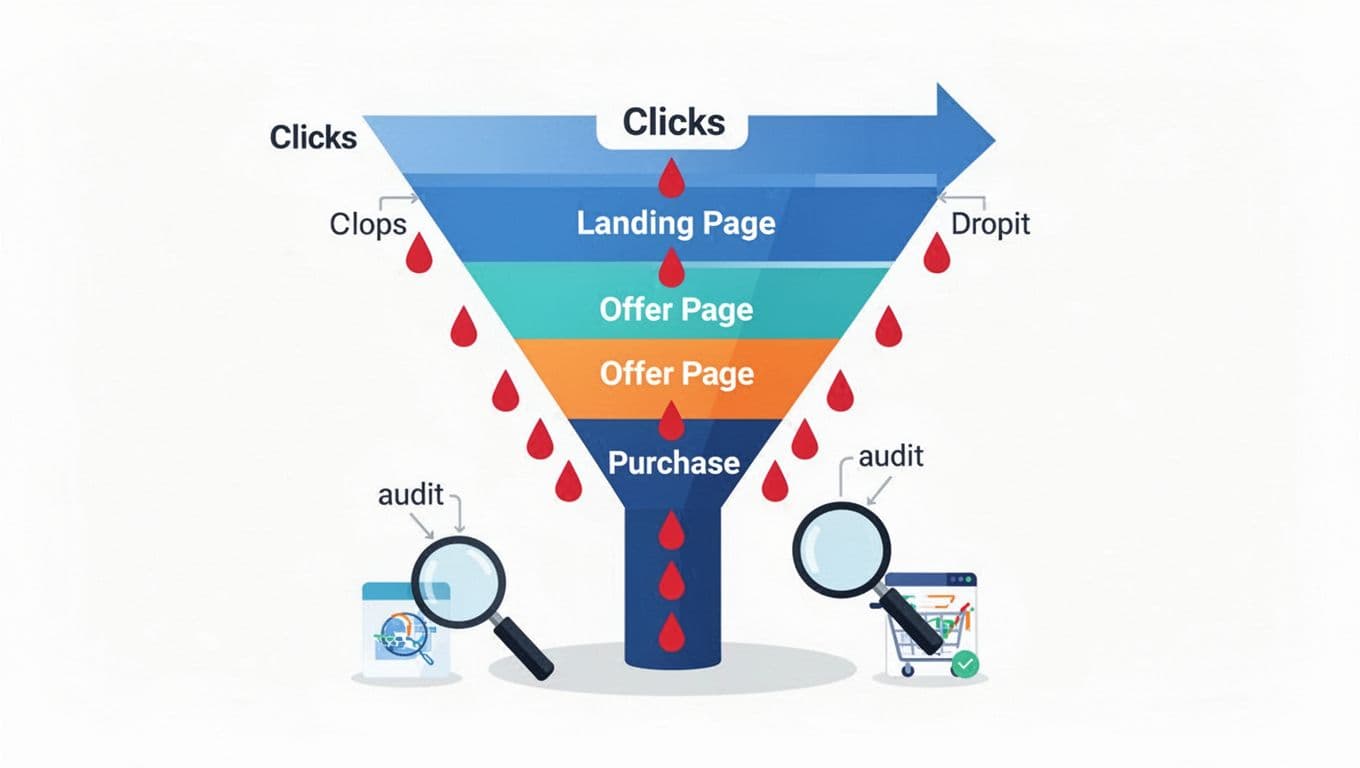
Think of your affiliate post as a short path starting at the top of funnel with search clicks and checkpoints to purchase. If you don’t know which checkpoint fails, you’ll keep “fixing” the wrong thing.
If you can’t point to the exact drop-off stage, you’re not optimizing, you’re guessing.
Use this simple map, then identify the weakest stage first:
| Funnel stage | What to check (GA4 or tools) | Common reason | Quick fix |
|---|---|---|---|
| Search click to page | Search Console click-through rate, title match | Title promises one thing, page delivers another | Rewrite title and opening to match the query |
| Page view to affiliate click | affiliate_click rate, scroll depth | Links are buried, CTA feels vague | Improve link placement and call-to-action wording |
| Click to merchant action | Merchant EPC (if available), high bounce on merchant | Landing page mismatch, geo issues | Link to the correct product page, note who it’s for |
| Purchase credited to you | Network reports, reversals, low attribution | Last-click overrides, short cookies, checkout process friction | Switch programs, add subIDs, adjust strategy |
Now add behavior data. Heatmaps and session recordings from tools like Microsoft Clarity or Hotjar are perfect here to spot bounce rate triggers. Watch 20 to 30 sessions and answer:
- Do people rage click (repeated taps) on non-clickable elements like comparison rows?
- Do they pinch zoom on mobile because the table is too wide?
- Do they bounce right after seeing a pop-up or a huge “recommended” block?
Also audit link placement. Many posts have affiliate links, but not at decision moments. This internal guide on an affiliate link placement map pairs well with the funnel approach because it helps you move the right link to the right spot as part of your digital marketing strategy, boosting conversion rate without adding clutter.
Fix intent mismatch and offer fit (the fastest conversion unlock)
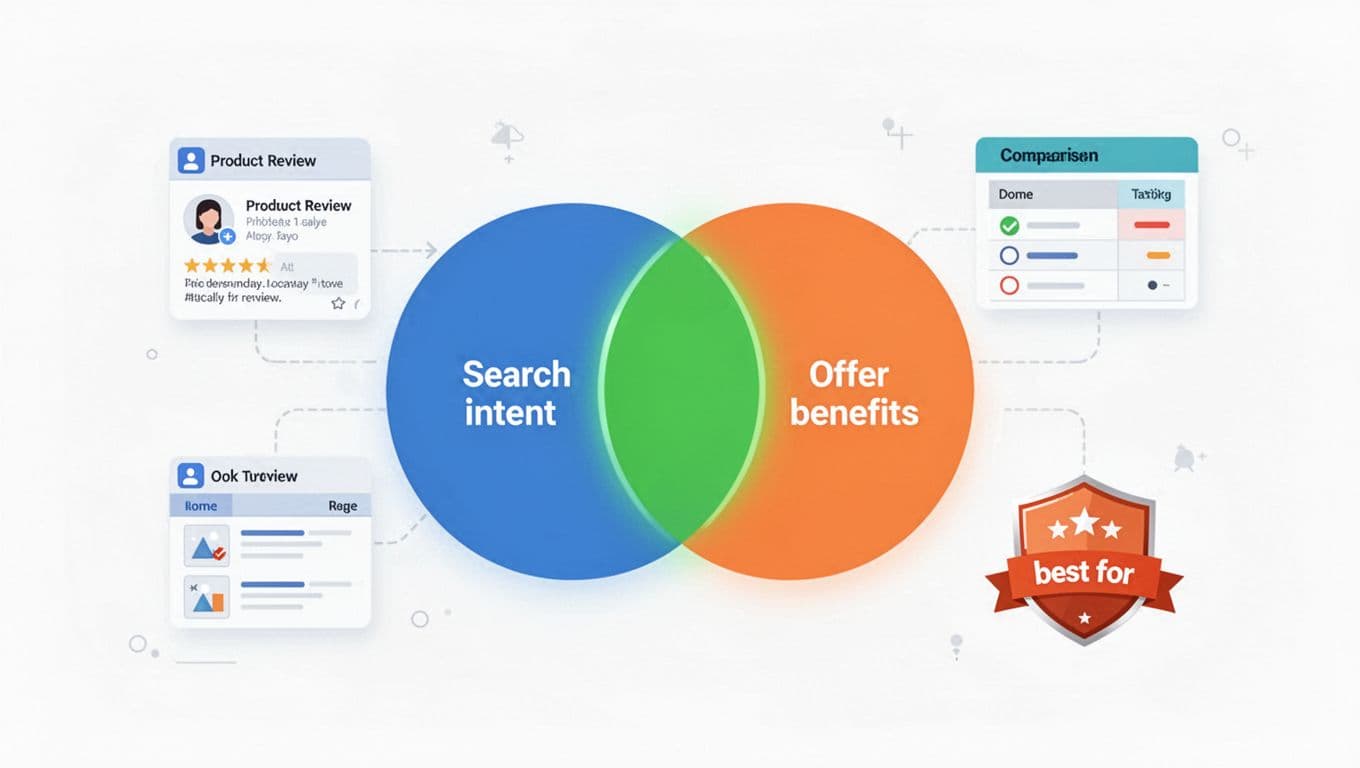
If your post ranks but doesn’t sell, your traffic might align with user intent for browsing but miss buying intent, being “curious,” not “comparing.” In 2026, that gap is common because AI summaries and SERP features often satisfy early research, while clicks that remain are more selective.
Tighten the match in three places:
- The first 120 words: Say who the recommendation is for, and who should skip it.
- Your “top pick” block: Give a clear reason, then a clean next step.
- Your comparisons: Compare what buyers actually worry about in product reviews and product descriptions, not generic features.
Use “best for” blocks with social proof to turn vague reviews into high-converting buying help. Here’s a swipeable format:
- Best for: beginners who want setup in under 30 minutes
- Why it fits: includes X, avoids Y, support is responsive
- Watch out for: higher cost after the trial, limited templates
- Next step CTA: “Check current pricing and plan limits”
Also make your comparison table do real work. These are the fields that usually matter most:
| Column | Why readers care |
|---|---|
| Best for | Helps them self-select fast |
| Key benefit | Ties to the main problem |
| Main tradeoff | Builds trust and reduces refunds |
| Price starting at | Sets expectations |
| Mobile-friendly | 2026 buyers shop on phones |
| Link | One clear action per row to the merchant landing page with details on checkout process |
If your keyword targets are part of the issue, adjust future content using a quick SERP read for niche alignment. This internal post on affiliate keyword selection in 2026 can help you shift from broad traffic to “best for X” intent that buys.
For extra structure ideas, this guide on how to write affiliate posts that convert is useful for tightening sections, headings, and skimmability.
Run a simple testing plan (hypothesis, change, metric, timeframe)
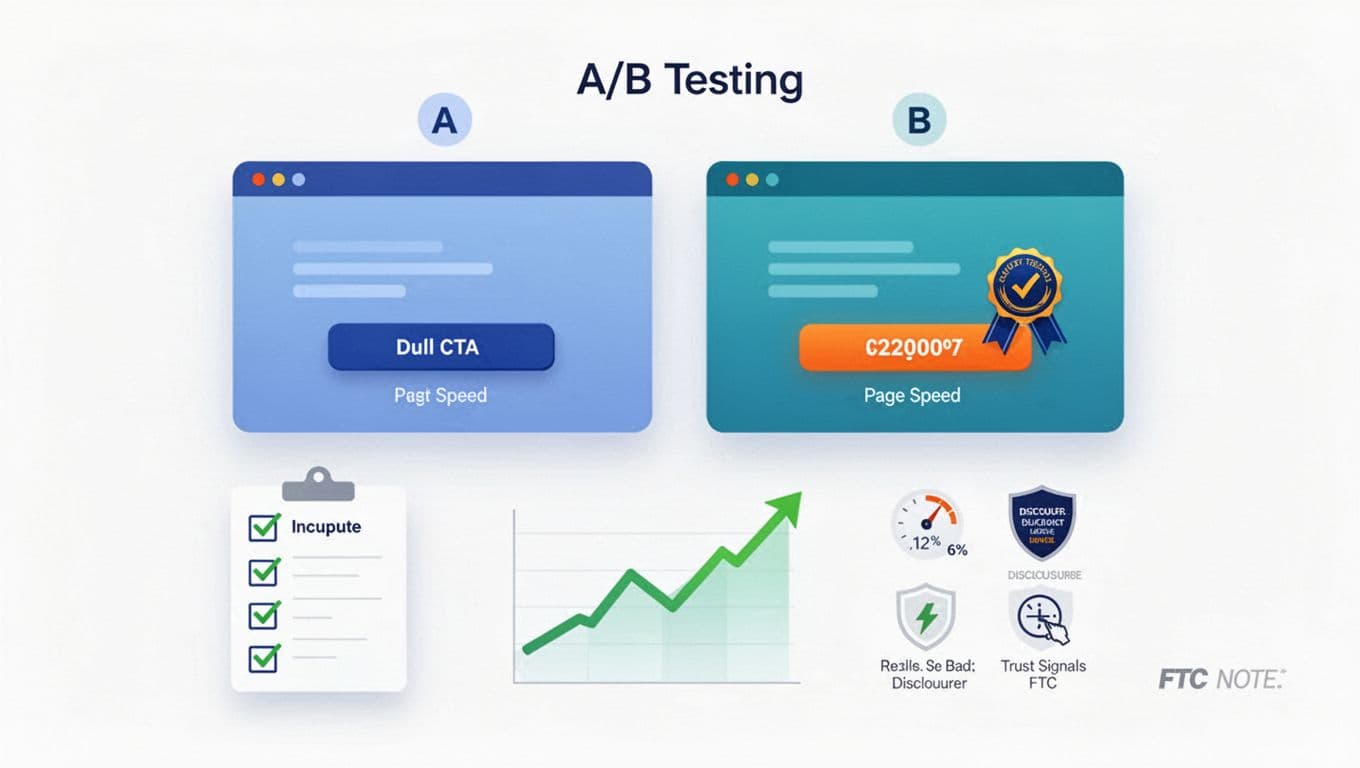
Testing is where affiliate post sales conversions and conversion rates become predictable. Keep it boring and clean: one change at a time, one primary metric, a fixed window.
Here’s a simple plan you can run this week:
- Hypothesis: “Mobile readers don’t click because the first call-to-action is too late.”
Change: Add one early CTA after the first product description.
Metric:affiliate_clickrate (mobile segment).
Timeframe: 7 days, or 500+ pageviews. - Hypothesis: “Readers don’t trust the recommendation.”
Change: Add a short “How I chose these” box plus one high-quality image or trust signal to build customer confidence.
Metric: Click rate plus time on page.
Timeframe: 14 days. - Hypothesis: “The CTA is vague.”
Change: Swap generic buttons for specific copy.
Metric: Clicks on that link (use event parameters for link position).
Timeframe: 7 days.
Sample call-to-action copy that usually beats “Buy now” for affiliate posts:
- “See what’s included (and what’s not)”
- “Check current pricing and free-trial terms”
- “View plans for beginners”
- “Compare features on the official landing page”
Finally, protect your tracking for affiliate links. If clicks look healthy but credited sales stay weird, attribution rules may be the culprit, including merchant landing page mismatches, checkout process glitches, or cart abandonment patterns. This internal breakdown on last-click attribution traps can help you spot coupon overwrites and other issues that quietly erase your commissions. For high-volume affiliate sites using targeted advertising, where return on ad spend matters most, it also helps to run a quick screen using this affiliate program vetting checklist before you commit to any offer.
Conclusion
Website traffic with no sales conversions feels personal, but boosting your conversion rate is usually a fixable affiliate marketing system problem. Confirm your tracking, locate the exact drop-off, then tighten intent match, trust, mobile friction, and broken links. After that, run one small test per week and track affiliate post conversions with clean GA4 events. The posts that win in 2026 don’t shout louder; they remove doubt with product reviews, social proof, trust signals, and product descriptions to make the next step obvious.