
Most EPC problems start before the offer page loads. If your link sends a ready buyer to a homepage, you’ve added friction at the worst moment.
In 2026, affiliate deep links do more than skip a click. They improve click quality, protect attribution, and move people to the exact product, bundle, trial, or promo that matches the promise they just saw. When the landing page fits the intent, EPC usually rises fast.
Here’s how to build a deep-link system that works across content, email, social, and paid traffic.
Why affiliate deep links raise EPC
Affiliate deep links send readers to the page they expected to see, not the merchant’s front door. That’s the first win. People who click to a specific SKU, category, pricing page, or promo usually have stronger intent than visitors dropped onto a broad storefront.
That improves click quality. A reader who taps “see current bundle price” and lands on that bundle is still on the same mental path. A generic landing page breaks that path. Some users browse around, but many bounce.

Conversion rate rises for the same reason. Relevance lowers friction. It also helps mobile users, because extra taps feel heavier on a phone, especially inside in-app browsers. If the merchant page loads fast and matches the article, ad, or email copy, more clicks turn into carts.
Deep links can also lift average order value. Sending traffic to a bundle, annual plan, or filtered collection often beats linking a single low-ticket item. ReferralCandy’s guide to SKU-level performance tracking shows why product-level links make it easier to see which landers drive revenue, not only clicks.
EPC rises when all three inputs improve. Still, one leak can wipe out gains: attribution. Short cookie windows and harsh last-click rules can erase value if a coupon site or brand ad steals the final touch. Before scaling, review common last-click attribution traps so your best clicks don’t get underpaid.
Deep link plays for each traffic source
The best destination changes with the traffic source, so a quick side-by-side view helps.
| Traffic source | Best deep link | Main EPC gain |
|---|---|---|
| Content site article | Exact product, bundle, or filtered collection tied to the section | Higher click quality |
| Email campaign | Pricing page, free trial, or approved promo page with sub-ID | Better conversion and attribution |
| Social traffic | Mobile-first product page or low-clutter collection | Fewer drop-offs |
| Paid traffic | Pre-sold merchant page matched to ad intent | Lower bounce rate |
| Product comparison page | Row-level product, plan, or coupon page | Cleaner testing and stronger AOV |
The pattern is simple: tighter intent needs tighter linking.
For content sites, use deep links where intent sharpens, after a use case, beside proof, or inside comparison tables. If you’re updating older posts, follow a safe workflow when you add affiliate links to old posts so the page keeps its original search intent.
Email deserves even more precision. New-subscriber clicks often do best on pricing, free trial, or curated promo pages, not homepages. Tag each send with simple tracking parameters or sub-IDs, such as source, campaign, placement, and geo. Then you’ll know whether the lift came from the email, the destination, or the offer.
Social traffic needs mobile-first destinations. Send people to fast product pages, clean collections, or approved promo pages built for small screens. If your traffic is global, use geo-targeting so UK users see GBP pricing and US users see USD pricing. SmartLinks that route by device or location are gaining ground, and this 2026 SmartLink guide explains why they’re useful when traffic mixes vary.
Paid traffic is stricter. Match your keyword or ad angle to the exact merchant landing page, or to a pre-sell page you control. On comparison pages, each button should land on the matching product or plan, not the brand homepage. If you need cleaner placement ideas, this affiliate link placement map is a strong companion.
Build a testing system, not random links
Deep link strategy works best when every link has a job. Use sub-IDs or tracking parameters for page type, slot, device, and angle. Simple naming wins, for example blog, table, mobile, or email-welcome. If your network supports landing-page IDs, capture those too.
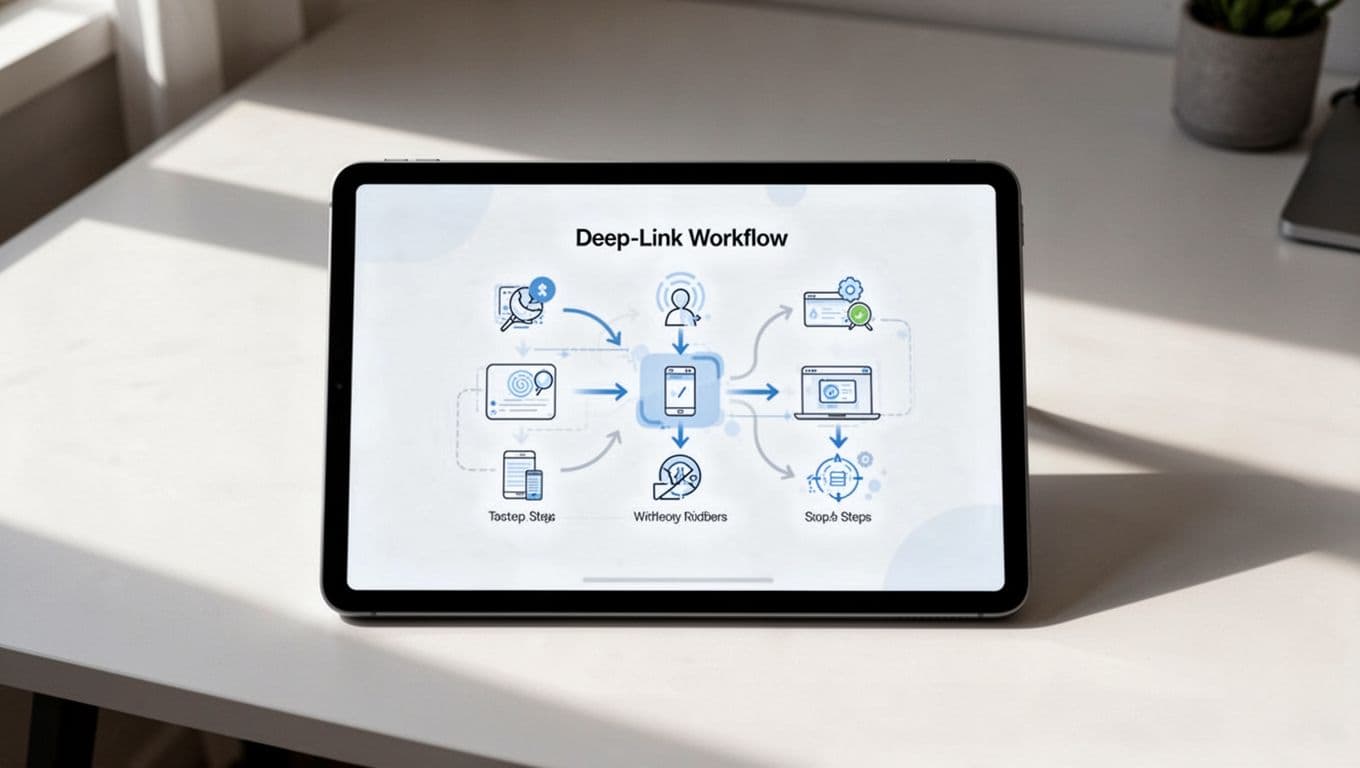
Then test one variable at a time. Start with destination page, single product versus bundle versus pricing page. Next, test offer framing, such as “see pricing” against “claim 20% off.” After that, split mobile and desktop EPC, because the best lander for a desktop reader may fail on a phone.
A common miss is coupon traffic. A coupon or promo page deep link can convert well late in the funnel, but it can also train people to leave and search for codes. Keep those links on deal pages, bottom-funnel emails, and comparison content, not all across your site.
If the landing page doesn’t finish the sentence started by the click, EPC drops.
Before you scale, vet the merchant. Check attribution windows, coupon rules, paid search limits, geo restrictions, and whether sub-IDs appear in reporting. This affiliate program checklist helps catch weak tracking early. If a merchant offers several routing options, this explanation of tracked URLs versus direct landers is worth reading.
Deep link best practices checklist
- Match the click promise to the merchant page.
- Split reporting by channel, device, GEO, and placement.
- Prioritize fast mobile UX for social and email traffic.
- Use bundle or annual-plan landers when they raise AOV.
- Send coupon traffic only to real, approved promo pages.
- Watch attribution windows before pushing more spend.
- Test destination pages before rewriting the whole offer.
- Refresh expired deep links in old posts, emails, and tables.
Affiliate deep links aren’t a minor tweak. They’re the bridge between intent and revenue. When the page, offer, device, and traffic source line up, click quality improves and EPC usually follows.
Pick one high-traffic page or one active email flow this week. Replace the homepage link with a tighter destination, tag it properly, and measure the change. Better alignment is often the fastest EPC lift available in 2026.