
That affiliate application denial email stings, even more when it doesn’t tell you what you did wrong. In 2026, in the world of affiliate marketing, many affiliate programs use manual review, so small gaps (missing pages, unclear traffic sources, thin content) can trigger an instant “no.”
The good news: most affiliate program rejection cases aren’t permanent. They’re a signal that your site or channel needs clearer trust signals, cleaner compliance, and a tighter “here’s how I’ll promote you” plan.
What programs actually review in 2026 (and what gets you auto-denied)
Think of an affiliate manager like a bouncer at a club. They don’t just check your ID. They scan your vibe, your intent, and whether you’ll cause problems inside.
In 2026, most programs filter applicants using a few fast questions:
- Is the niche a match? If your website content doesn’t align with their target market, they’ll pass.
- Is this a real property? “Coming soon” pages, thin sites with scraped content, and empty channels look risky.
- Can we trust the promotion methods? Programs often reject people who can’t explain traffic sources or rely on prohibited tactics (spam, brand bidding, incentives).
- Is the application generic? Copy-pasted answers get flagged. Some managers also reject applications that look AI-written or auto-submitted, because it often correlates with low effort and inaccurate claims (see this manager perspective on why some programs reject AI-heavy affiliate applications).
Finally, many rejections are just “fit.” Some brands want content partners, not coupon sites. Others want creators with proof of audience trust. If you want a quick list of common decline reasons from a program-side angle, this guide on why your affiliate application declined matches what many managers look for.
Troubleshooting affiliate application denial (fixes in the right order)
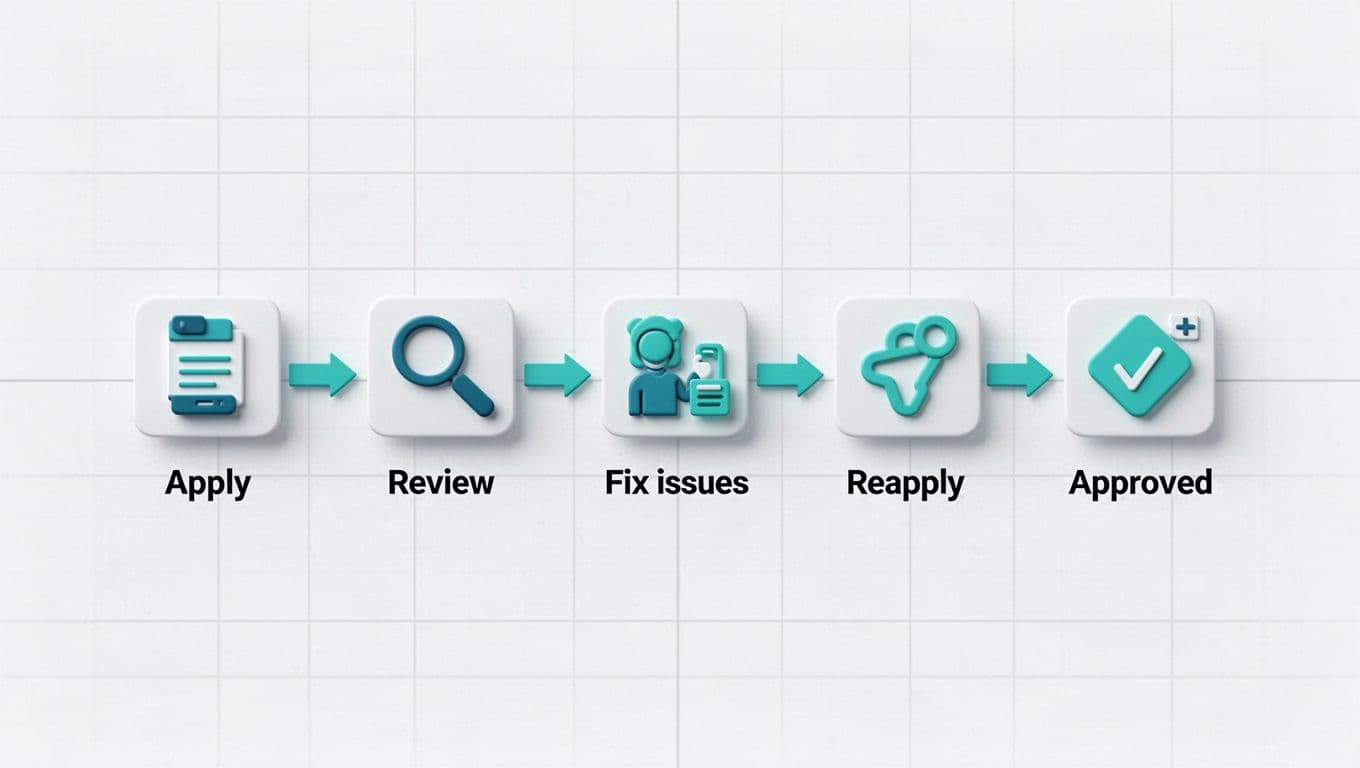
Use this table to diagnose the most likely reason first, then fix it before you reapply. “Time to reapply” is a practical guideline, always follow that program’s rules if they state a waiting period.
| Likely reason (priority) | How to confirm | Fix that usually works | When to reapply |
|---|---|---|---|
| Missing trust pages (About, Contact, Privacy) | Check header/footer and mobile menu | Add About (who you help), Contact (email/form), Privacy + cookie note | 1 to 3 days |
| Thin or unfocused content | Count posts, check depth and relevance | Publish 8 to 12 niche-focused posts, include real comparisons and FAQs | 7 to 21 days |
| No clear traffic source | Your application doesn’t explain it | Add a short promotional strategy, include promotional methods and what content you’ll publish | 1 to 7 days |
| Site looks unfinished | Placeholder theme, broken links, “under construction”, poor domain name | Improve site design, remove filler pages, improve readability and speed | 3 to 10 days |
| Unclear disclosures | Affiliate links appear before any disclosure | Add a simple disclosure near the top and near key affiliate links | 1 to 3 days |
| Coupon, deal, or incentive angle | Your site pushes discounts, rebates, “DM me” offers | Switch to content-led reviews, remove incentive language | 14 to 30 days |
| Application looks copy-pasted | Same generic text used everywhere | Rewrite answers with brand-specific details and your audience match | Same day (after edits) |
A helpful extra cross-check: network-level rejections often follow the same patterns across brands. This FAQ on why affiliate networks reject applications is a quick reality check if you keep getting denied in different places.
On-site compliance checklist (quick but thorough)
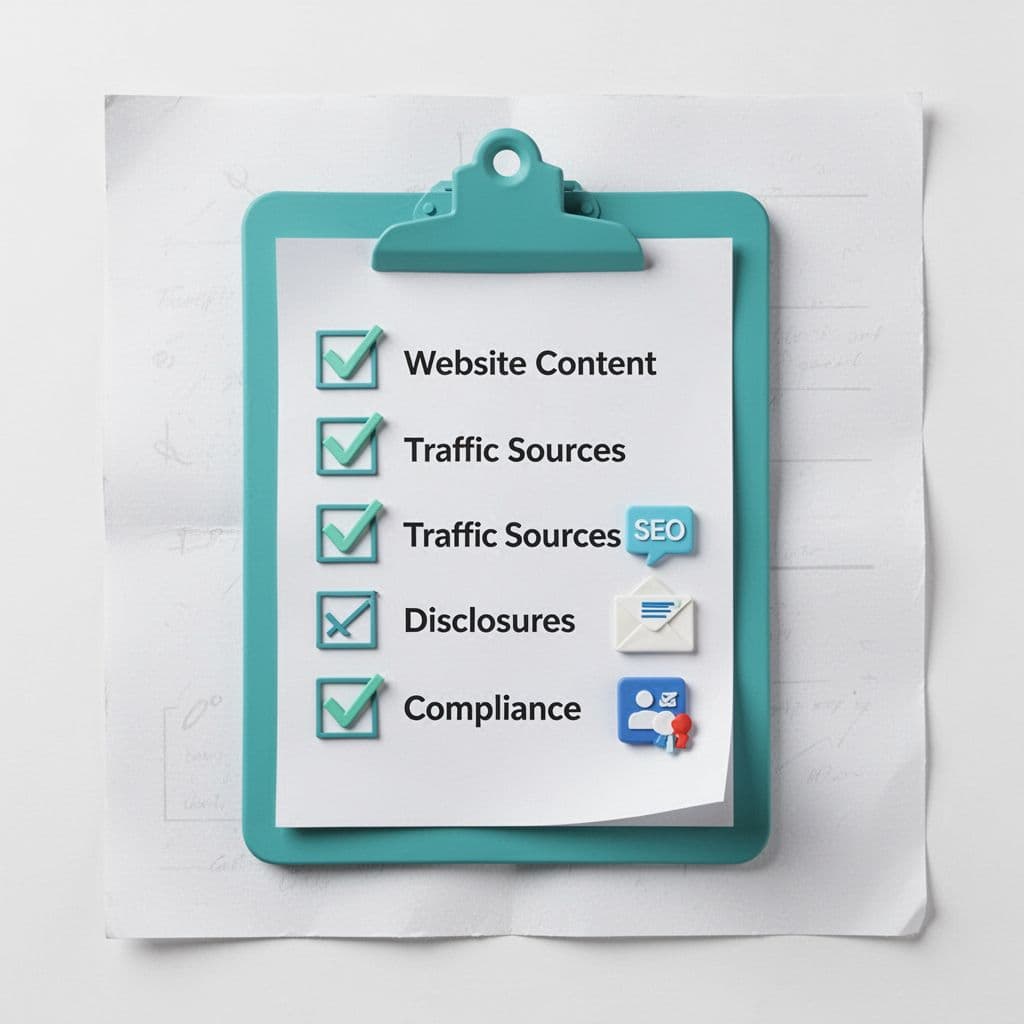
Keep this tight and visible. If a manager can’t find these fast, approval odds drop.
- FTC-style disclosures: Put a plain disclosure before the first affiliate link (not hidden in the footer).
- Privacy and cookies: Publish a privacy policy and mention cookies/analytics in plain language.
- About and Contact: Include a real email address or form, plus a clear “who this site is for.”
- Content depth: Avoid one-paragraph posts. Add original screenshots, comparisons, or experience-based tips.
- No “thin affiliate” layout: Don’t build pages that exist mainly to push links. Avoid banner farms. If you need help placing links without turning your post into a billboard, use this internal guide on the affiliate link placement map.
- No misleading claims: Don’t promise earnings, results, or “guaranteed approval.”
If you wouldn’t feel comfortable showing your traffic proof and promo methods to a brand on a video call, don’t submit that application yet.
Cautions: misrepresentation and prohibited incentives
Programs are stricter in 2026 because fraud got easier. Ensure all activities align with the program’s terms and conditions. Avoid these traps:
- Misrepresentation: fake traffic screenshots, bought followers, fake “team” identities, or claiming an email list you don’t have.
- Prohibited incentives: cashback, rebates, gift cards, “I’ll split my commission,” forced coupon placement, or self-referrals (unless the program explicitly allows it).
- Unauthorized paid ads: brand bidding or direct-link PPC often violates terms, even when it “works.”
Reapply by platform (blog, YouTube, TikTok, newsletter) + exact email scripts

Blog (content sites)
First, show you’re not a “random link dropper.” Add relevant posts that match the brand’s product category and buyer intent. Then, update your About page to name the audience you serve.
In your reapplication note, include: your best-fitting post URL, what keyword/topic it targets, traffic statistics, and how you’ll add the brand naturally (comparison table, “best for” section, tutorial).
If you’re still choosing topics, this internal guide on affiliate keyword selection in 2026 helps you pick terms that actually drive conversion.
YouTube
Programs want to see consistent publishing and clear disclosures. Add your disclosure in the video description near the top, and mention it verbally when appropriate. When you reapply, share 1 to 3 relevant video links, traffic statistics, and your channel’s main viewer location.
Also explain how you drive clicks: pinned comment, description links, and a “resources” section on your site.
TikTok
TikTok approvals often fail because traffic sources look unclear or risky. Clean it up by switching from hype clips to proof-based short demos, simple comparisons, and “who it’s for” framing.
When you reapply, describe your content format (for example, 3-part series), typical views, social media engagement, and how you send traffic (Linktree-style hub, website page, or email list). Keep it honest and simple.
Newsletter
If your list is opt-in and engaged, say so. Share list size, typical open rate range (if you’re comfortable), and how often you send. Brands care about spam risk, so clarity matters more than big numbers.
Email script 1 (friendly, specific, fix-forward)
Subject: Quick follow-up on my [Brand] affiliate application
Hi [First Name],
Thanks for reviewing my affiliate application for [Program Name]. I was declined, so I tightened a few things on my end, updated my account information, and wanted to reapply and re-check fit.
Here’s what I changed:
- Added/updated my About, Contact, and Privacy pages
- Published new posts/videos focused on [product category] for [audience]
- Added clear affiliate disclosures near key links
Best example content: [URL 1]
Traffic sources: [Organic search / YouTube / TikTok / Email], mostly from [top countries]
If there’s a specific requirement I’m missing, tell me and I’ll fix it fast.
Thanks,
[Your Name]
[Site/Channel URL]
Email script 2 (professional, short, numbers-based)
Subject: Reconsideration request, [Program Name] (updated assets)
Hello [First Name],
I’m requesting reconsideration for [Program Name]. Since the decline, I’ve improved my affiliate compliance and content quality, with no paid traffic or trademark bidding.
- Primary audience: [who you help]
- Promotion methods: [blog/YouTube/TikTok/newsletter], no incentives
- Proof of fit: [URL], [URL]
- Current reach: [monthly visitors or average views], [email list size if relevant]
If you can share the decline reason, I’ll address it directly.
Regards,
[Your Name]
[Website] | [Country]
Conclusion
Affiliate rejections feel personal, but they’re usually procedural. Receiving negative feedback from a brand is an opportunity to improve. Frame the recovery steps as a formal appeal process: fix trust pages, tighten compliance, publish deeper niche content, then reapply with a clear promo plan and proof. Most importantly, stay honest, because misrepresentation can get you banned across networks. After you send the follow-up, keep building assets for long-term success in affiliate marketing so the next “yes” is easier than the last.