
Readers can spot a thin review fast. If a post jumps from praise to a buy button, trust drops. A clear affiliate review methodology statement fixes that. It tells people how you pick products, how you test them, and why commissions don’t control the outcome.
That short section works like showing your math. Instead of asking for blind trust, you show the rules behind the review. Below, you’ll get a copy-and-paste template, niche-specific examples, and a simple way to adapt it for SaaS, consumer tech, web hosting, and physical products.
Why a methodology statement builds trust faster than a disclosure alone
An affiliate disclosure tells readers you may earn a commission. A methodology statement tells them why your review still deserves attention. You need both, because they do different jobs.
Most readers don’t expect total neutrality. They do expect honesty. They want to know whether you tested the product, what counted in the score, and whether you update old reviews when things change.
When that information is missing, people fill the gap with doubt. Was the top pick chosen because it works, or because it pays more? Was the review updated this year, or copied from launch day? A good methodology statement answers those doubts before they grow.
Trust rises when readers can see your standards before they see your recommendation.
A strong statement should quietly answer five questions:
- How products are chosen
- How testing happens
- What criteria matter
- How often reviews get updated
- How affiliate relationships are disclosed
Keep it plain. Skip legal-sounding fluff. If you want simple wording for the money side of things, these affiliate disclosure examples can help you keep the language clear and human.
What a strong affiliate review methodology should include
The best statements are short, but they aren’t vague. They read like a mini editorial policy.
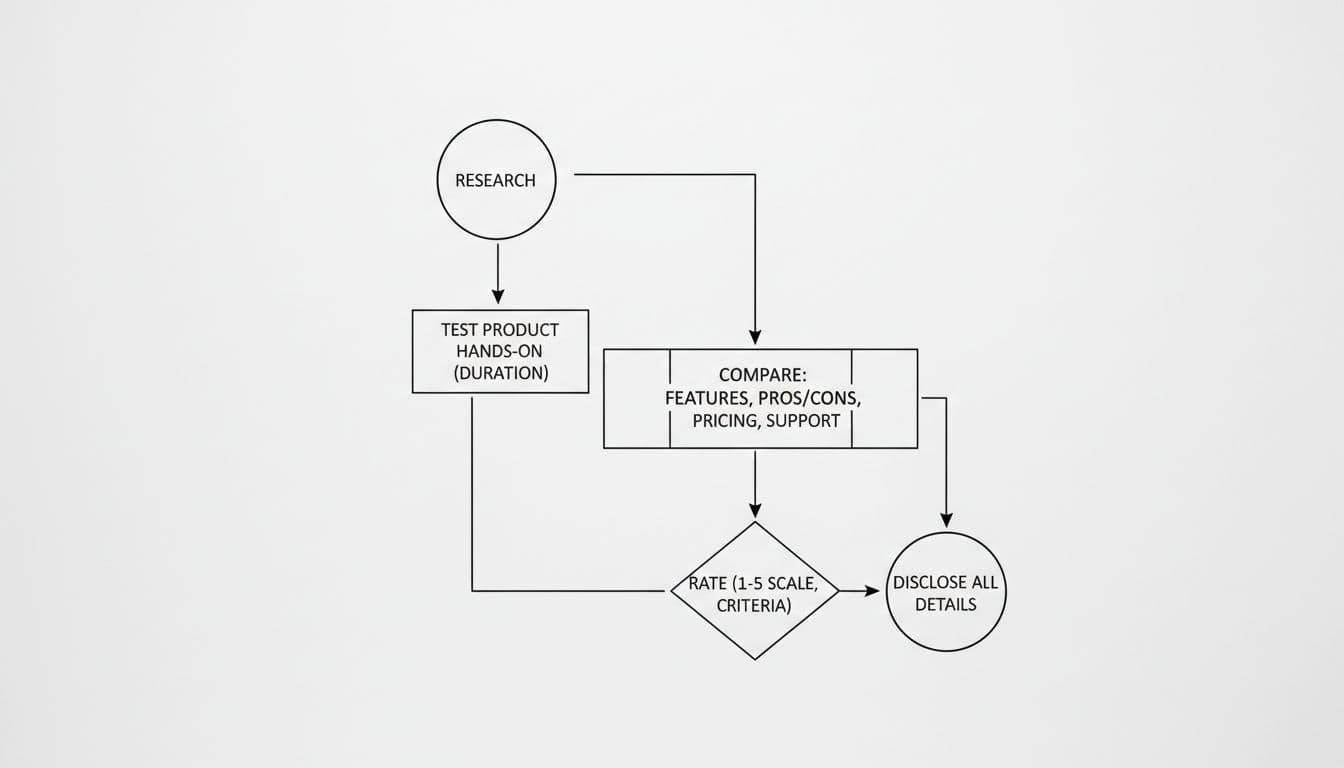
Start with product selection. Tell readers how products make the list. That might mean market demand, relevance to your audience, hands-on access, or strong user interest.
Next, explain testing. Be specific. “We tested this over 14 days” is stronger than “we reviewed this carefully.” If you couldn’t test something directly, say so, and explain what sources you used instead.
Then name your criteria. Common ones include ease of use, features, support, pricing, reliability, and value. Fixed criteria matter because they show that every product faces the same measuring stick.
After that, state your update policy. SaaS tools, hosting plans, and app pricing can change fast. If you revisit those reviews monthly or quarterly, say it. If you update physical product reviews less often, say that too.
Last, mention editorial independence. Readers need to hear that commissions do not buy higher rankings. Back that up with proof when possible. Screenshots, test notes, and product photos work well, especially in reviews. If you need ideas, this guide to lightweight proof for affiliate reviews shows how to add evidence without cluttering the page.
Copy-and-paste affiliate review methodology statement template
Use this as your base, then replace the bracketed parts with your real process.
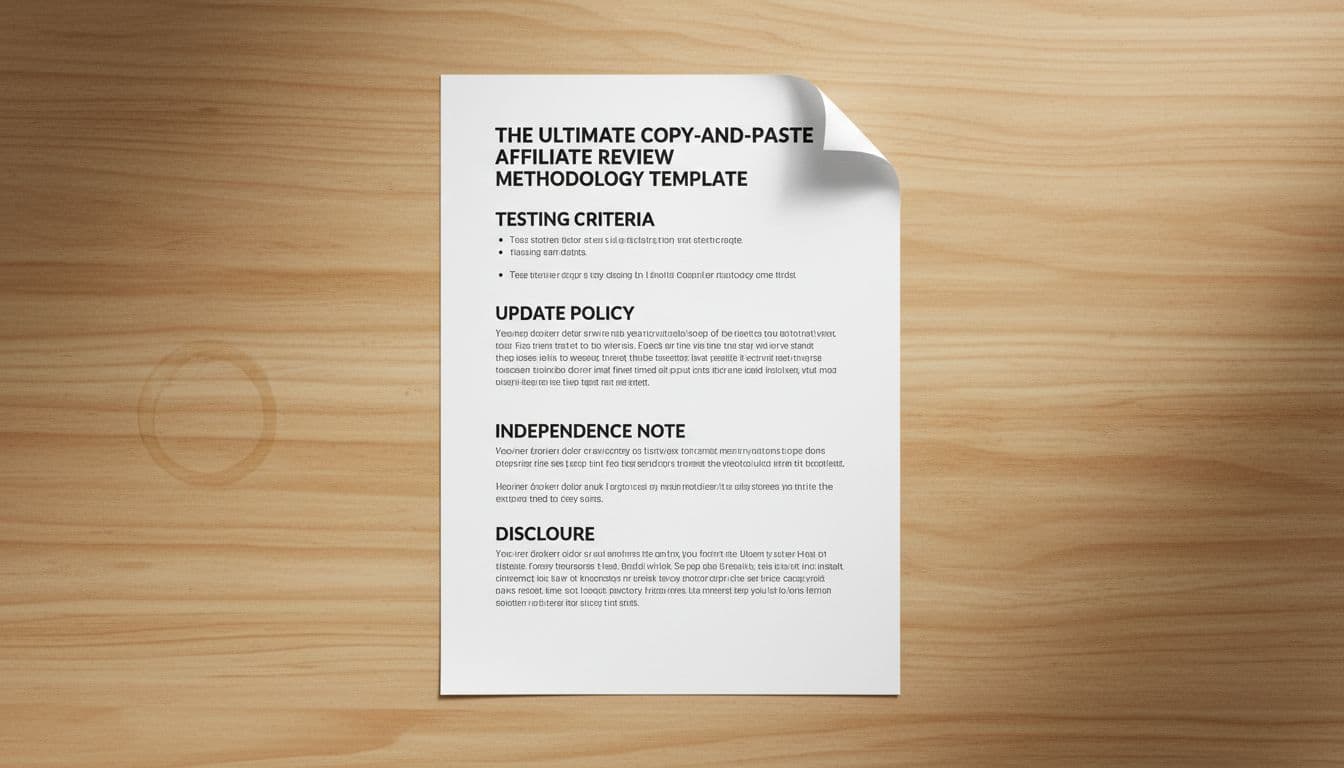
Review Methodology
We choose products for review based on reader relevance, product reputation, market demand, and fit for the problem this page addresses.
When possible, we test each product hands-on in a real-use setting for at least [time period]. If direct testing isn’t possible, we use verified documentation, customer feedback, support interactions, and side-by-side comparison with close alternatives.
We score products using fixed criteria, including [criteria 1], [criteria 2], [criteria 3], [criteria 4], and overall value.
Affiliate partnerships do not affect our ratings or rankings. If a product has clear weaknesses, we include them.
We review and update this page every [time period], or sooner if pricing, features, support, or product quality changes.
Some links on this page may be affiliate links, which means we may earn a commission at no extra cost to you.
Place this near the top of the article, or right before your first recommendation. Then add shorter disclosures near buttons, tables, and product boxes. If you need help with that, this guide on where to place affiliate links is useful.
Example statements for different affiliate niches
SaaS: We tested this tool for 21 days using real workflows, including setup, automations, reporting, and support. Scores reflect ease of use, feature depth, pricing, and how well the tool performs for beginners and small teams.
Consumer tech: We tested this product in normal daily use and compared it against similar models in the same price range. Ratings focus on setup, performance, comfort, build quality, battery life, and value.
Web hosting: We reviewed this host using setup speed, dashboard ease, support response, uptime tracking, pricing, and renewal terms. Hosting pages are rechecked often because plans, promos, and performance can change.
Physical products: We used this item over multiple sessions in real conditions, not just during unboxing. Ratings focus on quality, durability, ease of use, comfort, and whether the product matches its claims.
How to adapt the template without sounding robotic
First, swap vague phrases for real test conditions. For SaaS, mention tasks completed, trial length, and whether you contacted support. For hosting, mention uptime checks, migration, and setup speed. For physical products, say how long you used the item and in what conditions.
Next, trim your criteria to what buyers actually care about. A five-part score feels credible. A 14-part score often feels padded. Keep the list tight and relevant to the niche.
Then add an update rhythm that fits the product type. Hosting and software reviews need frequent checks. Consumer tech may need updates when firmware, pricing, or stock changes. Physical products usually need fewer refreshes unless quality slips or a new model replaces the old one.
Finally, disclose every material connection clearly. If you got a free sample, early access, or bonus compensation, say so. Small details like that can make the difference between suspicion and trust.
A review without a methodology sounds like an opinion. A review with one feels tested, fair, and accountable. Build your statement once, tailor it by niche, and reuse it across your review pages. When readers can see your standards, they’re far more likely to believe your conclusions.