
In the era of AI-powered search, adding affiliate schema markup can feel like putting a “VIP pass” on your content. Done right, proper structured data implementation with well-configured schema markup code helps search engines understand what’s on the page, especially via product schema markup and review schema markup. Done wrong, it looks like you’re trying to dress up thin content lacking E-E-A-T signals with fake signals.
In 2026, the safest approach is also the simplest: only mark up what a reader can clearly see, only claim what you can prove, and don’t copy-paste the same structured data across your whole site. Proper labeling with schema aids Knowledge Graph inclusion. Think of schema like a label on a jar; if the label says “honey” but the jar is full of syrup, someone’s going to notice.
What triggers spam signals with affiliate schema markup in 2026
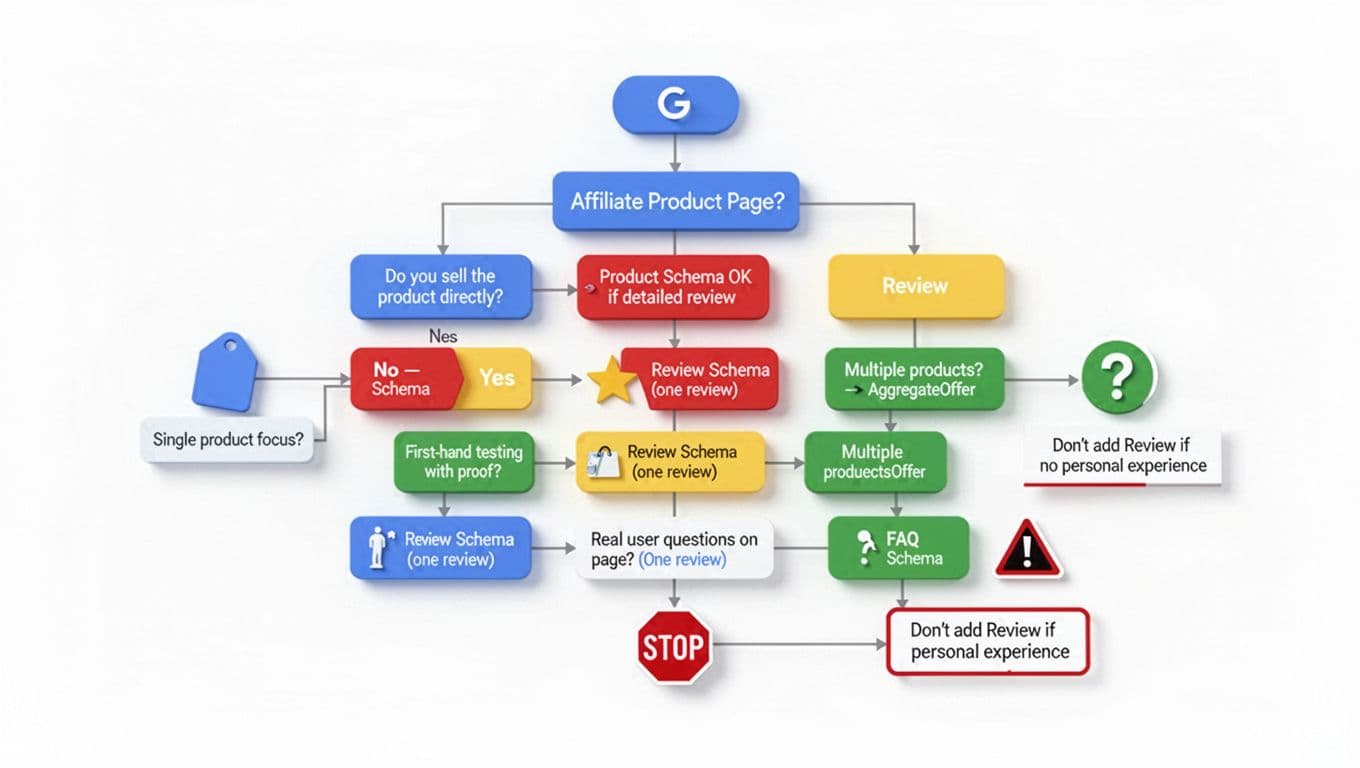
Most “schema penalties” aren’t really penalties. More often, Google just ignores your markup, drops your rich results, or flags pages in Search Console. The patterns that cause problems are predictable, particularly in AI-powered search where automated systems flag suspicious patterns:
Mismatch is the #1 tripwire. If your schema markup code says there are FAQs, star ratings, or a price, those items must be clearly visible on the page (not hidden in tabs users never open, not loaded only after a click, and not “implied”). This violates Google quality guidelines, which is why templated schema markup code is risky.
Boilerplate reviews across many pages also stand out. If 300 pages all have the same “Our verdict: 5/5” with a Review object, Google Search Console will identify these issues. Your structured data implementation must be unique to each page to boost user experience signals and avoid looking like mass-produced markup. A human reader wouldn’t trust it, and neither will Google.
First-hand experience signals matter more now. If you’re publishing a review, show how you tested it. Screenshots you took, photos, a short setup log, performance notes, or even “what surprised me after 7 days.” This builds stronger E-E-A-T signals. If you need a solid on-page structure for this, use a repeatable layout like this product review post structure.
To keep your structured data implementation conservative, treat schema as a mirror. It should reflect the page, not “upgrade” it. This approach strengthens E-E-A-T signals overall and forms a vital part of a long-term affiliate marketing strategy. For broader context on how structured data is being interpreted in AI-driven results, see Schema Markup for AI.
Product schema for affiliate pages (with offers) without over-claiming
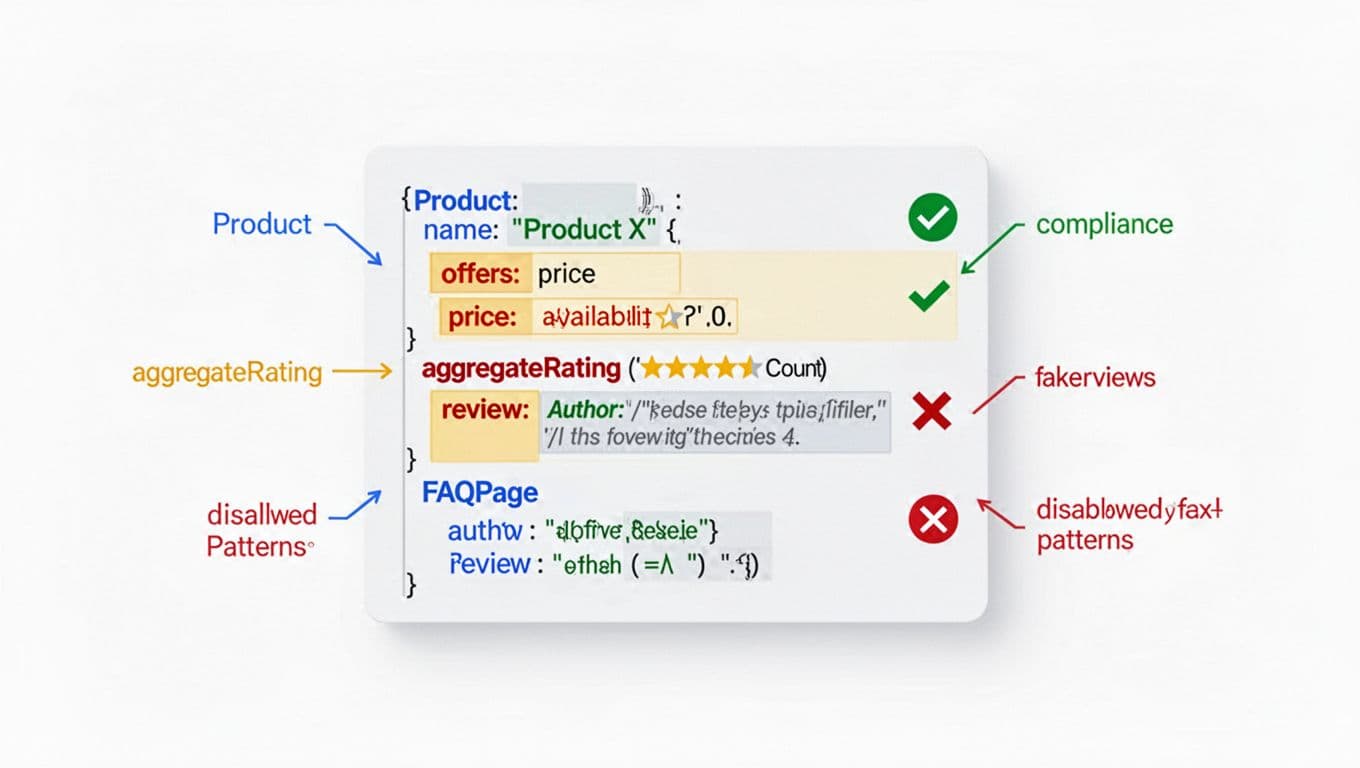
For affiliates, Product schema markup is safest when the page is clearly about one specific product (a single-product review or a “Product X pricing and features” guide), rather than Local business schema or Organization schema markup. If it’s a roundup, don’t force one Product across the whole page.
The hard rule: only include offers (price, availability, seller) if you show that same information on-page and you keep it updated. If you can’t keep prices fresh, it’s better to omit price fields than publish stale data. Consistent structured data implementation ensures accuracy.
Here’s a practical example of schema markup code in JSON-LD format for Product schema markup with offers (use your real values and show them on-page):
{
  "@context": "https://schema.org",
  "@type": "Product",
  "name": "Example Keyword Research Tool",
  "image": "https://example.com/images/example-tool.jpg",
  "description": "A keyword research tool for bloggers that includes topic ideas and SERP analysis.",
  "brand": { "@type": "Brand", "name": "ExampleCo" },
  "sku": "EX-KW-001",
  "offers": {
    "@type": "Offer",
    "url": "https://example.com/example-tool",
    "priceCurrency": "USD",
    "price": "49.00",
    "availability": "https://schema.org/InStock"
  }
}
This schema markup code provides a reliable template. A few conservative choices that reduce risk:
- Use Product schema markup on single-product focus pages, not category pages or those suited to Local business schema.
- Affiliates should prioritize product types over Local business schema, Organization schema markup, or broad Local business schema applications for specific product pages.
- If the affiliate link redirects, keep the
offers.urlconsistent with what you present to users for solid structured data implementation. - Don’t add aggregate rating schema unless you have a real, displayed rating average and count sourced from actual reviews you can audit; the same applies if considering aggregate rating schema enhancements.
If you want a refresher on schema types and how they’re commonly set up in CMS tools, Rank Math’s schema markup guide is a helpful reference point (even if you don’t use that plugin).
Review schema and FAQPage schema that stay compliant (plus when not to use them)
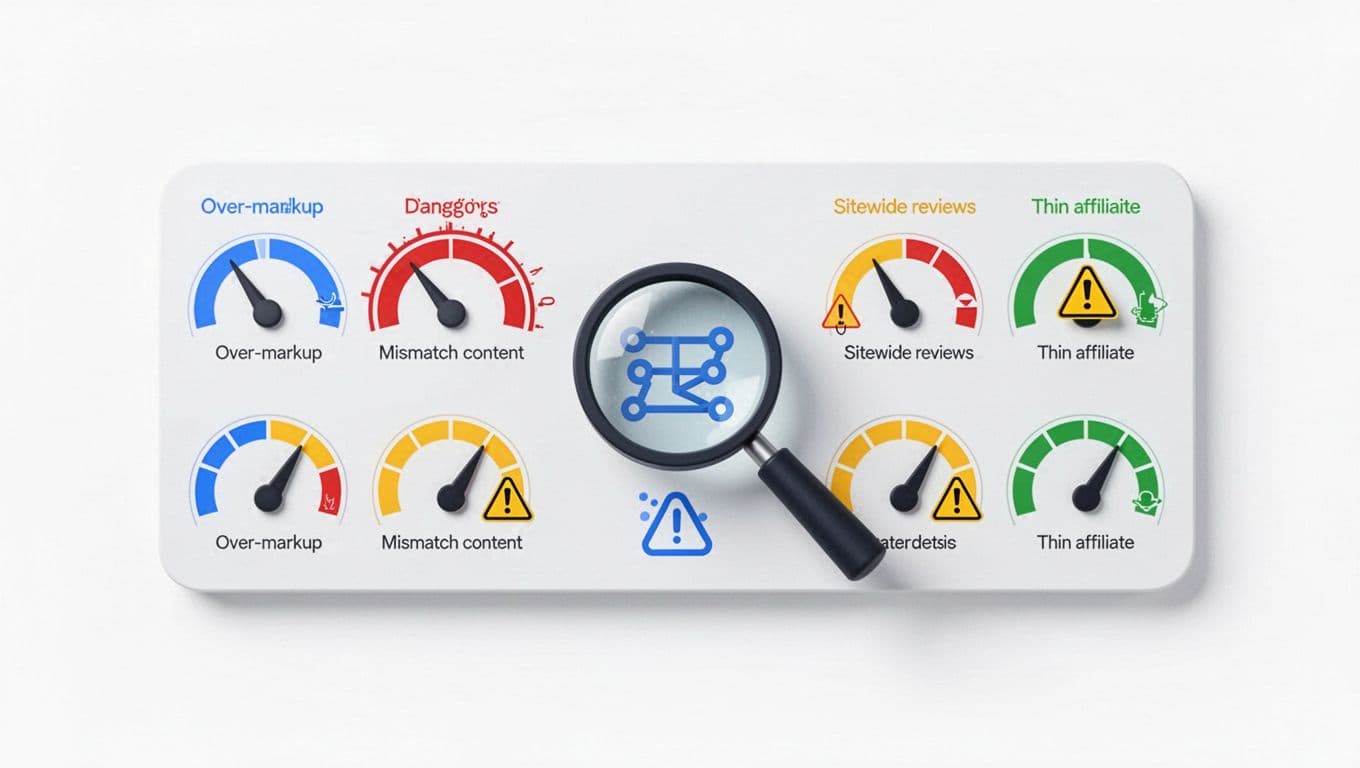
A compliant Review example (and when NOT to use Review schema markup)
Use Review schema markup when the page contains your original review text of a single product and you can back it up with first-hand use, which strengthens E-E-A-T signals. Keep it one clear review, not a “review farm.” Proper Review schema markup like this can enable star ratings in search results, improving click-through rate.
Do not use Review schema markup if:
- You didn’t test it (no personal experience, no evidence).
- The page is a roundup (“best X”) and each item only has a short blurb.
- You’re recycling the same verdict text sitewide.
- You’re trying to mark up “customer reviews” that aren’t actually shown on the page.
Example Review schema markup code (make sure the review text appears on-page):
{
  "@context": "https://schema.org",
  "@type": "Review",
  "itemReviewed": {
    "@type": "Product",
    "name": "Example Keyword Research Tool"
  },
  "reviewRating": { "@type": "Rating", "ratingValue": "4", "bestRating": "5" },
  "author": { "@type": "Person", "name": "Your Name" },
  "datePublished": "2026-02-01",
  "reviewBody": "Setup took about 15 minutes. The keyword suggestions were strong, but rank tracking felt limited for large sites."
}
FAQPage that doesn’t look templated
FAQ schema implementation works when it answers real buyer questions, in plain language, with answers that actually help. The fastest way to trigger spam signals is to reuse the same five FAQs on every review page. Proper FAQ schema implementation with relevant questions ensures search intent alignment.
Example schema markup code for FAQPage (only if the Q&A is visible on-page):
{
  "@context": "https://schema.org",
  "@type": "FAQPage",
  "mainEntity": [
    {
      "@type": "Question",
      "name": "Does the tool offer a free trial?",
      "acceptedAnswer": {
        "@type": "Answer",
        "text": "Yes, it offers a 7-day trial. You can cancel before the trial ends to avoid charges."
      }
    },
    {
      "@type": "Question",
      "name": "Is it good for beginners?",
      "acceptedAnswer": {
        "@type": "Answer",
        "text": "It’s beginner-friendly if you only need keyword ideas and basic SERP views. Advanced reports take more time to learn."
      }
    },
    {
      "@type": "Question",
      "name": "What’s the biggest limitation?",
      "acceptedAnswer": {
        "@type": "Answer",
        "text": "It caps tracked keywords on lower plans, which matters if you manage many pages or clients."
      }
    }
  ]
}
One more trust piece that supports everything above: put clear disclosures near affiliate links and use the rel=”sponsored” attribute on links as a best practice that complements structured data implementation. If you need wording that doesn’t kill momentum, use these affiliate disclosure examples.
“Eligible but not shown”, plus troubleshooting and governance for bigger sites
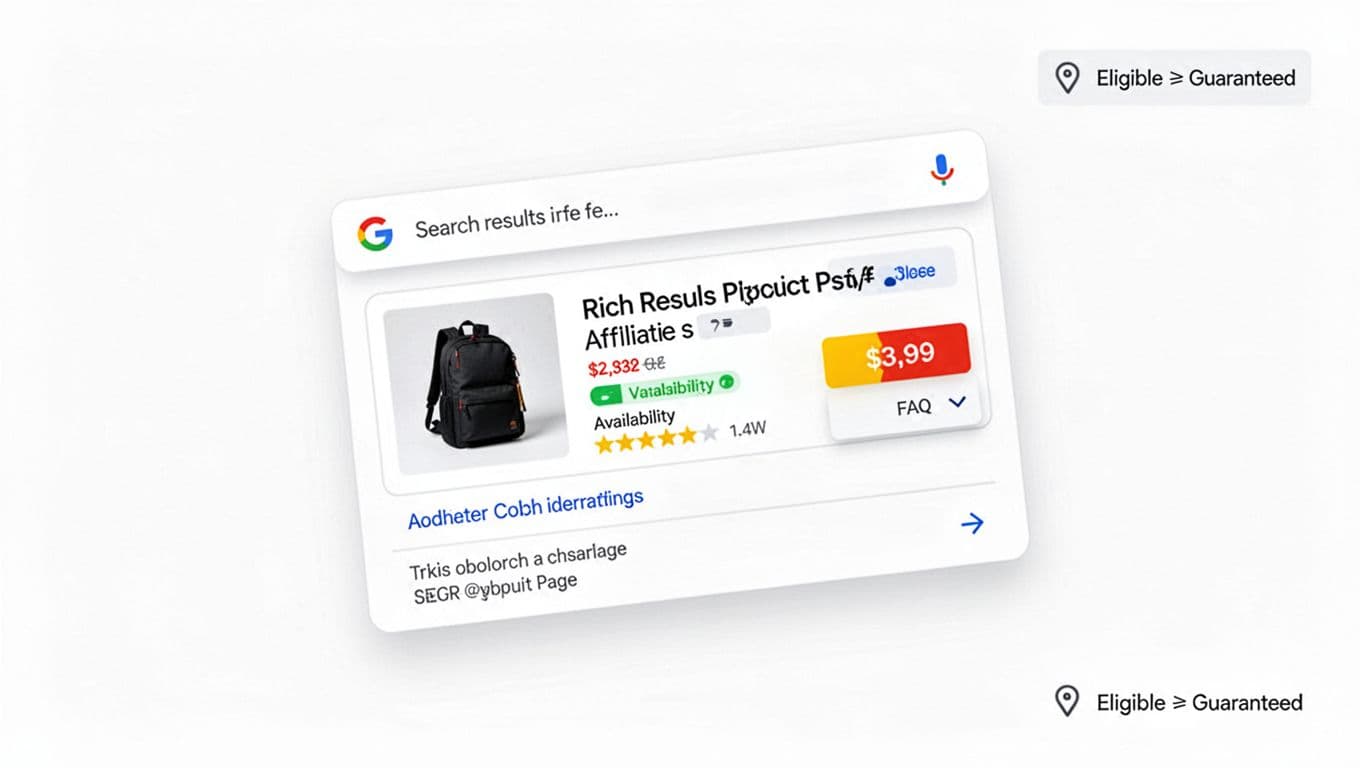
Even perfect affiliate schema markup code can achieve rich snippet eligibility and still not display rich results on the search engine result page. That’s normal. Display depends on query intent, competition, Core Web Vitals, mobile-first indexing, quality thresholds, and whether Google trusts the page and site.
Eligible but not shown: common reasons
- Your page meets rich snippet eligibility with correct structured data implementation and schema markup code, but similar results on the search engine result page are stronger (more trusted sources, clearer product info, better UX, stronger Core Web Vitals).
- Your FAQ answers look repetitive across the site, hurting semantic search optimization.
- Your review lacks evidence, even if the schema markup code is valid.
- Google decides rich results don’t fit the query, especially with mobile-first indexing and entity-based SEO factors in play.
- Schema supports semantic search optimization by clarifying Knowledge Graph entities for better context.
Warnings vs errors (what to fix first)
| Type | What it usually means | Priority |
|---|---|---|
| Error | Missing required fields or invalid format | Fix immediately |
| Warning | Optional fields missing, or weak eligibility | Fix if you want enhancements |
Lightweight governance workflow (for teams and large sites)
Keep it simple so it actually happens:
- One-page schema policy: when Product, Review, FAQPage are allowed, with examples and structured data implementation guidelines.
- Templates with guardrails: fields can’t be filled unless the on-page element exists, tying into mobile-first indexing checks.
- Quarterly audits: sample 20 pages across topical authority clusters, check Google Search Console for issues, run Rich Results Test, verify visible content vs JSON-LD schema markup code, assess Core Web Vitals, and fix drift.
- Change log: when price display, FAQ blocks, or review modules change, review schema markup code and Google Search Console the same day, ensuring mobile-first indexing compliance.
- Monitor Google Search Console and Rich Results Test regularly to confirm ongoing rich snippet eligibility and Core Web Vitals performance.
Final pre-publish checklist
- Product, Review, and FAQ content is visible on-page and matches the markup, including Breadcrumb schema where relevant.
- Review claims include first-hand proof (photos, screenshots, notes, or test steps).
- No sitewide copy-paste FAQs or identical review text; review topical authority clusters for unique depth.
- Prices and availability are shown on-page and kept current (or omitted).
- Rich Results Test shows no errors, Google Search Console issues are addressed.
- Disclosures are clear and placed near buying actions, supporting topical authority clusters.
If your schema feels like it needs “creative writing” to look good, pause. In 2026, the safest wins come from boring accuracy, real experience, and strong E-E-A-T signals, and that’s exactly what earns long-term trust.