
You can write a great affiliate post and still miss the target, because it fails to match the search intent; the SERP wanted something else. That’s the frustrating part. Google isn’t grading your effort, it’s rewarding the page type that best matches what searchers expect.
A fast affiliate SERP intent check keeps you from building the wrong page by analyzing the search engine results page. It also helps you choose the right angle (comparison, review, “best for X,” or a tutorial that earns trust first).
This guide gives you a simple rubric you can score in under a minute, then apply in five minutes total, before you outline anything.
What affiliate SERP intent looks like right now (March 2026 signals)
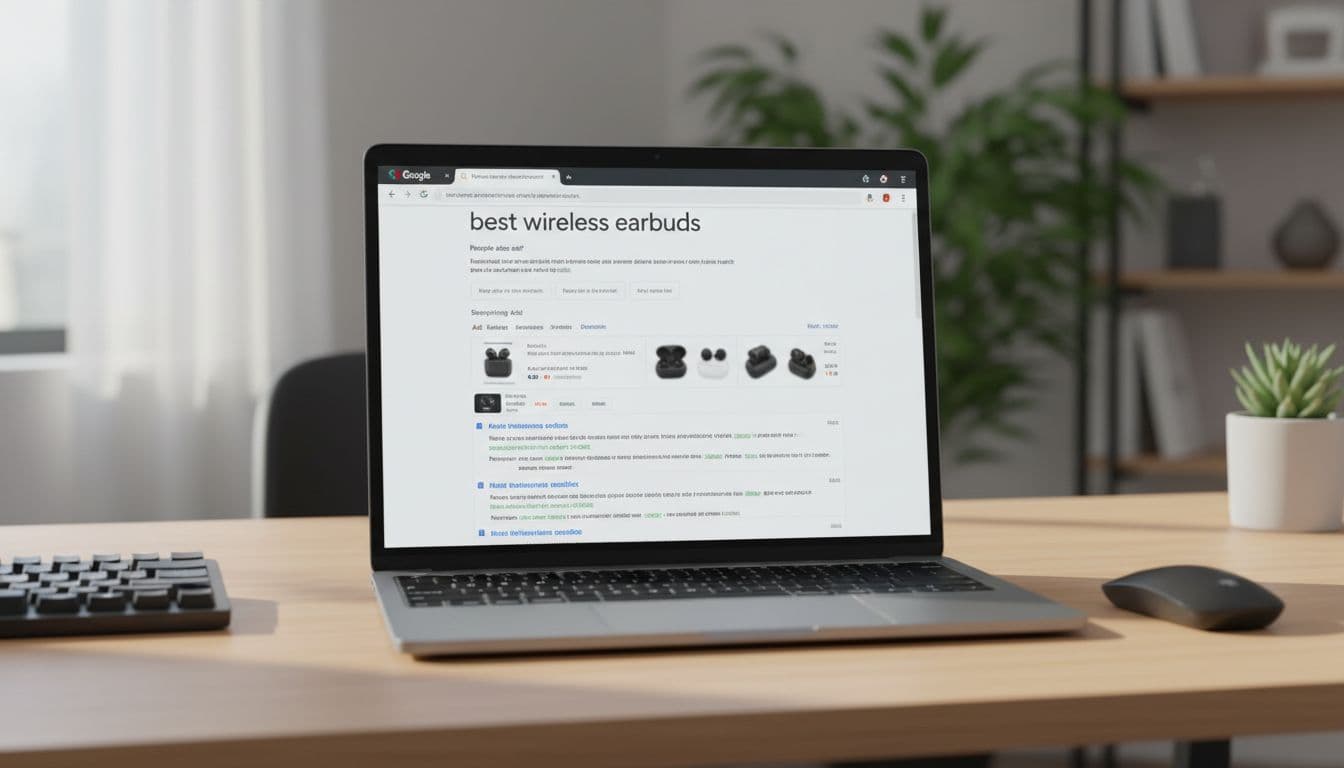
In March 2026, a lot of affiliate-heavy queries show “shortcut” SERP elements like featured snippets that steal clicks if you ignore them. Shopping ads and product carousels often sit above the fold on buyer terms with commercial intent. “People Also Ask” boxes can reveal the real doubts behind the keyword (size, compatibility, noise, refund policy). Video blocks show up when people want to see results, not read specs.
At the same time, long-tail keywords keep getting more specific. You’ll see modifiers stacked together, like “best standing desk for tall person under $400” or “best email software for creators free plan.” That’s a hint that many SERPs contain mixed intent, part research with generative AI intent toward AI-summarized answers, part purchase.
Brand trust also weighs heavier than it used to. If the organic search results on the first page are dominated by big publishers, well-known brands, and major retailers, a generic “best X” post can be a slow climb. In that case, a tighter use case usually gives you room to compete.
If you want a deeper, plain-language refresher on intent categories, this search intent guide for 2026 frames the same problem from the user’s side.
If the top results all “feel” the same, don’t fight it. Match the format first, then out-help them.
The simple rubric (scorecard + decision rule)
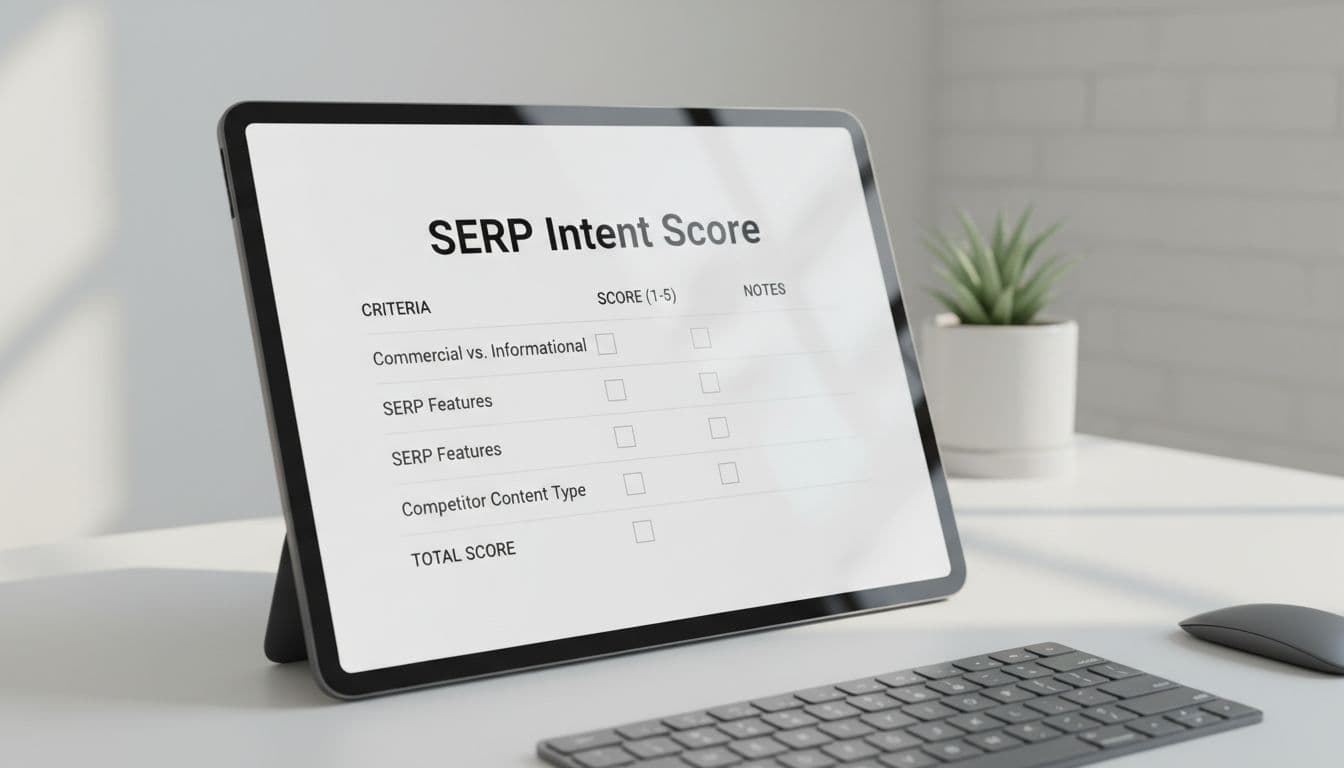
Use this rubric to score what Google is rewarding today, not what you hope it rewards later. Open an incognito window, set location if needed, then scan only the top 10 organic results and the features above them.
One sentence before you score: you’re not judging the competition from independent affiliate sites, you’re identifying the dominant page promise.
Here’s the rubric for commercial keywords. Score each row 0, 1, or 2, then add it up.
| Rubric signal you can spot fast | Score 0 | Score 1 | Score 2 |
|---|---|---|---|
| SERP is shopping-heavy (ads, product carousel, prices visible) | None | Some | A lot, above the fold |
| Top titles are affiliate-style (“best,” “top,” “review,” “vs”) | Mostly other formats | Mixed | Mostly affiliate formats |
| “Best for X” modifiers dominate (3+ results share same constraint) | No | Some | Yes, repeated pattern |
| Informational “how to” dominates (guides, definitions, setup steps) | No | Mixed | Yes, mostly guides |
| Video block is prominent (not just one random result) | No | Small | Yes, strong presence |
| Forums or discussions show up (module or top results) | No | Sometimes | Yes, often top 10 |
| AI overview answers the query cleanly (covers basics well) | No/weak | Partial | Strong, generic answer |
Decision rule (fast):
- 9 to 14: Strong transactional intent. Build a money page that matches the dominant format.
- 5 to 8: Mixed intent. Narrow the angle (persona, budget, use case), or create a hybrid page.
- 0 to 4: Mostly informational intent. Lead with a guide, then earn the affiliate click later.
This pairs well with the “best overall vs best for X” fork, especially if you’re building multiple pages in a category. Keep this internal reference handy: affiliate keyword selection strategies.
Apply the rubric in 5 minutes (timer workflow + a real example)
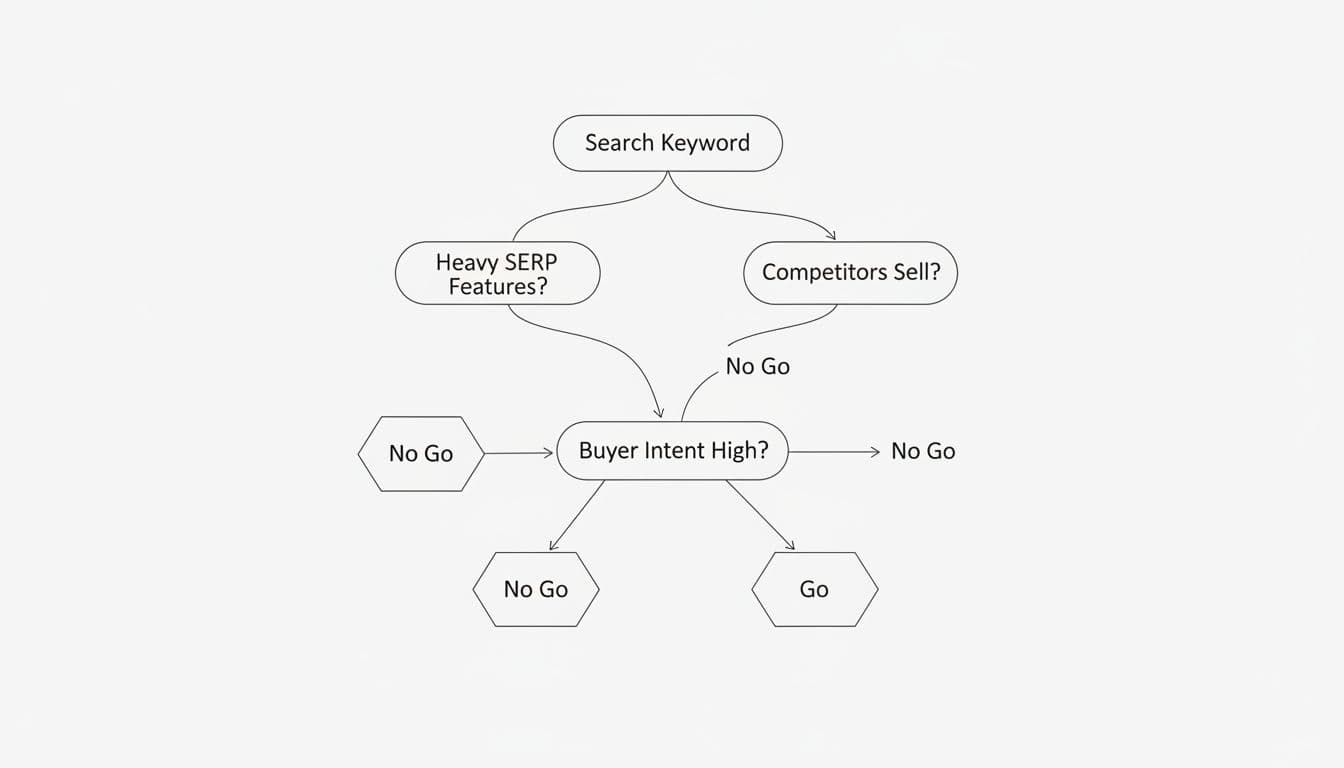
This process saves time during keyword research. Set a five-minute timer. The constraint forces you to focus on signals that matter.
-
Minute 1: Lock the keyword’s “job” in the buying journey.
Write one line: “This searcher wants ___.” Example: “They want to compare options and pick one today.” -
Minute 2: Scan above the fold only.
Count shopping elements, AI overview, PAA, and video. If shopping is stacked at the top, the SERP leans commercial and lowers the click-through rate of standard listings. If AI overview covers the full answer, you need a stronger angle or proof. -
Minute 3: Label the top 5 organic results by format.
Don’t read them. Just label: listicle, single-product review, ecommerce category, forum thread, tutorial, or tool page. When one format dominates, you just got your marching orders. -
Minute 4: Score the rubric.
Be strict. “Some ads” is not “shopping-heavy.” A single YouTube result isn’t a video-heavy SERP. -
Minute 5: Choose your page type and outline shape.
If the score says “mixed,” pick one constraint to clarify the promise and enhance user experience by aligning with searcher expectations. Budget, space, skill level, or “for X” use cases work well, especially for product review queries.
Quick example: say your keyword is “best project management software pricing.” In March 2026, that kind of query often triggers comparison pages, pricing snippets, and “which plan is best” questions. Your page should not be a fluffy “top tools” list. Instead, match the SERP with a tight comparison, clear plan breakdowns, and who each tier fits.
For another perspective on spotting intent patterns quickly, Surfer’s breakdown of how to analyze search intent is useful, especially if you’re training a writer or VA to do the first pass.
Don’t aim for perfect certainty. Aim for the right page type, then improve it with better proof and clearer choices.
Tools, printable checklist, and FAQ (quick checks you’ll actually use)
You can do an affiliate SERP intent check with just Google and a brain. Still, a few tools make it faster.
Free or near-free helpers
- Incognito + location settings: Reduces personalization, makes patterns easier to see.
- Google Search Console: Confirms what your page already ranks for, whether intent drift is happening, and on-page SEO performance.
- Keyword Surfer (browser extension): Quick volume, keyword difficulty, and related terms for modifier ideas.
Paid tools that save time
- Ahrefs or Semrush: SERP history, intent clues, competitor pages, backlink profile, domain rating, and keyword difficulty at a glance.
- Similarweb: Helpful when the SERP is full of brands and you want third-party content for traffic-source context.
Once you publish, intent still matters. If you add monetization later to your niche affiliate site, keep the page’s purpose intact and include clear affiliate link disclosure. This internal workflow is a solid guardrail: add affiliate links to old posts. And when you’re ready to place links, use this: affiliate link placement map.
Printable 5-minute checklist
- Search in incognito, same country as your target reader
- Note above-the-fold features (shopping, AI overview, PAA, video)
- Label top 5 organic results by format (don’t read yet)
- Score the rubric (0 to 14)
- Pick one page promise (compare, review, best-for, or guide-first)
- If mixed intent, choose one constraint (budget, use case, skill level)
- Mirror the SERP’s structure (tables, quick picks, videos, FAQs)
- Add proof the SERP pages don’t show (tests, photos, criteria, caveats)
- Write a title that matches the dominant promise
- Re-check the SERP right before publishing (it changes)
FAQ
What if the SERP looks split between “best” lists and ecommerce pages?
Treat that as mixed intent. Build a comparison that feels like a store shelf, fast picks first, then details. Also add a “where to buy” section for the ready-to-purchase crowd.
How many SERP results should I check?
Top 10 is enough for this rubric. If positions 1 to 5 share the same format, you already have the answer.
What if an AI overview answers everything?
Go narrower. Add a constraint the overview can’t cover well, like “for small rooms,” “for beginners,” “under $X,” or “quietest.” Then back it with real selection rules and clear trade-offs. For on-page SEO tightening around site structure, this practical on-page checklist for affiliate posts is a helpful reminder.
How do navigational intent and local search intent differ from affiliate queries?
Navigational intent targets specific sites or brands, while local search intent focuses on nearby options. Affiliate queries seek buying advice or comparisons, so spot these mismatches early to stay on track with commercial intent.
Your next move
In your content hub, a five-minute affiliate SERP intent check is like looking at the map before a road trip. You can still take side roads, but you won’t drive the wrong direction for hours, especially when targeting commercial intent and commercial keywords. Use the rubric, commit to the page type the SERP rewards, then add the proof and clarity others skip for product recommendations. Optimizing for search intent protects affiliate marketing spending from being wasted on the wrong formats. Next time you’re unsure, score the SERP first, outline second, and write last; matching transactional intent and informational intent is vital for surviving search algorithm updates.