
If your readers click, then bounce when they see the price, it’s not a traffic problem. It’s a mismatch problem. An effective affiliate marketing budget strategy starts with understanding target audience needs to solve that issue.
The tricky part is that “cheaper” doesn’t always convert better. A low-priced product can feel risky, flimsy, or like extra work, while a mid-priced option can feel like the safe choice. Your job is to choose affiliate products that match what your reader can spend and what they expect to get, then frame the decision so it feels simple and honest.
Start by segmenting budget using data-driven insights from the data you already have

You don’t need mind-reading powers to understand spending comfort. You need a simple system that turns signals into 3 budget segments. Think of it like seating guests at a wedding, you’re not judging them, you’re just making sure they end up at the right table.
A simple 3-segment method (email, GA4, Search Console, EPC)
Use these inputs, then create audience segments by tagging people and pages into one of three buckets: Budget, Mid (best value), Premium. Creating these audience segments allows for better targeting.
- Email polls (fastest and clearest)
Send a one-question poll to your list once a quarter:
- “When you buy tools for (goal), what’s your usual budget?” with 3 choices.
- Add a fourth option: “Depends, tell me your situation.”
Even a small sample beats guessing. Tag subscribers by choice, then watch what they click later.
- GA4 (what their behavior suggests)
In GA4, compare landing pages and traffic sources against outcomes:
- Readers from “how to start” posts often skew budget or cautious.
- Readers from “best” and “vs” posts often skew mid or premium.
- Returning visitors are more likely to pay more, they already trust you.
You’re not trying to be perfect. You’re trying to avoid offering a $300 solution to a $30 problem.
- Search Console queries (what they’re asking for)
Look for price-intent modifiers in queries that already bring impressions/clicks:
- Budget intent: “cheap,” “free,” “under $X,” “alternative”
- Mid intent: “best,” “recommended,” “worth it”
- Premium intent: “pro,” “enterprise,” “advanced,” “for teams”
If a page ranks for “under $50,” don’t lead with a premium pick.
- Affiliate EPC by page (what’s paying, where)
If your affiliate tracking software shows EPC, export it by page (or use separate tracking IDs). Monitoring commission rates and average order value at the page level is essential. High EPC pages often have the right reader-product-price match. Low EPC pages can mean bad placement, weak intent, or the wrong price tier.
For broader audience targeting context, skim affiliate audience targeting best practices, then bring it back to your own data.
Mini-template: quick budget label for any page
Use this line in your content plan doc:
Page intent + price comfort + offer stack Example: “Email marketing tools comparison + mid comfort + budget/mid/premium picks.”
That one sentence keeps you consistent when you choose affiliate products across dozens of posts, as part of a broader content marketing strategy.
Build a tiered offer stack that keeps the “best fit” easy to pick
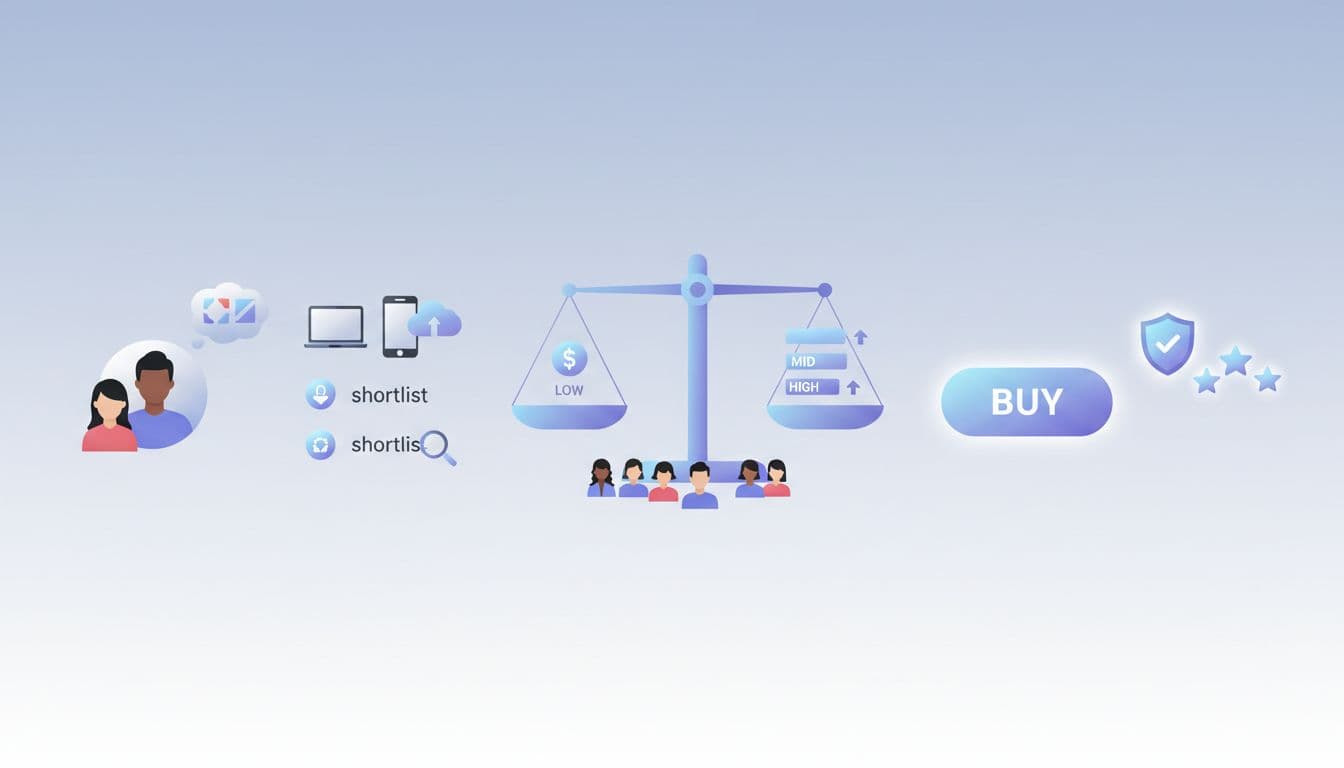
When people shop through your content, they’re usually doing one thing: trying to avoid regret. Price matters, but so does confidence.
A high-converting setup in 2026 is rarely “one recommendation.” It’s a three-option menu where the reader self-selects without feeling pushed. This tiered menu serves as performance-based marketing that naturally increases affiliate conversions by reducing buyer friction.
How to position budget, mid, and premium while building trust (scripts you can copy)
Use these short scripts to keep trust high while still driving clicks.
- Budget positioning (for price-sensitive or unsure readers)
“If you’re keeping costs tight or testing this for the first time, start here. It covers the basics without locking you into a big monthly spend. The trade-off is fewer extras.” - Mid-tier positioning (your default ‘best value’)
“If you want something that lasts and won’t feel limiting in a month, this is the best balance. It costs more, but it usually saves time and avoids upgrades later, improving the lifetime value of a customer while potentially lowering the customer acquisition cost for the brand.” - Premium positioning (for time-poor or high-stakes buyers)
“If this supports your income or you need high-ticket items and advanced features, the premium option makes sense. You’re paying for depth, support, and fewer workarounds.”
CTAs for building trust (and still convert)
You don’t need hype. You need clarity plus permission.
- Budget CTA: “See current pricing and what’s included (good starter option).”
- Mid CTA: “Compare the mid-tier plan details (best balance for most people).”
- Premium CTA: “Check the premium features if you need the advanced stuff.”
One more trust move: mention who each option is not for. It reduces refunds and buyer’s remorse, which helps conversions long-term.
If you want an extra gut-check before promoting anything, use a lightweight checklist like this guide on how to evaluate an affiliate offer.
Use comparison tables, “best for” boxes, and metrics to iterate confidently
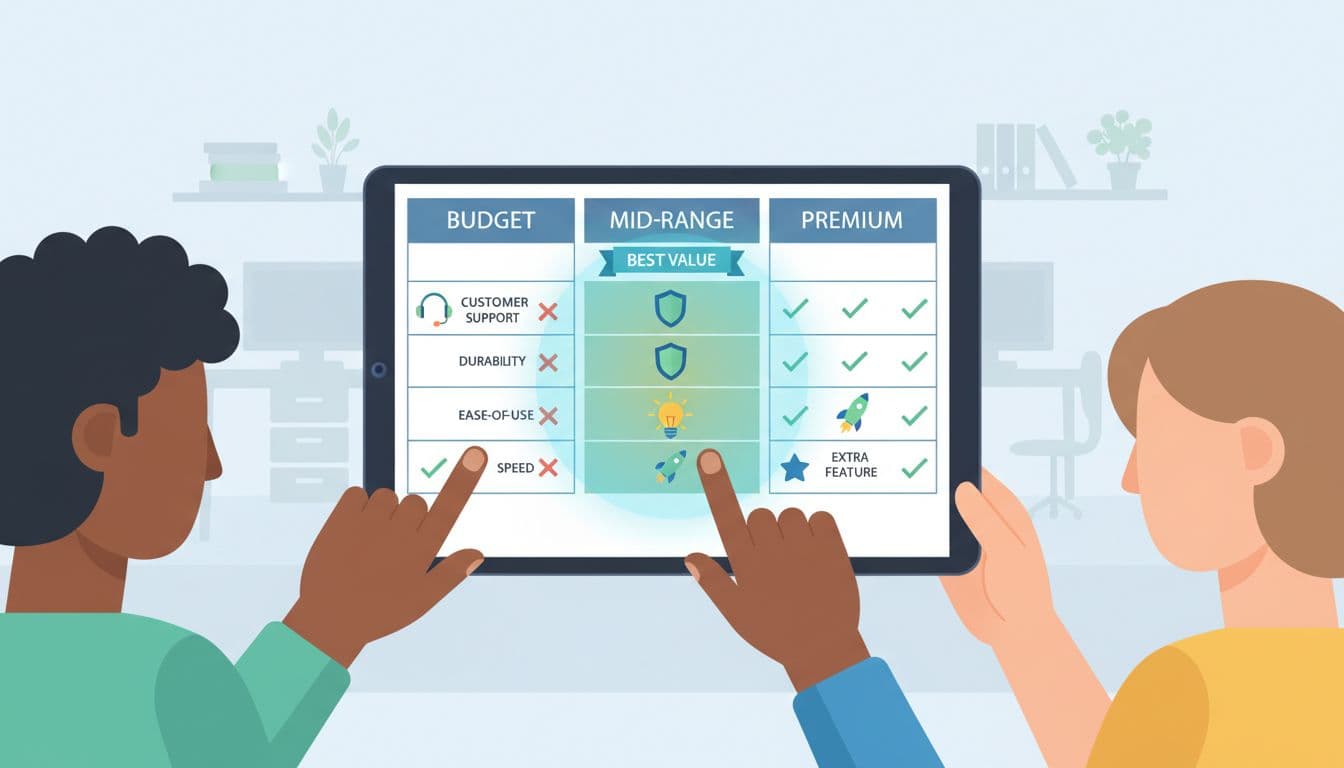
A clean comparison does two things: it reduces decision fatigue, and it makes price feel fair. This format is a staple in successful affiliate listicles. The goal is not to make every option look equal. The goal is to make the trade-offs obvious.
Sample comparison-table structure (keep it simple)
Prioritize mobile optimization for table readability across devices.
| Option | Price range | Best for | Key strength | Main trade-off |
|---|---|---|---|---|
| Budget | Low | Beginners, tight budgets | Gets the basics done | Fewer features or limits |
| Mid (Best value) | Medium | Most readers | Balance of features and cost | Not the cheapest |
| Premium | High | Pros, teams, high stakes | Advanced tools and support | Higher ongoing cost |
Right under the table, add “best for” boxes like these (short, specific, no fluff):
Best for: Budget
Pick this if you’re starting out, you’re unsure you’ll stick with it, or you need the lowest monthly cost.
Best for: Mid-tier
Pick this if you want a dependable option that won’t force an upgrade soon, with solid profit margins for steady growth.
Best for: Premium
Pick this if time matters more than cost, your income depends on performance, or you need tools that boost gross profit margins.
For additional ideas on choosing offers, see these tips for choosing affiliate products, then adapt the criteria to your audience and content type.
Disclosures and transparency that don’t kill clicks
Place your affiliate link disclosure before the first affiliate link, in plain language. Example: “Some links are affiliate links, which means I may earn a commission at no extra cost to you.” Note how pre-sell pages or direct checkout options can enhance affiliate revenue and improve user experience.
Then prove you deserve trust:
- Mention 1 real drawback for each option.
- Avoid “best for everyone” language.
- If pricing changes often, say so, and avoid hard numbers unless you update frequently.
Metrics that tell you what to fix (and what to keep)
Watch these per page, not just site-wide, and compare against industry benchmarks:
- Click-through rate (CTR): Low CTR often means weak placement or unclear next step.
- Conversion rate (CVR): Low CVR with high CTR often means price mismatch or weak landing page; use it for conversion rate optimization.
- EPC (earnings per click): Great for comparing pages and offer stacks.
- AOV (average order value): Helps you see if premium buyers are showing up.
- Refunds/returns (when available): A trust and fit signal, not just a product issue.
Iteration loop (monthly): pick 5 pages, adjust one variable (tier order, table wording, CTA, or adding a budget option), consider products with recurring commissions or a tiered commission structure, then re-check EPC and CVR after enough clicks.
Conclusion
When you choose affiliate products based on budget signals instead of guesses, you stop forcing readers into the wrong aisle. Give people three clear paths (budget, best value, premium) as your promotional strategy, explain the trade-offs, and let them pick with confidence. This builds trust, the foundation for long-term affiliate revenue. Track CTR, CVR, EPC, and refunds per page, then tweak one small thing at a time. This data-backed approach makes affiliate partner recruitment easier, since you can prove your conversion ability. The win is simple: matching budget signals leads to better fit, better trust, better conversions, and better performance.