
Most affiliate sequences fail for one simple reason: they ask for the click before they build trust and earn the right to ask.
In 2026, readers expect a value-forward onboarding welcome email series experience, clear disclosures, and an easy way to control what they receive. If your first week feels like pressure, they either ignore you or unsubscribe. If it feels like help, they lean in and clicks come naturally.
What a high-trust affiliate welcome sequence looks like in 2026
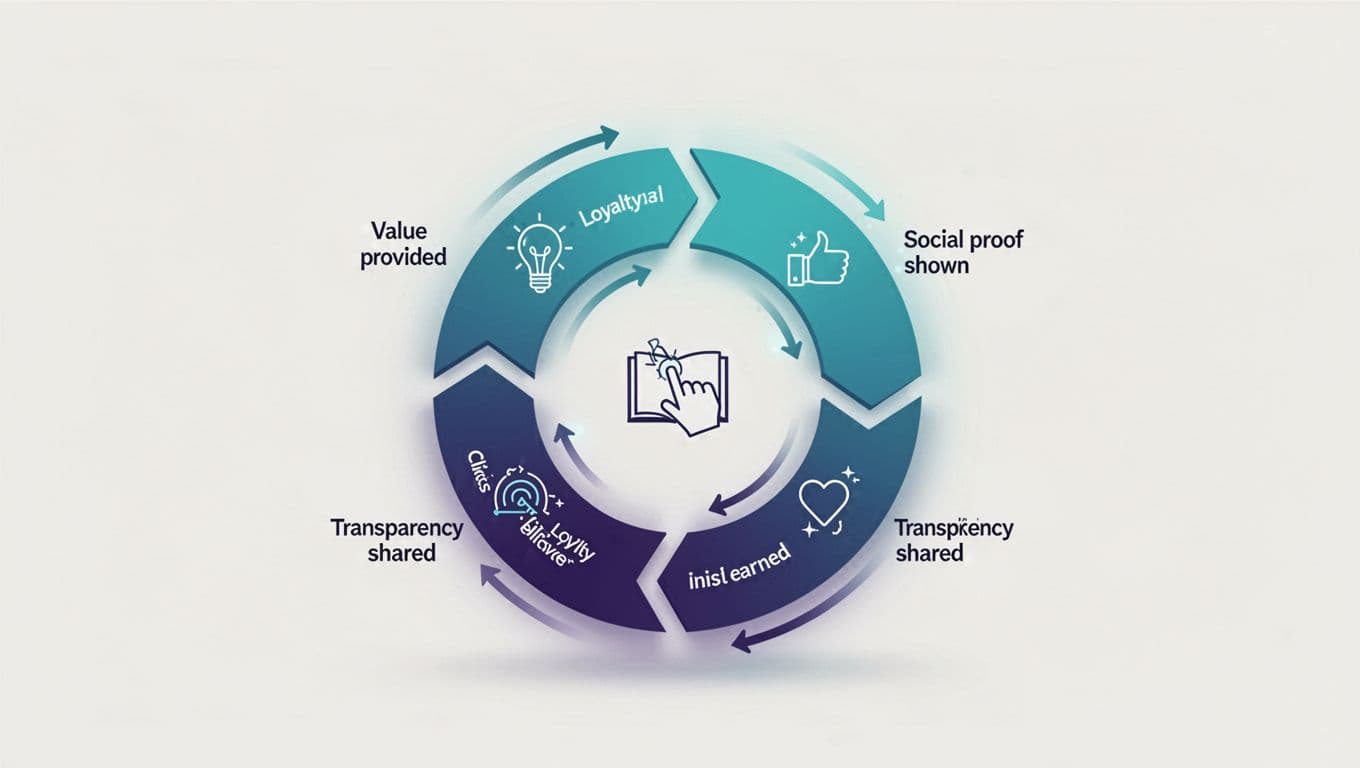
A modern affiliate welcome sequence powered by email marketing automation should feel like a good host, not a salesperson, to build trust. You’re guiding a new subscriber from “Who are you?” to “I trust your recommendations.”
Three 2026 expectations matter most:
First, deliverability is fragile, directly impacting open rates and primary inbox placement. Keep early emails simple, limit links (one primary CTA is plenty), and avoid heavy graphics. If you want a broader set of onboarding patterns, see these onboarding email sequence best practices.
Second, privacy-first tracking is now table stakes. Don’t depend on creepy personalization. Use preferences, topic tags, and clean link tracking you can explain in one sentence to support the customer journey.
Third, readers want control. Add a preference center link in your footer, offer frequency choices, and invite replies. Replies are still one of the best trust signals you can earn.
A click is a side effect of trust. The sequence’s real job is to make your next recommendation feel safe.
The 7-email affiliate welcome sequence (copy blocks included)
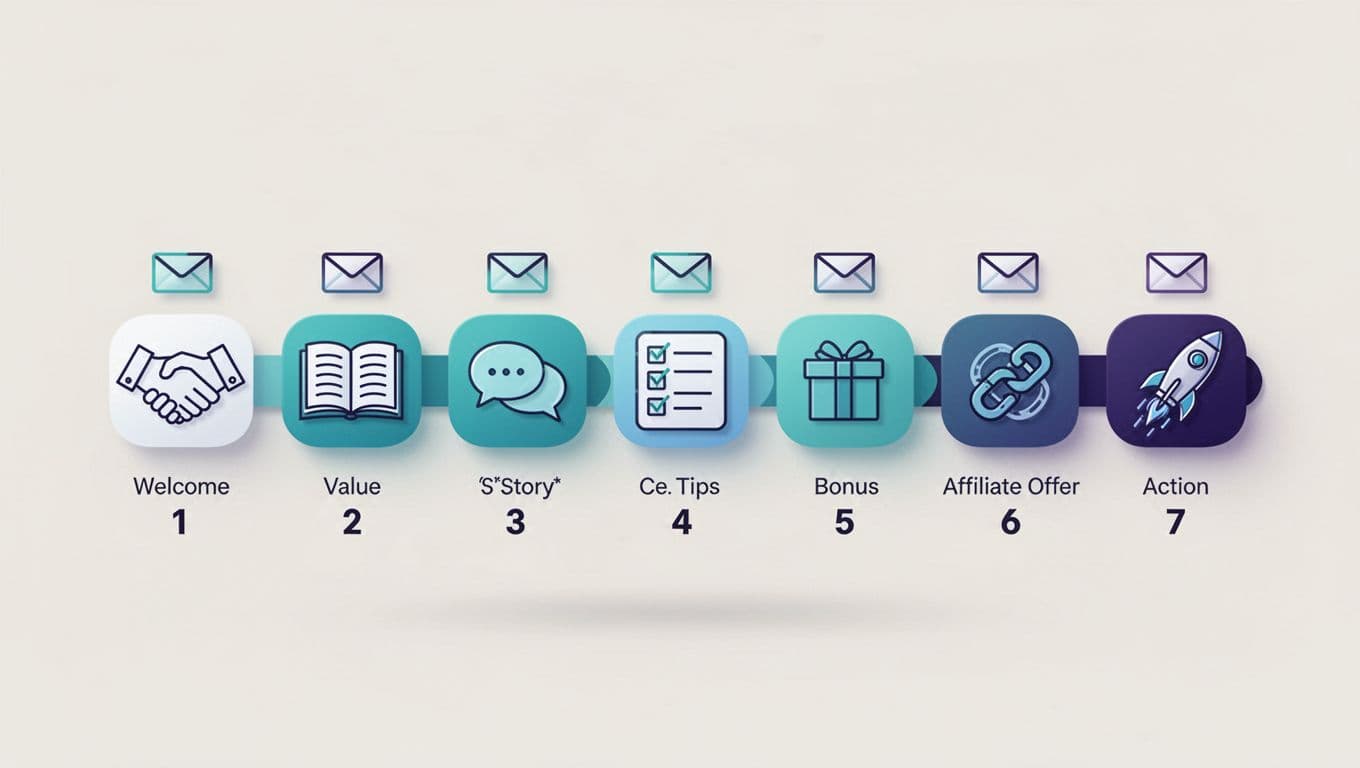
Send these email templates over 10 days to avoid inbox fatigue:
| Send | Goal | Primary CTA style | |
|---|---|---|---|
| 1 | Immediately | Set expectations + preferences | “Start here” |
| 2 | Day 1 | Quick win | “Use this checklist” |
| 3 | Day 2 | Story + standards | “Here’s how I choose tools” |
| 4 | Day 4 | First recommendation | “See what’s included” |
| 5 | Day 6 | Proof + objections | “Compare options” |
| 6 | Day 8 | Main offer | “Try it” or “Get the bonus” |
| 7 | Day 10 | Recap + segmentation | “Pick your track” |
Email 1: Welcome, what to expect, and a small win
Subject lines: Welcome, you’re in the right place
Preheader: Here’s what you’ll get (and how to control it)
Copy block:
Hey {{first_name}}, thanks for joining.
Over the next 10 days, I’ll send 7 short emails to help you get your first real results, without hype. You’ll also see a few tool links. If you buy through them, I may earn a commission (your price stays the same).
Start with this: one simple action you can do today in 10 minutes.
Call to action (hyperlink this text): Start the 10-minute setup
Disclosure placement: Put a one-line disclosure right above the CTA.
Micro-CTA (low intent): Reply with your #1 goal.
Email 2: The “save this” checklist (value first)
Subject: Your quick-start checklist (save this)
Preheader: Do these 3 things before you chase traffic
Copy block:
Today is about removing friction.
Here are the three mistakes that stall beginners: no clear offer, no simple next step, and no follow-up. I made a one-page lead magnets checklist so you can fix those fast.
CTA (hyperlink this text): Get the checklist
Disclosure placement: No affiliate links needed here. Keep it clean.
Micro-CTA (low intent): Hit reply with “checklist” and I’ll nudge you tomorrow.
Email 3: Why you can trust my recommendations
Subject: How I recommend tools (so you don’t waste money)
Preheader: My rules, my bias, and my deal-breakers
Copy block:
You’ll see affiliate links from me sometimes, so here’s my brand story.
I only recommend tools I’d use for the same problem, and I’ll tell you who it’s not for. If there’s a cheaper option that works, I’ll say so.
If you want to avoid sketchy programs, use this before you promote anything:
CTA (hyperlink this text): Use this affiliate program checklist
Disclosure placement: Add a disclosure only if the checklist page or link is affiliate-related.
Micro-CTA (low intent): Reply “rules” if you want my full checklist.
(Helpful internal read: affiliate program checklist)
Email 4: First affiliate recommendation (soft ask, strong context)
Subject: My current “start here” tool (and why)
Preheader: One pick, one reason, one next step
Copy block:
If you’re starting from zero, the best tool is the one you’ll actually use weekly.
Here’s my current pick for {{topic_interest}} because it does the basics well and doesn’t force a complex setup.
CTA (hyperlink this text): See what’s included
Disclosure placement: Put a one-line disclosure immediately above the CTA.
Micro-CTA (low intent): Not ready? Save this email for later.
(For smarter linking inside emails and content, bookmark: where to put affiliate links)
Email 5: Social proof, objection handling, and the “who it’s for” line
Subject: Is this worth it for you? Quick reality check
Preheader: A 60-second fit test before you click
Copy block:
Let’s make this easy.
This tool is a fit if you want: (1) a simple start, (2) a clear path, (3) fewer tabs and logins. It’s not a fit if you need deep enterprise features or custom builds.
CTA (hyperlink this text): Compare options in 2 minutes
Disclosure placement: Put the disclosure above the first comparison link.
Micro-CTA (low intent): Reply with your budget range.
Email 6: Main offer email (clear, calm, and specific)
Subject: Want my setup bonus with it?
Preheader: If you’re going to try it, do it with a plan
Copy block:
If you’re ready to test the tool, here’s the best way to do it on the value ladder: set one goal, run it for 7 days, then decide. This adds scarcity and urgency with my time-sensitive bonus.
If you grab it through my link, I’ll send you my “first week” plan and a swipe file of the exact emails I’d start with.
CTA (hyperlink this text): Try it here
Disclosure placement: Put the disclosure line directly above the CTA button or text link.
Micro-CTA (low intent): Want the plan without the tool? Reply “plan”.
Email 7: Recap, segmentation, and “pick your track”
Subject: Choose what you want next (so I don’t spam you)
Preheader: Pick one path, I’ll tailor what you get
Copy block:
Quick recap: you’ve got the checklist, my tool rules, and my recommended starting option.
Now choose what you want next so these emails stay useful in the nurture sequence:
CTA option A (hyperlink): Help me get traffic
CTA option B (hyperlink): Help me build my list
CTA option C (hyperlink): Help me pick offers
Disclosure placement: Add disclosure only if any of these links are affiliate-related.
Micro-CTA (low intent): Update preferences using the footer link.
Disclosures and tracking that won’t spook readers (or break in 2026)
FTC disclosure scripts (copy and reuse):
- Friendly: “Heads up, I use affiliate links. If you buy, I may earn a commission at no extra cost to you.”
- Neutral: “Disclosure: This email contains affiliate links, and I may earn a commission if you purchase.”
- Direct: “Affiliate link below, I may get paid if you buy.”
Placement rule: put it right before the first affiliate CTA, not buried in a footer. Clear placement like this helps build trust with readers. If you want more options, save these affiliate disclosure examples.
For tracking, skip anything you can’t explain. Use UTMs, consistent naming, and measure outbound clicks on your site through email marketing automation tools. This guide on GA4 affiliate tracking setup is a solid reference if you want clean reporting.
If you manage an affiliate team (or you’re onboarding partners), this 7-day affiliate onboarding email script is useful context for structuring activation without spam.
How to adapt the same 7 emails to SaaS, health/fitness, and digital products
You’re not rewriting the whole affiliate welcome sequence, you’re swapping the “quick win,” the “proof,” and the “offer.” These swaps account for stages of awareness across different audiences.
SaaS example swaps Focusing on the onboarding process:
- Email 2 quick win: “Set up your first project in 10 minutes.” CTA: “Copy my setup checklist.”
- Email 4 first rec: “My starter stack for solo creators.” CTA: “See what’s included (free plan).”
- Email 6 offer: “Try it for 7 days, here’s my onboarding map.” Micro-CTA: “Reply ‘stack’ for alternatives.”
Health/fitness example swaps
- Email 2 quick win: “3-day habit: protein, steps, sleep.” CTA: “Download the tracker.”
- Email 4 first rec: “The simplest app I’d start with.” CTA: “See the features I use weekly.”
- Email 6 offer: “If you start today, use my 7-day plan.” Micro-CTA: “Reply ‘plan’ if you want bodyweight-only.”
These niche adaptations open doors to passive income. For more welcome flow ideas, compare your sequence against these email welcome series best practices, then keep your version simpler.
Final checks before you turn it on
Keep one primary CTA per email until Email 6, place disclosures next to the first affiliate link, and use preferences to reduce unsubscribes. Most importantly, apply the 80/20 rule to make sure every email earns its space. After turning the sequence on, monitor subscriber engagement and click-through rates.
A strong affiliate welcome sequence doesn’t “sell,” it uses future pacing to help someone make a good next decision, such as joining a high-ticket program.