
Yes, you can start affiliate marketing with a free website, without paying for hosting, a domain, or an affiliate-program subscription. You’ll need a platform that permits your promotional approach, useful content, and an affiliate program that accepts your site.
A free setup gives a new affiliate marketer a place to learn before spending money. However, free to start doesn’t mean guaranteed income, and platform restrictions can limit your choices.
Start by understanding how commissions work, then choose a simple publishing setup.
Key Takeaways
- A free website can support affiliate content, but program approval isn’t automatic.
- Blogger, WordPress.com, Google Sites, and other publishing platforms offer different starting approaches.
- Match products to your readers’ needs rather than chasing the highest commission.
- Publish useful articles, explain your affiliate relationships, and track clicks before buying extra tools.
How Affiliate Marketing With a Free Website Works
Affiliate marketing is a revenue-sharing arrangement. Four actors commonly participate: the affiliate recommends products, the merchant sells them, the customer buys, and the affiliate network manages tracking or payments.
Some merchants run direct programs, so a separate network isn’t always involved. Your website hosts the recommendation, while a tracked affiliate link connects eligible activity to your account.
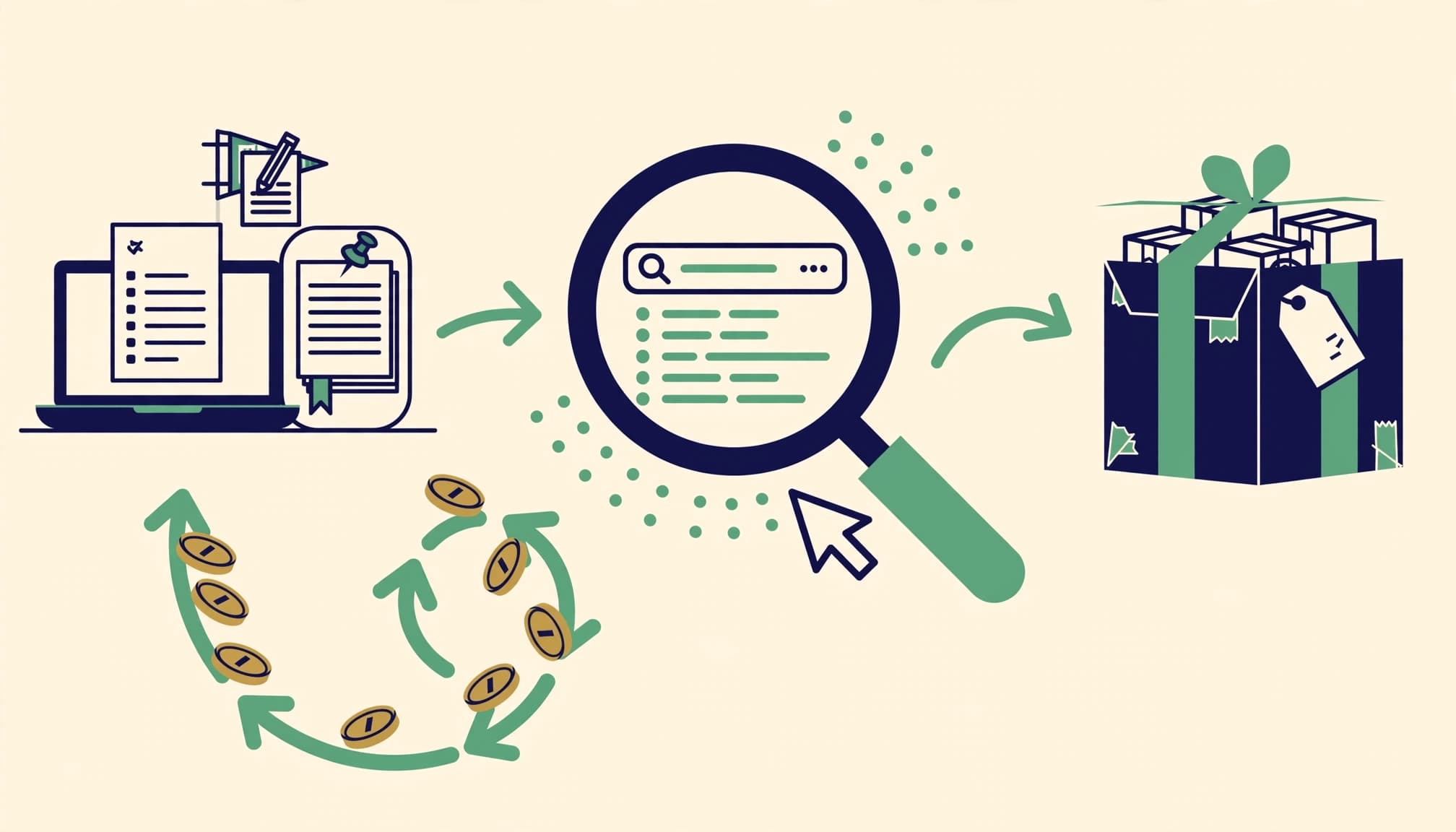
How commissions are calculated
Pay-per-sale (CPS) pays for qualifying purchases. Pay-per-action (CPA) rewards an eligible action, while pay-per-lead (CPL) pays for qualified prospects. Recurring commissions can continue while a referred customer’s subscription remains eligible. Some programs use pay-per-click (PPC), which pays for eligible clicks. Check the terms, since not every advertiser offers it.
Flowlu’s commission examples illustrate the arithmetic: a $50 product at 10% earns $5. Twenty qualifying signups paying $3 each earn $60.
Those examples explain payment models, not expected earnings.
When earnings become payable
Cookie duration is the window after a click during which a purchase may qualify. A 30-day window is one example.
A payout threshold is the minimum payable balance, such as $50. Reaching it doesn’t necessarily trigger immediate payment because approval periods and payment schedules also apply.
A cookie window doesn’t guarantee commission. Attribution rules, excluded purchases, and refunds can change which referrals receive credit.
Free Website Builders: Which Starting Point Fits?
For affiliate marketing with a free website, choose a free website builder that makes publishing easy. A clear article archive usually matters more than animations or a complicated homepage for affiliate websites.
Each option can work as an affiliate marketing platform, but compare its publishing workflow and monetization rules.
| Platform | Useful starting role | Main consideration |
|---|---|---|
| Blogger | A straightforward, article-focused blog | A simpler design environment |
| WordPress.com | An organized blog with categories and pages | Different from self-hosted WordPress |
| Google Sites | A small resource hub or introductory site | Less suited to an expanding article archive |
| Wix or Weebly | Visually arranged pages using site-building tools | More design decisions before publishing |
| Carrd or Strikingly | A compact site focused on one subject | Less suitable for a substantial content library |
| Medium or Substack | Articles or newsletter-led publishing | Platform publishing rather than independent hosting |
For a beginner planning regular articles, Blogger or WordPress.com is a practical shortlist. Google Sites suits a smaller collection of resources. Meanwhile, Medium and Substack suit writers who prefer publishing within an existing platform.
These are format recommendations, not blanket permission for every affiliate promotion. The platform’s monetization policy and the advertiser’s approved promotional channels both apply.
What a genuinely free setup includes
A hosted address, included design, and articles you write yourself can cost $0. Joining a no-fee affiliate program also costs $0.
You can skip paid keyword tools, advertising, and premium themes initially. Your main investment is time.
Free hosting versus free software
WordPress.org software is free, but a self-hosted website still needs hosting and usually a domain.
WordPress.com is a hosted service. Treating the two as interchangeable creates misleading expectations about a completely free launch.
Choose Affiliate Programs That Match Your Content
Start with one or two affiliate partners. That makes reporting easier and keeps your recommendations focused.
A modest commission on something readers already want can outperform a large commission on an unsuitable product.
Physical products and digital offers
Amazon Associates is free to join and advertises commissions of up to 10% on qualifying purchases and programs. That maximum isn’t the rate for every product.
ClickBank also offers affiliates a no-upfront-cost route, with no monthly affiliate fee. It can suit digital-offer content, but product quality and audience fit matter.
CJ Affiliate and Rakuten Advertising provide additional merchant-discovery options. Software-focused and SaaS publishers can explore advertiser programs through impact.com and PartnerStack. Check each advertiser’s payout terms, since supported methods such as Stripe or PayPal vary by program.
Applications, fees, and realistic expectations
Applications typically ask how you’ll promote products, including your website, social channel, or newsletter. Some decisions arrive quickly; others require a review over several days. Network membership doesn’t automatically approve you for every advertiser.
Amazon’s application guidance recommends roughly ten original posts as a rule of thumb. A populated website gives reviewers more to assess than an empty homepage.
Awin is an exception to a strictly zero-upfront-cost shortlist: its US publisher signup requires a refundable $1 deposit, according to its publisher FAQs.
You don’t need to buy affiliate software such as Rewardful, Tapfiliate, or Trackdesk. Those products help businesses run programs; joining a program as a publisher is a separate task.
Your First Month on a Free Website
Keep the first month focused on publishing and learning. A schedule gives you structure, but it doesn’t create an income deadline.

Weeks 1 and 2: Pick a niche and publish
Choose a narrow audience problem you can explain accurately. Home-office webcams, for example, offer a clearer starting subject than consumer electronics generally.
Google Trends helps compare interest and seasonality. However, its relative scores aren’t exact search volumes or proof that visitors will buy. Our affiliate keyword research guide explains how purchase-focused searches differ from broad informational topics.
Next, create your site, an About page, contact information, and appropriate disclosure and privacy information. Publish an initial buying guide, a focused comparison, and a practical tutorial.
If you choose a review website format, explain who each product suits, its limitations, and what evidence supports your recommendation. Separate manufacturer specifications from personal testing. Never imply you’ve used something when you haven’t.
Weeks 3 and 4: Apply and attract relevant readers
Apply to a suitable program using your published content and an honest description of your promotional approach.
After approval, add links only where they answer the reader’s next question. Connect related articles so visitors can move between explanations and recommendations.
Then share useful excerpts through one relevant social channel or community that permits promotion. Answer the discussion rather than dropping unexplained links.
Record published pages, visits, affiliate clicks, and approved commissions in a spreadsheet. Early results help distinguish a traffic problem from a weak recommendation.
Our 30-day affiliate content sprint provides a publishing schedule when you need more structure.
Add Affiliate Links Without Weakening Your Content
Readers need enough information to make a decision before you send them to a merchant. Filling a thin page with buttons won’t solve that problem.
Place links at decision points
Copy the tracking link from your affiliate dashboard. In your website editor, select descriptive text, choose the link tool, paste the destination, and publish.
Link a product name or a useful action such as viewing available options. Avoid turning every mention into another sales prompt.
Keep the program’s tracking information intact. Also, don’t make purchases through your own links to manufacture activity. Programs commonly restrict self-referrals.
Explain the relationship clearly
The FTC’s endorsement guidance calls for clear, conspicuous disclosure of material relationships.
A plain disclosure can explain that you may earn a commission when readers purchase through links. Place that explanation near the recommendation, before readers encounter the relevant links, rather than hiding it in a footer.
A separate policy page can add detail, but it doesn’t replace a visible explanation. Our affiliate sources page template helps organize supporting information.
Free-Plan Tradeoffs and When Upgrading Makes Sense
A free plan often comes with platform branding, a hosted subdomain, advertising, or restrictions on customization, storage, plugins, and monetization. The tradeoffs vary by service.
These restrictions can affect presentation and flexibility. However, paying for hosting won’t fix content that fails to answer readers’ questions.
Upgrade for a concrete need
A custom domain makes sense when you want an address you can keep as your publishing setup changes. Paid hosting becomes useful when you need more control over features, tracking, backups, or site structure.
Self-hosted WordPress is one established option for that control. It also adds maintenance responsibilities, including updates, security, and backups.
Keep your work portable
Save copies of your articles, original images, and destination links outside the publishing platform. Export content where that feature is available.
Before moving, check whether existing addresses can redirect to the new site. Otherwise, older links may stop sending readers to the right pages.
Avoid upgrading solely because a free site feels less professional. Upgrade when the expense solves a real constraint and fits your budget.
Frequently Asked Questions
Can you start affiliate marketing without a website?
Yes. Some programs accept social accounts, video channels, or newsletters as promotional channels.
However, acceptance depends on the program. A website gives you a central place for detailed comparisons, disclosures, and related articles. You can begin elsewhere and add a site later without abandoning the audience you’ve built.
How long does a free affiliate website take to earn money?
There’s no reliable universal timeline. Relevant traffic, product fit, approval requirements, and attribution all affect your first eligible commission.
Payment can arrive later because of validation periods and payout thresholds. Therefore, judge the first month by published content, working links, and relevant visitors rather than a promised earnings figure.
Start Free, Then Pay for What You Need
Affiliate marketing with a free website is a practical way to learn publishing, recommendations, and referral tracking without an initial hosting bill.
Choose one platform, serve a defined audience, and join a small number of suitable programs. Treat affiliate income as an outcome to work toward, not a promise. Make useful content your first investment.
When platform limits obstruct work that matters, a domain or paid hosting becomes a purposeful purchase rather than a hopeful shortcut.