
An affiliate marketer balancing a full-time job can build an affiliate marketing schedule with a few protected work blocks. Choose one main promotion channel and set a weekly finish line. Five focused hours can be a practical starting budget, provided those hours don’t replace sleep or interfere with your job.
The goal is repeatable progress, not filling every evening with tasks. Start with the time you can maintain, then fit content, tracking, and payment administration inside it.
Key Takeaways
- Reserve specific weekday and weekend blocks instead of relying on leftover time.
- Prioritize useful content and qualified referrals over constant posting or dashboard checking.
- Keep pending commissions separate from available cash, and protect at least two evenings from business work.
Build a Weekly Affiliate Marketing Schedule

Give weekday sessions narrow jobs
Choose work periods after accounting for your commute, household responsibilities, and energy. If evenings are exhausting, move a writing block to the morning.
A five-hour week could look like this:
| When | Time | Finish line |
|---|---|---|
| Monday evening | 30 minutes | Review results and choose one priority |
| Tuesday evening | 60 minutes | Research and outline one useful article |
| Thursday evening | 60 minutes | Draft the article or update |
| Saturday morning | 120 minutes | Edit, publish, and distribute |
| Sunday afternoon | 30 minutes | Review links, commissions, and next steps |
Wednesday and Friday remain free. Because each session has a defined outcome, you won’t waste its opening minutes deciding what to do.
Use weekends for uninterrupted work
Reserve your longest block for work that suffers from interruptions: comparing products, writing demonstrations, or editing a detailed tutorial.
However, don’t make Saturday responsible for every unfinished weekday task. When the week overruns, reduce the deliverable. Updating one comparison may be more useful than rushing an entire article.
Our weekly affiliate website workflow provides a repeatable structure for content, maintenance, and reporting. Keep your own version short enough to follow when you’re tired.
Batch Similar Tasks to Reduce Switching
Separate research, writing, and publishing
Researching one paragraph, checking commissions, and designing an image creates unnecessary switching. Group commission tracking and reporting checks into one planned work block.
Instead, collect product specifications and permitted links during research. During drafting, focus on the explanation. Leave formatting, disclosures, and link testing for the publishing session.
You can also reuse completed work thoughtfully. A detailed comparison might support an email and a short social post. Each should answer a useful question rather than repeat the same sales message.
Save unfinished ideas in a backlog so they don’t interrupt the current task.
Give recurring tasks a finish line
“Work on SEO” can absorb an evening without producing anything usable.
A better task is: review Search Console queries for two pages, select one improvement, and record the decision. Similarly, a content update is finished when the revision is live, links work, and the change is logged.
Use scheduling tools for approved posts and emails. However, keep product claims and recommendations under human review. Automation can publish outdated information as efficiently as accurate information.
Prioritize Work That Can Improve Qualified Referrals
Choose one content task and one maintenance task
During Monday’s review, use commission tracking to examine Search Console, Google Analytics 4, affiliate dashboards, and reader questions. Then select one meaningful content task and one maintenance task.
Useful content helps someone make a decision. Examples include a product comparison, a setup tutorial, or an explanation of who should skip an offer.
A lower-traffic page can still attract better-qualified readers in your niche, so don’t assign your entire week according to page views.
Avoid collecting programs and opening new channels while existing recommendations still need attention.
Track outcomes without watching dashboards daily
Record referred clicks, conversions, and pending, approved, reversed, and paid commissions separately. When reported, conversion rate can help assess referral quality. An outbound click in GA4 doesn’t prove that a merchant credited a sale.
Once approved earnings accumulate, calculate earnings per click as approved net commissions divided by referred clicks.
For operators, the 80/20 principle in affiliate programs suggests that a small group of partners may produce most sales. Compare partners by cost per acquisition and customer lifetime value, but treat this as a prioritization guide, not a guaranteed distribution. Support productive partners without ignoring promising newcomers.
Understand What Triggers Your Commission
Affiliate marketing commonly involves four participants. The affiliate recommends an offer, the merchant sells it, and the customer takes the qualifying action. An affiliate network may handle tracking or payments. Some merchants operate directly without a network.
Pay-per-sale programs reward qualifying purchases. Pay-per-lead programs reward accepted inquiries or signups. Pay-per-click programs reward eligible clicks, while pay-per-action and pay-per-install programs define other qualifying actions.
For example, Amazon Associates advertises commissions of up to 10% on qualifying purchases and programs. That maximum isn’t a universal rate.
Before promoting an offer, record the merchant’s qualifying action, commission rate, attribution window, restrictions, refund windows, any payment holds, minimum payout thresholds, and payment schedule. For recurring offers, distinguish commissions lasting 12 months from commissions lasting throughout a subscription.
Our affiliate program onboarding checklist helps organize this setup work. Put it in a dedicated block so incomplete account settings don’t interrupt publishing later.
Fit Payout Administration Into Your Schedule
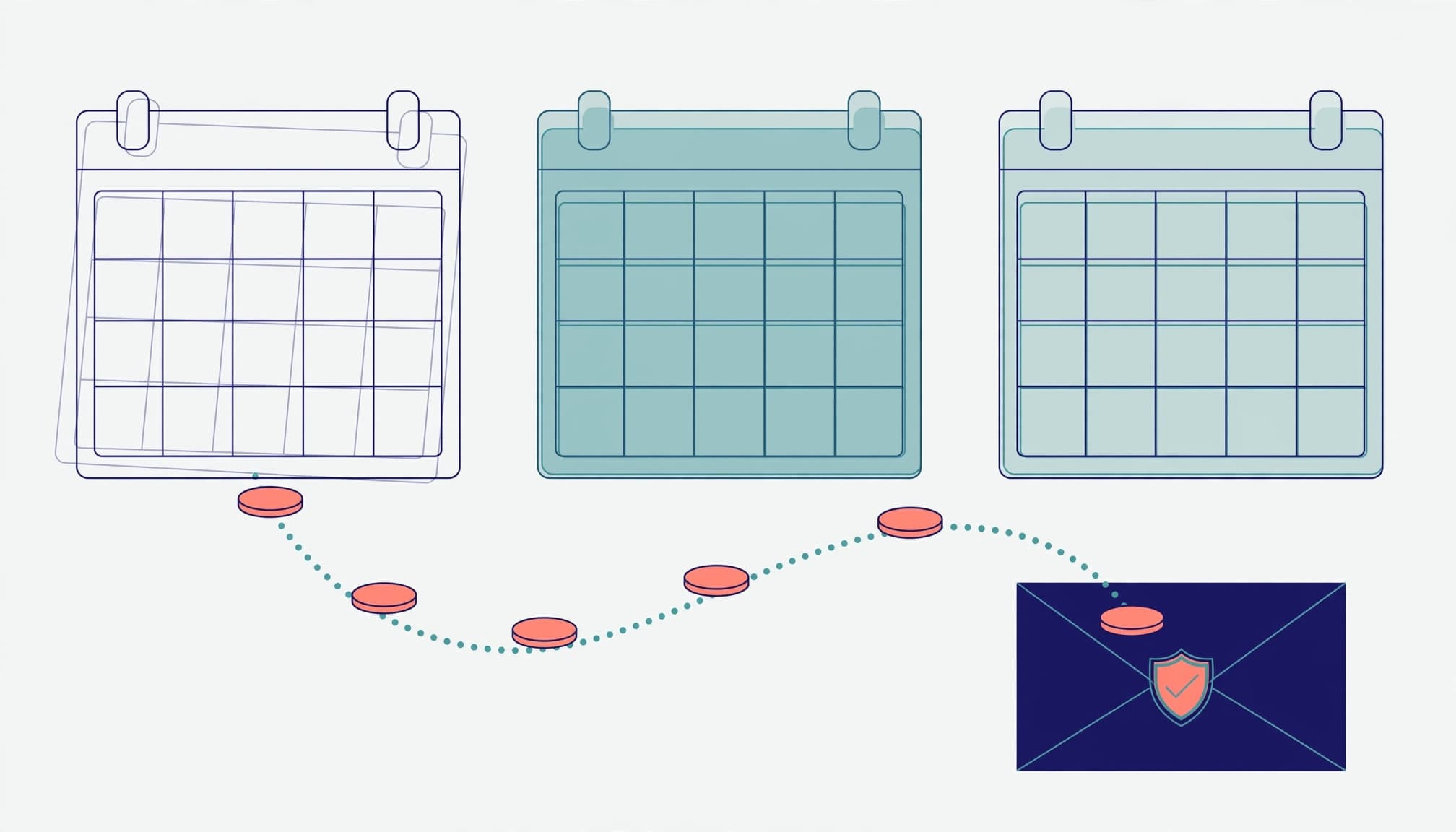
Your work calendar and payout schedule have different purposes. The affiliate payout system determines when commissions become available, and the merchant or affiliate network may set payment timing.
According to iDevAffiliate’s guide to affiliate payout timing, most programs pay monthly, typically 30 to 60 days after a sale. That delay allows time to validate transactions and process refunds within refund windows. Many networks use minimum payout thresholds of $50 to $100, depending on payment methods and transaction costs.
For people managing a program alongside employment, payout frequency also determines administrative workload.
| Payout frequency | Practical advantage | Main challenge |
|---|---|---|
| Monthly | Fewer payment runs and easier reconciliation | Affiliates wait longer for cash |
| Every two weeks | More regular cash flow can support partner motivation | More frequent reviews and payment processing |
| Weekly or on demand | Faster access to eligible earnings | More operational work and greater exposure if validation is rushed |
A new program can start with monthly payments and a clearly stated approval period. Shorter cycles become practical when transaction volume and controls justify the extra work.
However, payment frequency doesn’t replace refund protection. Weekly payments can still cover only commissions whose refund windows have closed. Paying earlier creates the possibility of recovering money already released.
Budget for the Gap Between a Sale and Payment
A worked calculation makes the cash-flow issue clearer.
With a $50 minimum payout and $20 in approved commissions, you’re still $30 short of the program’s minimum payout thresholds. A scheduled date or payout frequency doesn’t override eligibility requirements, so those earnings won’t be released until you meet them.
Likewise, if a program holds commissions for 30 days to cover refund windows, a sale on October 10 doesn’t finish that hold until November 9. Under a monthly month-end payout schedule, its earliest eligible payment could then be November 30.
Meanwhile, hosting or software charges may fall due before the commission arrives, which can strain cash flow.
A dashboard balance can contain several stages of earnings. Only the paid portion has completed the route to cash.
Maintain separate columns for pending, approved, reversed, and paid amounts. Set your spending limit using available money, not expected commissions. Check the payout schedule against the threshold and refund rules before counting on a payment. This matters especially before buying advertising that requires payment upfront.
Protect Rest and Keep Publishing Standards Intact
Set a stopping time before each session begins. When that time arrives, record the next action and close the work.
During overtime-heavy weeks, use a maintenance-only routine: handle urgent reader messages, repair important broken links, and review payment exceptions. Resume larger content tasks when capacity returns. Don’t turn every disrupted week into a weekend catch-up marathon.
Keep business work outside employer time and equipment, and follow applicable workplace policies.
Before publishing, include a final review for accurate claims, functioning links, and disclosures. The FTC’s endorsement guidance calls for clear disclosure of relevant financial relationships.
Place an understandable disclosure near the recommendation, rather than relying only on a footer. Also follow any additional wording your affiliate program requires. Never imply firsthand product experience you don’t have.
Build a Routine You Can Repeat
An affiliate marketer can keep an affiliate marketing routine alongside other responsibilities without giving up every free hour. Start with a manageable weekly commitment, then measure progress through useful content and qualified referrals, not promised earnings.
Protect consistency and recovery together. A smaller plan you can maintain through ordinary working weeks is more useful than an ambitious schedule you abandon.
Frequently Asked Questions
How long will it take to earn my first commission?
There’s no reliable universal timeline. Relevant traffic, offer fit, conversion behavior, and attribution rules all affect the first referral. Approval and payment create additional delays afterward.
Use your early weeks to establish working links, useful content, and measurable traffic. A 30-day publishing plan provides structure, not an income deadline.
Should I use an affiliate network or work directly?
For affiliates, networks can consolidate merchant discovery, reporting, and payments. Direct programs such as Amazon Associates create a separate relationship with each merchant.
For operators, networks can reduce some administrative work, while an in-house program requires your own recruitment, tracking, support, and payout processes. Our comparison of beginner-friendly affiliate networks covers options for getting started.
Which financial calculations matter when managing a program?
Cost per acquisition equals marketing spend divided by customers acquired. Spending $1,000 for five customers produces a $200 acquisition cost; attracting 500 visitors alone doesn’t establish that figure.
A simple revenue-based customer lifetime value estimate equals average sale value multiplied by annual purchase frequency and average retention in years. Compare the customer lifetime value estimate with acquisition costs, margins, refunds, and support expenses before increasing commissions.