
Usually, no. A U.S. publisher who only earns referral commissions generally doesn’t collect sales tax on the merchant’s customer purchases. The main affiliate sales tax issue is whether your promotional activity creates a collection obligation for the merchant.
Your commissions can still create income-tax and reporting obligations, even when you never handle a customer’s payment. Rules vary by jurisdiction, so start by separating your role as a publisher from the retailer’s responsibilities.
Key Takeaways
- Publishers generally report commissions as income rather than collecting sales tax on referred purchases.
- An in-state affiliate relationship can create sales tax nexus for a merchant, depending on state law and promotional activity.
- Selling your own products changes the analysis, and income-reporting thresholds don’t make smaller commissions tax-free.
Who Handles Affiliate Sales Tax?
Publishers earn commissions for referrals
In affiliate marketing, publishers earn money when tracked referrals produce qualifying purchases, leads, or other agreed actions. The affiliate program tracks referrals, while the merchant usually handles checkout, fulfills orders, and receives customer payments.
Because you’re providing a referral rather than selling the merchandise, you generally don’t collect sales tax on that retail transaction. However, some jurisdictions tax advertising, marketing, or related services. Your commission arrangement still deserves a separate review under local rules.
Merchants collect when nexus and taxability require it
Nexus is a connection that can require a seller to register and collect sales or use tax. Physical operations, economic activity, and certain affiliate relationships can establish that connection.
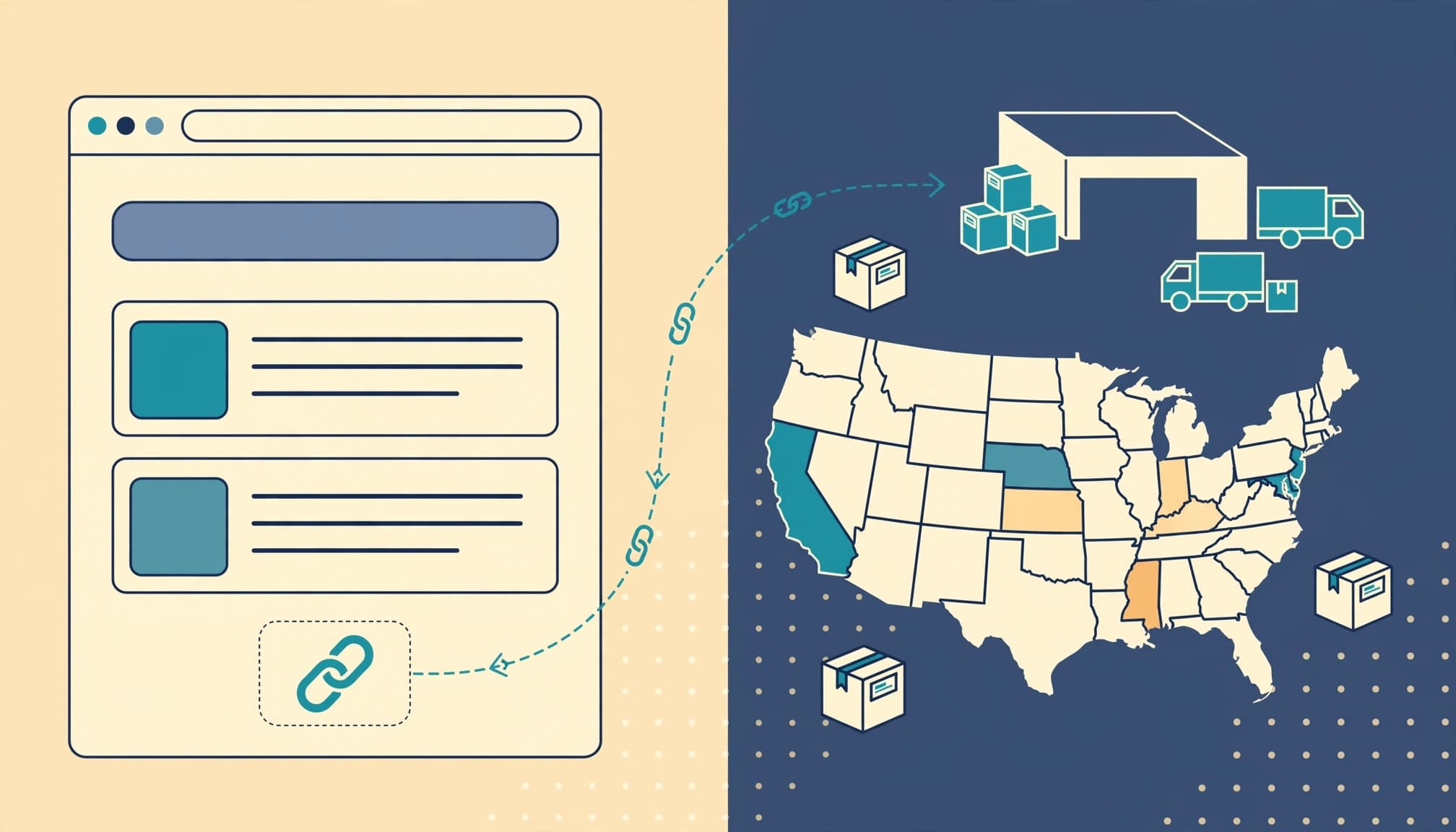
The merchant must also determine whether the product is taxable and whether an exemption applies. Having nexus doesn’t make every sale taxable.
If you sell merchandise yourself, rather than referring shoppers elsewhere, you’re acting as a retailer. That includes many dropshipping arrangements.
New York: Affiliate Links Can Affect the Merchant
The $10,000 rule concerns referred sales
New York’s “Amazon Tax” creates a presumption of nexus for certain sellers using compensated New York resident referrals.
The rule applies when qualifying referred sales exceed $10,000 during the preceding four quarterly sales-tax periods. Although often summarized as a previous-year threshold, it isn’t simply a calendar-year test. The amount measures the merchant’s qualifying referred receipts, not your commission income.
New York’s May 8, 2008 bulletin, TSB-M-08(3)S, explained how sellers could rebut the presumption when resident representatives only placed website links without additional solicitation.
Once collection is required, the obligation can extend to taxable New York sales beyond those credited to affiliates.
Annual certification supports the link-only position
The June 30, 2008 bulletin, TSB-M-08(3.1)S, added documentation requirements for that rebuttal approach.
The seller’s written agreement must prohibit covered solicitation. The procedure also calls for signed annual certifications from resident affiliates confirming they haven’t engaged in prohibited activity. Those statements are subject to audit.
Targeted emails, newsletters, and other direct solicitation can undermine a link-only arrangement. Nonprofit affiliates face additional website-disclaimer requirements under the bulletin.
An affiliate’s certification supports the merchant’s nexus position. It doesn’t transfer responsibility for collecting the merchant’s sales tax to the publisher.
California: Separate Current Nexus Rules From Older Advice
Link-only restrictions aren’t a universal exemption
Older California and New York affiliate guidance describes written limits on solicitation and annual certifications. Under a link-only approach, affiliates avoid covered emails, newsletters, and targeted marketing.
These limits aren’t a blanket exemption in either state. Agreements and certifications don’t erase nexus created by other activities or sales volume.
The California Department of Tax and Fee Administration’s Internet Sales publication explains retailer registration and collection responsibilities. Retailers whose combined sales of tangible merchandise delivered into California exceed $500,000 in the current or preceding calendar year are generally engaged in business there.
The calculation can include applicable sales by related persons. Restricting affiliate promotion doesn’t remove this economic-nexus obligation.
Permits, rates, and marketplace sales have separate rules
A person selling merchandise in California who makes three or more sales during a 12-month period generally needs a seller’s permit. This doesn’t require every commission-only publisher to register.
California’s statewide sales and use tax base rate is 7.25%. It includes 1.25% in local taxes: 1.00% for the local jurisdiction and 0.25% for the Local Transportation Fund. District taxes can increase the applicable rate.
Since October 1, 2019, qualifying marketplace facilitators have been responsible for collecting and paying tax on facilitated marketplace sales under the Marketplace Facilitator Act.
That responsibility applies to qualifying marketplace transactions. It doesn’t automatically cover a seller’s separate website sales.
A Decision Checklist for Publishers and Merchants
Use your actual activities to identify which obligations need attention.
- Identify who makes the sale. Affiliate marketers who send readers to a merchant’s checkout have a different role from a business that accepts customer orders. The affiliate relationship doesn’t automatically make the publisher responsible for the merchant’s sales tax.
- Map the relevant states. Merchants need affiliate locations, solicitation activities, physical operations, and sales totals by destination.
- Separate nexus tests. Affiliate nexus, physical presence, and economic nexus can apply independently.
- Document promotional limits. Keep signed agreements and any required certifications, and follow restrictions on email or targeted solicitation.
- Address registration and filing. A merchant with a collection obligation needs the appropriate registration, tax calculation, returns, and remittances.
Collecting in every state isn’t automatically the simplest choice. Registration creates continuing filing obligations, sometimes including zero-sales returns.
Limiting affiliate activity may reduce one source of nexus, but it won’t remove an economic-nexus obligation. A qualified tax professional can compare these paths using the merchant’s actual exposure.
Affiliate Commissions Still Create Income-Tax Obligations

Report income even without a tax form
For U.S. sole proprietors operating a business, Schedule C reports business income and deductible expenses. Its net profit generally flows through Schedule 1 to Form 1040.
The familiar $600 Form 1099-NEC reporting threshold applies to qualifying payments made through 2025. For payments made after December 31, 2025, the threshold increased to $2,000, as reflected in the IRS’s business reporting guidance.
That threshold concerns the payer’s reporting requirement. You must report taxable income even when no form arrives. Payment methods and other rules can also affect which information return is issued.
Plan for income and self-employment taxes
Business commissions generally face federal income tax, self-employment tax, and usually state income tax. Self-employment tax generally applies when net self-employment earnings reach $400.
Individuals who expect to owe at least $1,000 after withholding and credits generally need to make estimated tax payments, subject to applicable payment rules.
Use Form 1040-ES to calculate federal estimated tax. Standard calendar-year deadlines for 2026 are April 15, June 15, and September 15, 2026, plus January 15, 2027.
Additional withholding from another job can sometimes cover the obligation. A tax reserve helps with cash planning, but moving money into savings doesn’t pay the IRS.
Keep Records That Explain What You Earned
Reconcile commissions instead of relying on dashboard totals
Save statements from affiliate networks such as Commission Junction, invoices, expense receipts, bank statements, payment-processor reports, and tax forms. Keep requested W-9 or W-8BEN documentation securely as well.
Track pending, approved, reversed, and paid commissions separately. Pending earnings aren’t the same as money received, and your accounting method determines when income is recognized.
Our affiliate marketing bookkeeping guide explains how to organize commission statuses, fees, reversals, and expenses. Monthly reconciliation helps you explain differences between a network report and a bank deposit.
Document business activity and retain supporting evidence
The IRS’s business-versus-hobby guidance considers multiple factors. These include time and effort, attempts to improve profitability, businesslike records, and dependence on the income. No single factor decides the outcome.
A hobby classification doesn’t make receipts tax-free, and expense treatment differs from business treatment.
Generally, keep supporting tax records for at least three years after filing. For refund claims, the usual period is three years after filing or two years after paying the tax, whichever is later. Certain circumstances require longer retention.
Frequently Asked Questions
Does dropshipping require sales tax collection?
It can. A dropshipper generally sells to the customer rather than earning only a referral commission. Nexus, product taxability, marketplace rules, and resale documentation determine the obligations.
Having a supplier ship the product doesn’t automatically remove the seller’s responsibility. This is why an affiliate publisher’s usual answer can’t simply be applied to a dropshipping store.
Does submitting a W-9 make me responsible for sales tax?
No. Form W-9 provides taxpayer-identification information for reporting purposes. It doesn’t establish sales tax nexus or assign you the merchant’s collection duties.
U.S. persons generally use W-9, while non-U.S. individuals commonly use W-8BEN. Foreign entities may need W-8BEN-E. Those forms address taxpayer status and withholding, not retail sales tax collection.
Keep Your Role and Your Tax Obligations Separate
For most commission-only publishers, affiliate sales tax collection belongs to the merchant, while reporting commission income belongs to the publisher.
The distinction changes when you sell products yourself or operate where your services are taxable. Affiliate relationships can also affect the merchant’s nexus without making you its tax collector.
This is general U.S. information, not personal tax or legal advice. Consult a qualified tax professional for advice based on your location, activities, and business structure.