
Your first affiliate sale probably won’t come from a viral post. It is more likely to come from one reader who has a clear problem, trusts your judgment, and is already comparing solutions.
With little traffic, focus matters more than reach. Choose one relevant offer, create one decision-focused piece of content, promote it through channels you already use, and track what happens after every click. The process starts with finding people who are close to buying.
Your First Affiliate Sale Starts With Buyer Intent
Traffic is only useful when it includes people who care about the problem your offer solves. A small audience with strong buying intent can outperform a much larger audience that is only browsing for general information.
Find readers who are already comparing options
Informational searches often lead to more research. Commercial searches show that the reader may be ready to evaluate a product or service.
Look for phrases such as:
- “best budget running shoes for flat feet”
- “Shure MV7 review”
- “Jasper vs Copy.ai”
- “best standing desk under $300”
- “Amazon Echo Dot alternatives”
These searches reveal a decision that is already forming. The reader wants help choosing, not a general explanation of the category.
You don’t need to rank for the biggest keyword. A narrower phrase can bring fewer visitors but create better conversations and more affiliate clicks.
Connect the offer to one specific problem
Start with a problem your audience already discusses. Read comments, emails, community posts, and questions people ask you directly. Pay attention to the words they use.
For example, “How do I build an online business without technical skills?” points toward a different offer than “Which email platform has advanced automation?” Both audiences may want business software, but their needs are not the same.
Give your page one clear job. It might help a beginner choose a website platform, compare email tools, or select a budget-friendly course. A focused page is easier to write, promote, and improve.
Choose One Relevant Affiliate Offer
A good offer fits your audience, solves the stated problem, and gives readers a sensible next step. Start with one primary offer instead of covering every product in a category.

Check the program before you promote it
Read the affiliate program terms before publishing. Look for the commission rate, cookie duration, payment threshold, refund rules, and reversal policy. A large commission doesn’t help if the product doesn’t match your readers.
Also check which traffic sources the program allows. Some programs restrict paid search, brand bidding, email promotions, coupon sites, browser extensions, direct linking, or downloadable software. Program approval doesn’t give you permission to use every promotional channel.
Brand rules matter too. A domain that suggests official ownership can confuse visitors and violate program terms. Copied logos, product screenshots, and branded images may also require permission. Use your own visuals or assets the merchant has approved.
Match the offer to the reader’s situation
Commission rate should come after audience fit. A low-cost tool that solves an immediate problem may be easier to recommend than a high-priced product with a larger payout.
Suppose your audience wants to start an online business without technical skills. A beginner-friendly website or training platform may fit naturally. A complex enterprise tool probably won’t, even if its commission looks attractive.
Choose an offer you can explain honestly. Know who should use it, who should avoid it, what it costs, and which limitation could change the reader’s decision. If the product has a free trial, explain what the trial includes instead of implying that it is completely risk-free.
Create One Page That Helps People Decide
Your strongest first-sale asset is usually a useful review, comparison, or “best for” page. It should help a reader make a decision without forcing them to open ten more tabs.
Use a format that matches the search
Match the page to the words people search. The right format removes friction before the reader reaches your affiliate link.
| Search wording | Useful page format | Natural call to action |
|---|---|---|
| “[Product] review” | Honest review with pros and limits | See current details |
| “[Product] vs [Product]” | Side-by-side comparison | Compare both options |
| “Best [category] for [use case]” | Shortlist with a clear top pick | Check the recommended option |
| “[Product] alternatives” | Alternative products for different needs | View suitable alternatives |
Put the decision near the top. State who the product suits, what it does well, and the main reason someone may choose another option. Readers shouldn’t have to scroll through a long history lesson before they understand your recommendation.
A comparison table can help when the differences are real and easy to verify. Keep it short. Include details that affect the decision, such as price, setup difficulty, support, integrations, or usage limits.
Build trust before asking for the click
Explain how you reached the recommendation. You might compare official pricing pages, product documentation, customer support policies, or a hands-on test. If you haven’t used a product personally, don’t write as though you have. Instead, describe the evidence you reviewed.
Avoid unsupported claims such as “this tool will double your income” or “everyone gets results.” Product features are not the same as guaranteed outcomes. A platform may include email automation, but that doesn’t mean it will automatically produce sales.
Place a clear affiliate disclosure near the first relevant link. The FTC’s Endorsement Guides require material connections to be disclosed clearly and conspicuously. A vague phrase such as “support this site” may not tell readers that you can earn a commission.
Amazon Associates, affiliate networks, and individual brands can add their own requirements. Follow the strictest applicable rule, and check for updates before launching a new promotion.
Promote Through Channels You Already Have
Little traffic doesn’t mean zero access. You may already have a small email list, social profile, YouTube channel, private community, or network of people who ask for your advice.
Share the decision page, not a random affiliate link
Write a useful post or email around the problem. Then send people to the full review or comparison page. This gives them context and lets you explain the recommendation before they reach the merchant.
For social content, answer one narrow question. A creator discussing email marketing could post, “Which email tool should a beginner choose if the list has fewer than 500 subscribers?” The post can summarize the decision and point to a detailed comparison.
Don’t copy the same sales message into every group. Follow each platform’s rules, contribute useful information, and disclose the affiliate relationship wherever you promote the recommendation.
Use email to build a second chance to convert
Many people won’t buy during their first visit. An email opt-in lets you provide helpful follow-up without depending on another search visit.
Offer a small resource connected to the product, such as a setup checklist, comparison worksheet, or short planning guide. Goho Money’s affiliate lead magnet strategy provides examples of opt-ins that attract people with a real problem instead of subscribers who only want unrelated freebies.
After signup, send useful guidance before making a recommendation. A short sequence can deliver the resource, answer a common question, explain how you evaluate tools, and then present one relevant offer. Keep the disclosure beside the first affiliate link and follow your email provider’s promotional rules.
Track Clicks and Conversions
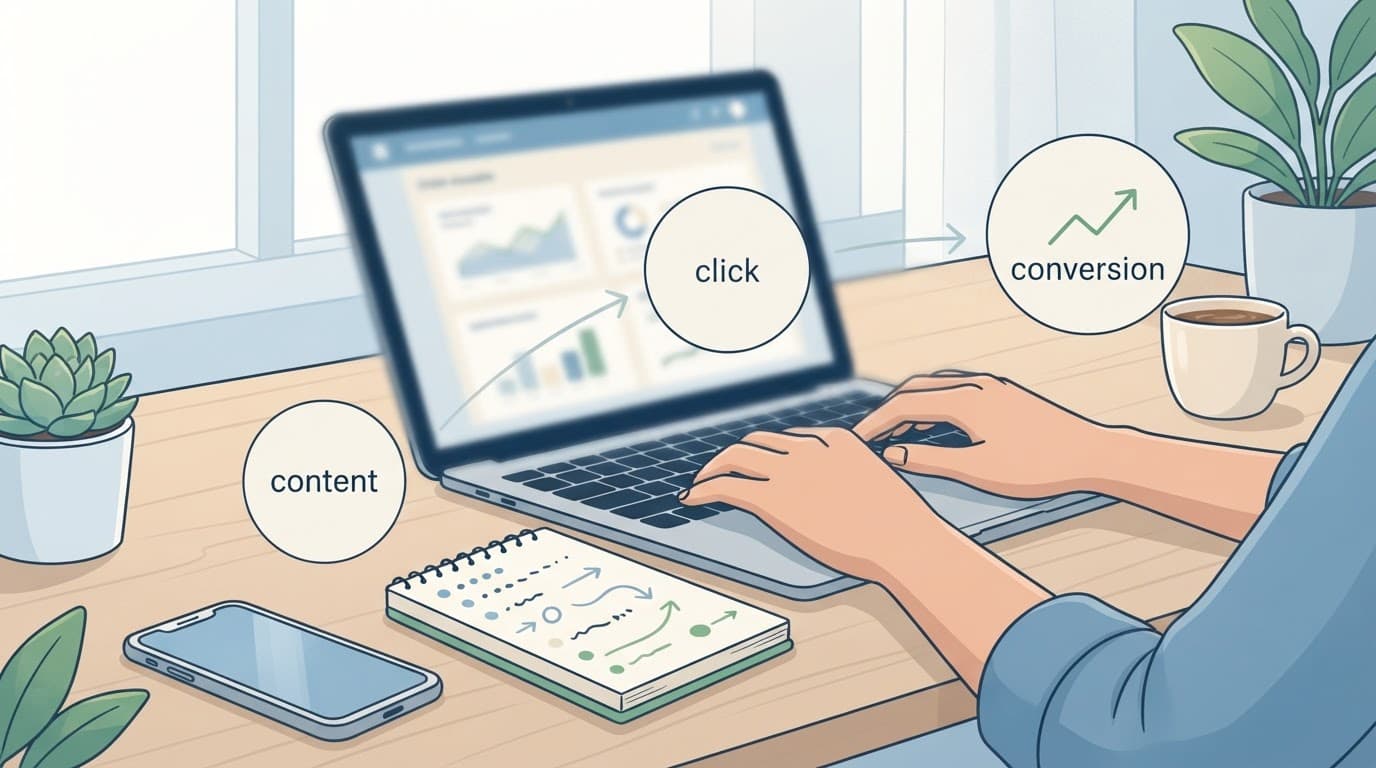
Without tracking, you may mistake traffic for progress. A page with 100 visitors and no affiliate clicks needs a different fix from a page with 10 clicks and no sale.
Start with a simple measurement setup
Create one tracking label for each page and link placement. For example, labels might identify the article, email, top button, comparison table, or closing recommendation.
Google Analytics 4 can show page visits and outbound click events. Add campaign parameters to links that lead to pages you control, such as an opt-in page or bridge page. Google’s URL builder documentation explains how campaign parameters identify traffic sources.
Your affiliate dashboard is the source for reported clicks, orders, pending commissions, approved commissions, and reversals. Analytics usually can’t see the merchant’s final sale unless the network passes that data back to you.
For a beginner-friendly setup, use the affiliate link tracking guide to organize labels and identify which page or placement generated each click.
Read the gap between clicks and sales
A page with visitors but no clicks may have a weak offer match, an unclear introduction, or a call to action that appears too late. Improve the page’s decision section before publishing more content.
Clicks without sales can point to a different issue. The merchant page may not match your promise, the price may surprise readers, the tracking link may be broken, or the product may have a longer buying cycle. Check the destination and program dashboard before rewriting everything.
When sales appear, review approved revenue rather than celebrating every pending commission. Refunds and cancellations can reduce the final amount. Earnings per click, or EPC, can also reveal that a smaller page produces better visitors than a broad article.
A Simple 14-Day Plan for Your First Affiliate Sale
Use this schedule to turn a vague goal into a focused test. The 30-day affiliate content plan can help if you want to continue after the first two weeks.
- On day one, choose one audience, one problem, and one affiliate offer. Read the complete program terms.
- On day two, collect real questions from search suggestions, comments, emails, and relevant communities. Pick one high-intent topic.
- During days three through five, write one review, comparison, or “best for” page. Put the verdict, audience fit, limitations, and disclosure near the top.
- On day six, test every affiliate link on mobile and desktop. Add consistent tracking labels and confirm that the destination matches your wording.
- During days seven through ten, share the page through your existing email list, social posts, videos, or helpful community replies.
- During days eleven through fourteen, check visits, clicks, replies, and affiliate reports. Improve one weak point instead of changing the offer, headline, page, and traffic source at once.
The goal is not to publish as much as possible. It is to learn whether one specific audience will act on one well-matched recommendation.
Mistakes That Delay the First Commission
Chasing broad traffic too early
A beginner may publish general posts about “online business” and add an affiliate link to each one. Those articles can attract curious readers who aren’t choosing a product yet.
Start with a narrower problem. A page about choosing a website platform for a beginner has a clearer path to an affiliate recommendation than a broad article about making money online.
Hiding disclosures or making the page look official
A disclosure buried in the footer may not be clear enough. Put it near the recommendation and repeat it where platform rules require. The affiliate disclosure examples from Termly can help you compare clear wording and placement.
Don’t use a brand name in your domain, copy a merchant’s logo, or title a page in a way that suggests official support. Avoid income guarantees and exaggerated product claims. Clear ownership, accurate evidence, and honest limitations protect both your readers and your account.
Conclusion
A first affiliate sale with little traffic comes from matching the right offer to a reader who already wants a solution. One focused page, one clear recommendation, useful promotion, and accurate tracking give you more to work with than a large collection of unfocused posts.
Start with a problem you understand, check the program rules, and help the reader decide without pressure. Small, relevant audiences can create meaningful results when every click has a clear reason behind it.