
Searches for “is x legit” come from readers who are close to a decision. They are checking for risk, not looking for a pep talk.
That makes these posts strong affiliate assets, but only when the page feels trustworthy. If your review sounds like a sales script, readers leave. In 2026, the pages that win answer the question early, show proof, and still leave room for a real downside.
Why “Is X Legit” posts bring in buyers, not browsers
A legit review sits near the bottom of the funnel. The reader already knows the brand name. They want one thing, a reason to move forward or a reason to back out.
So give the answer near the top. A short verdict works best: “Yes, X is a real company, but it’s a poor fit if you need fast support” or “Yes, it’s legit, though the price may be hard to justify for beginners.” That format respects search intent and lowers bounce rate. It also fits how Google surfaces short answers in AI-generated summaries.
Give the verdict early, then use the rest of the page to prove it.
This matters even more now because generic AI content is everywhere. As of April 2026, creator-led reviews with firsthand proof still have an edge. Clear structure and buyer intent also matter, which is why this no-fluff guide to ranking buyer-intent content lines up well with what is working.
A strong post also separates “legit” from “good.” Some companies are real businesses and still bad fits. That distinction builds trust, and trust drives conversions.
If your site covers bigger trust topics, connect those pages to your brand reviews. A broader page like is affiliate marketing worth it in 2026 can feed readers into tighter, higher-intent reviews later.
The structure that satisfies search intent and builds trust
This layout keeps the reader moving and covers the details they came for.
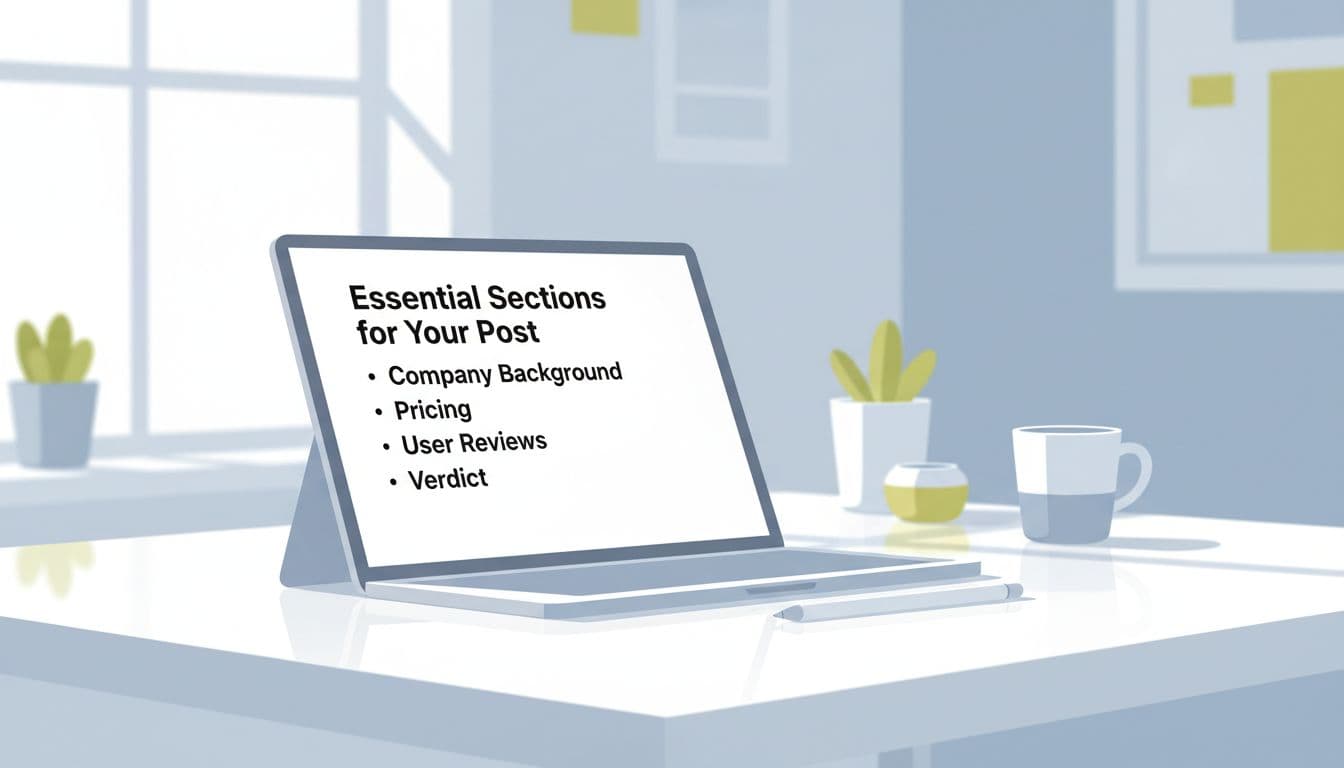
| Section | What to include |
|---|---|
| Quick answer | A direct yes, no, or yes-with-caveat verdict |
| Company background | Who runs it, how long it has existed, and how support works |
| Pricing | Full cost, trials, renewals, and hidden upsells |
| Customer complaints | Repeated issues, not random one-off gripes |
| Refund policy | Deadline, process, and any exclusions |
| Real user sentiment | Common praise and common complaints from third-party sources |
| Red flags | Missing terms, weak support, wild claims, or vague ownership |
| Who it’s for | The reader profile that will likely benefit |
| Who it’s not for | The reader profile that should skip it |
| Final verdict | A plain recommendation with reasons |
That structure works because it mirrors the reader’s own checklist.
The company background section should not copy the About page. Verify what you can. Look for ownership, support channels, company age, and whether the business leaves a real footprint online. Before promoting any offer, run it through this affiliate program vetting checklist.
Pricing needs more than the front-end fee. Show the full path, including upsells, add-ons, and renewal terms. If the reader learns about surprise costs after clicking your link, you lose them for good.
Complaints and user sentiment deserve their own space. One angry review proves little. A pattern around billing, support delays, or refund trouble means more. Check review platforms, Reddit threads, YouTube comments, and app stores when they apply. If you want more format ideas around reviews, comparisons, and tutorials, these affiliate content templates that convert are a useful reference.
How to rank in 2026 without sounding biased
Ranking is only half the job. The page also has to move the reader from doubt to decision, without acting like a closer.
- Research past the sales page. Read the pricing page, terms, refund policy, and support details. Then look for recurring complaints on third-party sites.
- Write the verdict-first intro. Answer the “is x legit” query in the first few lines, then explain why.
- Build depth around real questions. Add sections on cost, support, complaints, alternatives, and fit. That gives the page topical depth without filler.
- Show real experience when possible. If you tested the product, say what happened. If you could not test it, explain your research method and say that clearly.
- Keep the CTA calm. One main recommendation is enough. If the product is a poor fit for part of your audience, say so.
Internal linking helps here, too. Link into your legit review from comparison posts, beginner guides, tutorials, and “worth it” articles. Then link back out to related pages from the verdict or alternatives section. That helps readers keep moving, and it also strengthens your topical map.
On-page basics still matter. Tight intros, useful subheads, updated facts, and descriptive anchor text all make the page easier to scan. This on-page SEO checklist for affiliate marketing websites is a good refresher if your review pages feel thin.
The conversion piece is simple. Readers click when they trust your judgment. That usually means honest caveats, one clear next step, and no fake urgency.
A good “is x legit” post acts like a careful editor. It gives the answer fast, checks the hard facts, and explains who should walk away.
That is why these pages still rank and convert in 2026. When the verdict is honest and the proof is clear, trust does the selling for you.