
A practical question in affiliate marketing is whether you can use one account for multiple websites. Check whether the program permits using one affiliate account across multiple websites, and make sure each domain meets its requirements. Account approval doesn’t automatically approve every affiliate website you launch.
You can also run several affiliate programs on one website. Each program has its own tracking and compliance rules, so start with the account terms.
Key Takeaways
- Register each website under the program’s required process.
- Separate site performance with tracking IDs or sub-IDs.
- Judge results by approved commissions, not clicks alone.
- Keep those suggestions relevant and disclose your financial relationships.
Using One Affiliate Account for Multiple Websites
Amazon Associates: register domains and separate tracking
Amazon Associates lets publishers add website URLs to an existing account. Keep that site list current when expanding your portfolio.
Its tracking ID documentation allows up to 100 tracking IDs per Associates account. Assigning different IDs to different websites separates their results without creating additional accounts.
Those IDs are reporting tools. They don’t replace site registration or create separate payment accounts.
Awin and Impact: different account structures
Awin allows one publisher account to manage multiple websites, listed individually under Promotional Spaces.
Impact supports Sub IDs and Shared IDs for distinguishing websites or placements in reporting. However, adding a tracking parameter doesn’t approve an unlisted website.
Network membership and advertiser approval are separate steps. Each merchant may be an affiliate partner with its own eligibility rules. Those rules can limit websites, traffic sources, or promotional methods within an approved publisher account.
How to Manage Multiple Sites Under One Account
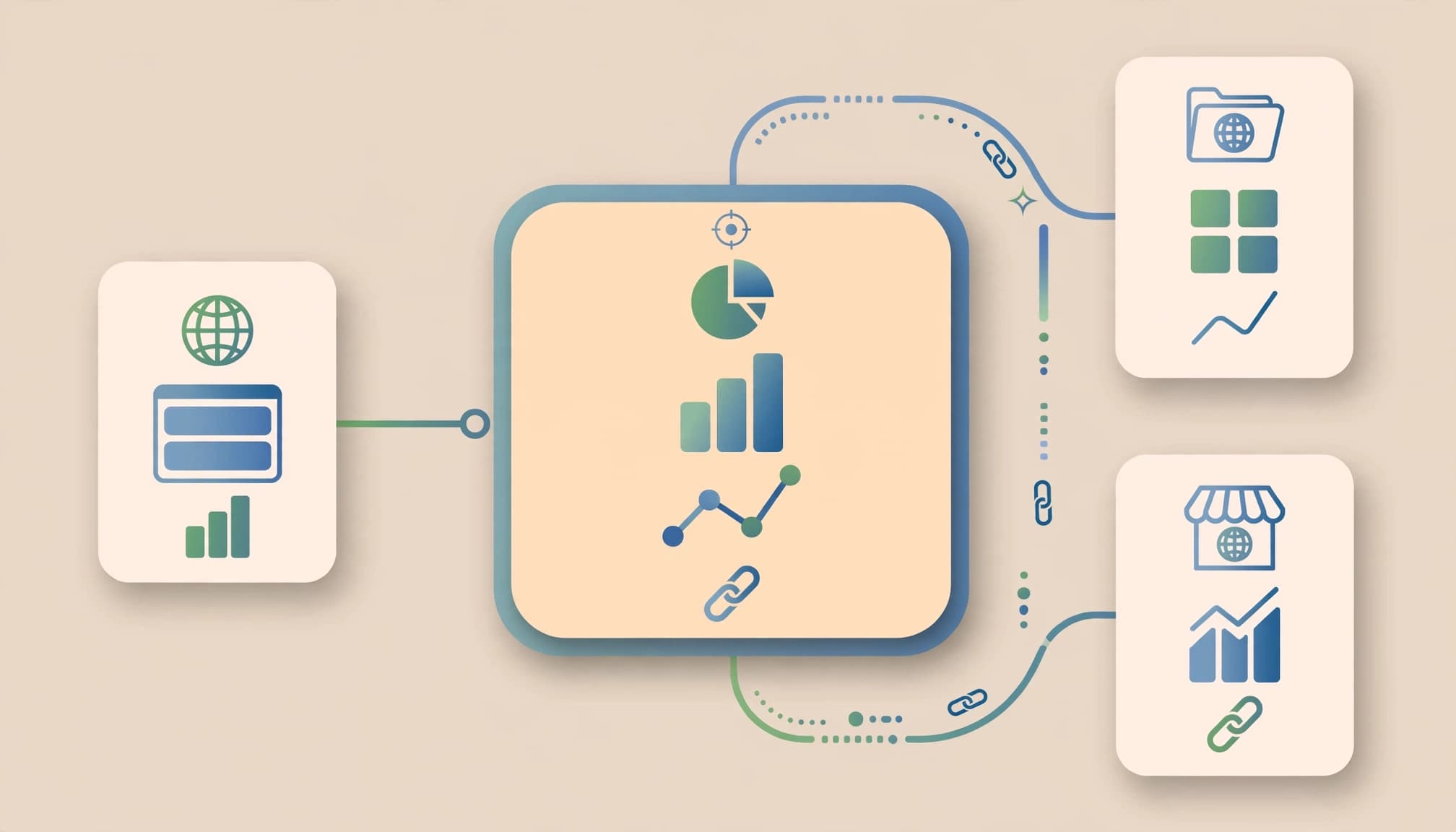
Give every site identifiable links
Register each domain and complete any required advertiser approval before you promote products or publish affiliate links. Then generate affiliate links with the program’s supported tracking IDs or sub-IDs.
Use a consistent naming system built around the website, page, and placement. Don’t put personal or sensitive reader information into identifiers.
Record which program, tracking label, and destination belong to each site. Our guide to tracking affiliate sales in GA4 explains how tracking and analytics for outbound clicks complement merchant results.
Reconcile commissions and test destinations
Track clicks, conversions, and pending, approved, reversed, and paid commissions separately. Record each commission rate separately from realized earnings per click, which equals approved net commissions divided by referred clicks.
Payments follow the account’s payee details, thresholds, and schedule. A tracking ID doesn’t create a separate payout.
Also test affiliate links in an incognito window. Confirm that each destination matches your recommendation and preserves tracking through redirects.
A link can load successfully while sending readers to the wrong offer or losing attribution.
Our affiliate redirect audit covers these less obvious failures.
Can One Website Use Several Affiliate Programs?
Yes. A website can earn from programs on different platforms when each agreement permits simultaneous promotion.
Read each program’s terms before adding another merchant. Restrictions can cover competing offers, paid advertising, email, and other traffic sources.
Keep relevant products connected to your audience’s needs. Unrelated suggestions confuse readers, while excessive affiliate links make useful content look spammy.
Disclose affiliate relationships and commissions near relevant links for transparency. Amazon’s disclosure requirements call for clear, conspicuous disclosure and identification as an Associate. An About page alone doesn’t replace disclosure near links.
Clear disclosures and useful offers build reader trust. That trust supports repeat purchases and long-term earnings. Adding programs only helps when readers still find your recommendations useful.
Nine Affiliate Website Examples to Learn From
These affiliate websites show the range of models used by affiliate marketing websites. Their scale and monthly visits alone don’t predict what a smaller website will earn.
- Wirecutter launched in 2011 and joined The New York Times in 2016. Reported annual revenue exceeded $20 million by 2018. Its detailed product reviews illustrate the value of purchase-focused content.
- ConsumerSearch organizes product reviews and buying recommendations. Its useful lesson is helping readers narrow choices rather than filling pages with unrelated product picks.
- MoneySavingExpert began in 2003. Its 2026 About page reports roughly 9.5 million monthly users and 9.1 million weekly email recipients.
- This Is Why I’m Broke curates unusual gifts and products. Its recognizable editorial theme gives varied suggestions a consistent audience.
- Skyscanner compares travel options. Ctrip acquired it in 2016 for approximately $1.75 billion, illustrating the commercial scale comparison tools can reach.
- Finder is a comparison site with content across financial and consumer categories. Clear category organization helps readers find options relevant to their particular decision.
- PCPartPicker combines computer-component selection with retailer price comparisons. Its practical tools support readers while they’re planning a purchase.
- NerdWallet reported $538.9 million in 2022 revenue. Its financial guidance and comparisons illustrate a business built around consequential consumer decisions.
- Dog Food Advisor became part of Wag! in January 2023 through a $9 million acquisition. Its focused subject shows how niche affiliate marketing can support specialist publishing.
Frequently Asked Questions
Can I reuse the same affiliate link across websites?
Often, yes, when both websites are permitted under the agreement. However, separate tracking IDs or sub-IDs make performance easier to compare. Reusing one identifier merges results that you may later need to separate.
Does an analytics click prove I earned a commission?
No. Your analytics records the outbound click, while the merchant determines whether a transaction qualifies. Attribution rules, excluded products, cancellations, and refunds can prevent payment even when your click tracking works.
Keep Reporting Separate as Your Portfolio Grows
One affiliate account can simplify administration across several websites. Separate tracking shows which sites produce approved earnings, so you can assess affiliate income by results rather than site count or clicks.
Register domains properly, preserve attribution, and keep recommendations relevant. A manageable portfolio with trustworthy content is more useful to an affiliate marketer than extra websites with links and results they can’t confidently maintain.