
Landing pages can attract plenty of readers and still produce little affiliate income. Traffic volume alone doesn’t show whether a page earns clicks, sends qualified visitors to the merchant, or produces affiliate conversion rates that survive approval and refund periods.
Good tracking separates on-site reader behavior from merchant-side payout data. For content creators, measurement is central to affiliate marketing because it distinguishes engagement, qualified referrals, and approved earnings. Once those layers are clear, you can improve a page without guessing or pushing products your audience doesn’t trust.
Key Takeaways
- Measure landing-page sessions, unique affiliate clicks, recorded conversions, and approved commissions as separate metrics.
- Calculate a page’s affiliate conversion rate with commission-qualified conversions divided by unique affiliate clicks.
- Use GA4 to understand on-site behavior and affiliate-network reports to validate sales, approvals, reversals, and payouts.
- Tag pages and button placements with consistent SubIDs so each sale can be traced back to its originating content.
- Compare similar traffic, offers, devices, and date ranges before deciding that one landing page performs better.
Start With the Right Conversion Definitions
A report becomes misleading when it treats every visit or click as a conversion. In affiliate marketing, define each stage consistently before comparing offers or pages.
Sessions and landing-page visits
A session begins when someone arrives on your site. A landing-page session shows how much traffic a page receives, but it doesn’t show purchase intent by itself.
For example, an informational article may receive 5,000 sessions from search but send only 100 people to an offer. A focused comparison page may receive 500 sessions and send 150 people to the same offer. The smaller page has stronger commercial intent.
Unique clicks, sales, and qualified commissions
A unique affiliate click is one tracked visitor or click identifier sent to a merchant. It differs from total clicks because one person may tap multiple buttons or return later.
A conversion is a completed order, lead, trial, or subscription recorded by affiliate programs. A commission-qualified conversion is an approved outcome eligible for an affiliate commission under the program’s rules. Keep pending, reversed, approved, and paid commissions in separate columns.
A click event shows interest on your site. An approved commission confirms what the affiliate program will pay under its own rules.
Calculate Affiliate Conversion Rates by Landing Page
For most publishers, the cleanest formula uses unique affiliate clicks as the denominator:
Affiliate conversion rate = commission-qualified conversions / unique affiliate clicks x 100
If a review page generates 240 unique clicks and eight approved sales, its result is 3.33 percent. Record the date range, offer, traffic source, and attribution window beside that number.
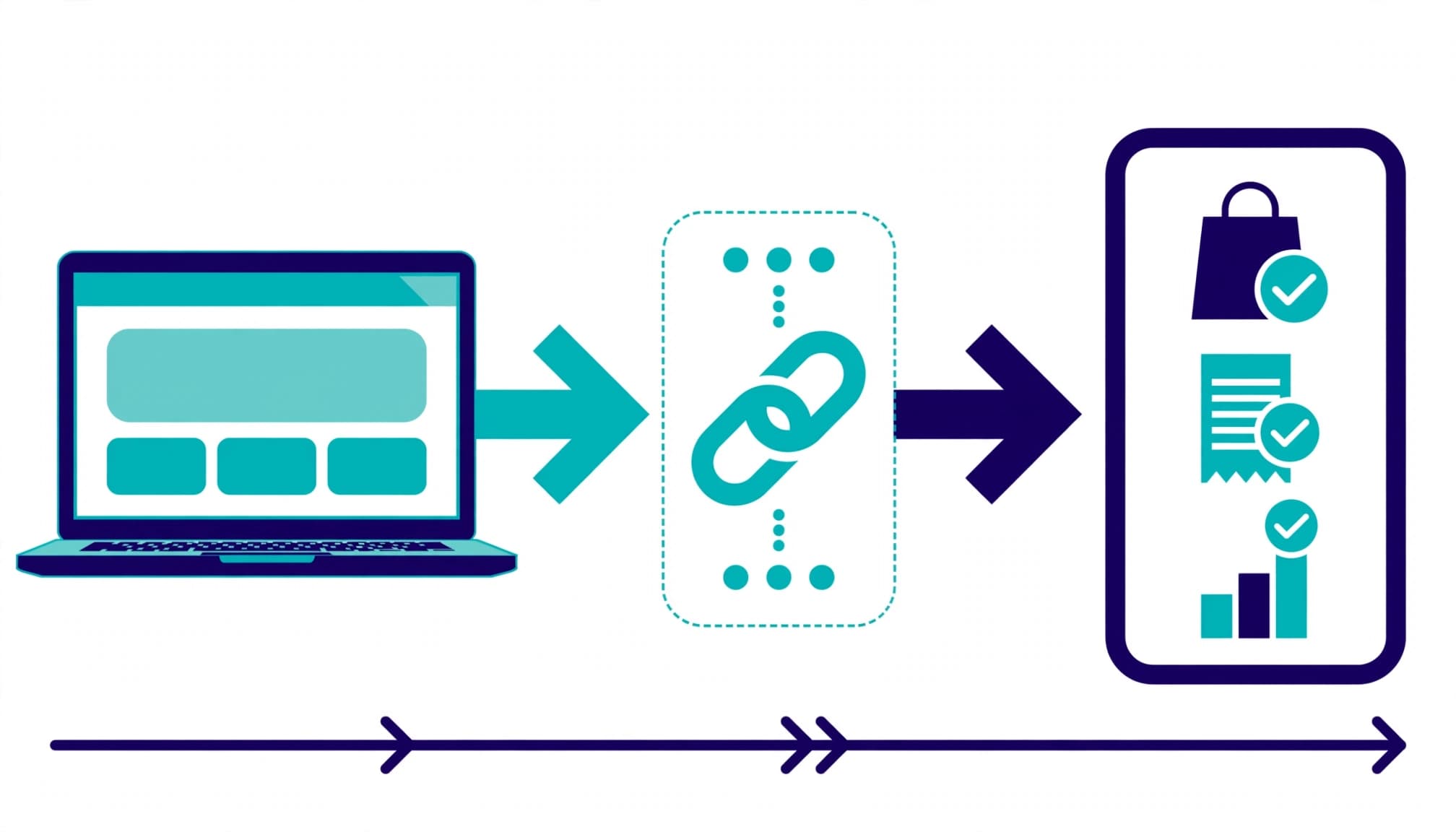
Keep click-through rate separate
Click-through rate answers a different question:
Affiliate CTR = unique affiliate clicks / landing-page sessions x 100
CTR tells you whether visitors want to investigate the recommendation. The affiliate result tells you whether referred visitors complete a commission-eligible action. A page’s recommendation and call to action influence outbound clicks, but merchant pricing, checkout, or message match can still weaken sales.
If your network only provides total clicks, calculate a click-based rate and label it clearly. Don’t compare that figure against a rate based on unique clicks.
Use a simple page-level scorecard
Track the same fields for every important page.
| Metric | Calculation or source | What it reveals |
|---|---|---|
| Landing-page sessions | GA4 landing-page report | Traffic volume and source quality |
| Affiliate CTR | Unique clicks / sessions | Strength of the recommendation and call to action |
| Affiliate conversion rate | Approved conversions / unique clicks | Merchant-side buying performance |
| Earnings per click | Approved commission / unique clicks | Page value after payout differences |
| Reversal rate | Reversed conversions / recorded conversions | How much provisional revenue disappears |
When revenue differs, average order value helps contextualize the gap alongside affiliate commission rates. This scorecard prevents a common mistake: scaling a page because it produces clicks while ignoring weak earnings per click.
For recurring subscriptions or renewals, customer lifetime value can provide secondary context. It shouldn’t replace the page-level approved-conversion rate.
Build Tracking That Connects Pages to Sales
Landing-page reporting works only when page, offer, partner, and link placement use stable names. In affiliate marketing, decide on the format before publishing a new campaign.
Capture outbound affiliate clicks in GA4
Use Google Tag Manager to fire one event, such as affiliate_click, when visitors use affiliate links. Pass useful parameters, including partner, offer_id, link_position for each call to action, and destination_url.
For a detailed implementation, use this guide to track affiliate clicks in Google Analytics 4. For example, label editorial reviews separately from promotional content placements when both use the same offer. Inconsistent labels split one program into several report rows, which makes page comparisons unreliable.
Google Analytics defines key events as actions that matter to business success. You can mark an affiliate click as a key event when click intent is a reporting goal. However, don’t mistake it for purchase revenue.
Add SubIDs to identify page and placement
GA4 can tell you that a visitor clicked. The affiliate network needs its own identifier to tie a sale back to a specific page or button.
Use a readable SubID pattern such as review_email_tool_top_button or comparison_page_pricing_cta. A consistent affiliate SubID tracking setup can connect a post, placement, click ID, and later network postback.
Keep parameter values short. Also, use one spelling for each partner and offer. A tracking system with random abbreviations becomes difficult to audit after a few months.
Use GA4 for Behavior, Not Final Payouts
GA4 is excellent for measuring how people reach and use your landing pages. It usually can’t confirm a merchant-site purchase because that transaction occurs outside your property.
Build a landing-page comparison report
In GA4 Explore, add Page path as a dimension, then compare sessions, users, affiliate_click event counts, and click-through rate. Add session source, medium, device category, and campaign when you need to explain differences between traffic sources.
A practical GA4 landing-page report workflow helps isolate pages that bring engaged visitors instead of only large traffic totals. Break down results by call to action, button, or link placement when you need more detail. Register important event parameters as custom dimensions before expecting them in explorations.
If source or medium appears as “(not set),” review your tagging. Use utm_source and a consistent value such as utm_medium=affiliate. Also check redirects and link shorteners, since they can remove parameters.
Reconcile GA4 with an affiliate network
These platforms usually apply their own attribution rules, often last click. Meanwhile, GA4 may use data-driven attribution and split credit across several touchpoints. Different attribution models can assign credit differently. A review may introduce the buyer, while a later branded search receives final network credit.
Compare date ranges with enough time for the normal buying cycle, approval delay, and reversal period. GA4 is your on-site behavior and outbound-click record. Approved network data is the financial source of truth for commissions, refunds, and payable earnings. For recurring offers, customer lifetime value can supplement approved commissions, but it doesn’t replace validated network revenue.
Compare Landing Pages Without Distorting the Result
A fair comparison in affiliate marketing holds major variables steady. Don’t compare a warm email marketing campaign sent to past buyers with broad social or search traffic, since these traffic sources reflect different intent.

Control the variables that change buyer intent
Compare pages that promote the same offer during the same period. Segment by device, country, traffic source, and new versus returning visitors when the volume supports it.
Also check the merchant destination. A clear review can underperform because the merchant page loads slowly, changes the promised price, or loses the referral ID. Before increasing traffic, audit the merchant landing page for message match, friction, trust signals, and attribution risks.
Read the metrics together
A high conversion rate on 20 clicks isn’t enough evidence to rewrite a page. Wait for a meaningful sample and compare benchmark metrics from similar groups.
Strong click-through rate with weak affiliate conversion rates often points to an offer or merchant-page problem. Weak click behavior with a solid click-to-sale rate usually means the page needs clearer product fit, stronger proof, or better call to action placement. Earnings per click helps settle the decision when two programs have different commission rates or average order values. For recurring products, customer lifetime value can increase the value of a converting visitor without changing the observed page conversion rate.
Improve Conversions Without Losing Reader Trust
Conversion rate optimization should make affiliate marketing recommendations clearer, not more aggressive. Readers can tell when a page hides tradeoffs or pushes urgency without evidence.
Write reviews that help people self-select
State who the product suits and who should skip it near the top. Include limitations, pricing context, and alternatives where they matter. Firsthand screenshots, real workflows, tested outcomes, and relevant social proof carry more weight than a quick unboxing.
A high-converting product review structure can keep a page useful while placing a call to action after the verdict, pricing discussion, and objection handling. Add a visible affiliate disclosure before readers encounter the recommendation or related promotional content.
Test offers and page elements one at a time
Coupons, limited-time bonuses, and exclusive deals can lift action when they solve a real objection. They can also attract discount-only traffic that later reverses, so check approval rates before calling a test successful. For subscription offers, consider customer lifetime value alongside approval rates, reversal rates, and refund quality.
Change one meaningful element at a time, such as the lead recommendation, comparison table, call to action position, or merchant destination. Give the test enough traffic and time. When a page earns clicks but no sales, use affiliate conversion troubleshooting to check scroll depth, link placement, destination quality, and tracking before changing the copy.
Frequently Asked Questions
What is a good affiliate conversion rate?
Rates vary by offer price, audience intent, device, merchant brand, and conversion definition. Broad affiliate benchmarks often fall between 0.5 percent and 5 percent, with 1 percent to 3 percent often treated as a general reference point. Use your own page, offer, and traffic-source history as the better benchmark.
Can Google Analytics track affiliate sales?
GA4 can reliably track sessions, landing-page behavior, and outbound affiliate clicks on your site. It can’t usually see a purchase completed on a merchant’s site unless you also control that tracking setup or receive a validated postback. Confirm final sales and commissions in the affiliate network dashboard.
Why do GA4 and my affiliate network show different results?
The systems may use different attribution models, time zones, cookie rules, and reporting dates. GA4 may distribute credit among touchpoints, while a network often awards one last eligible click. Pending sales, returns, fraud checks, and missing identifiers can create further gaps.
Measure What the Page Actually Earns
A useful landing-page report follows a reader from session to affiliate click, then validates the outcome in commission data. It reveals whether the issue is traffic quality, page messaging, the merchant experience, or attribution itself.
Calculate return on investment only after assigning costs for content, promotion, or paid traffic. Track affiliate conversion rates with consistent definitions, clean identifiers, and approved commissions. Clicks alone shouldn’t determine the value of promotional content. For recurring offers, customer lifetime value can provide an optional downstream measure, separate from immediate approved commissions.