
Your first product gets more attention than the rest. In a best-product post, that top slot can change CTR, EPC, RPM, and total affiliate revenue without adding a single new visit.
Many publishers leave list order alone because it “looks right.” That costs money. A smart affiliate product list order earns its position with data, while still staying fair to the reader.
Why product order changes clicks and earnings
Most best-product posts are top-heavy. Readers skim, stop at the first solid option, and often click before they reach item four. Your affiliate link placement map matters, but ranking order shapes what gets seen in the first place.
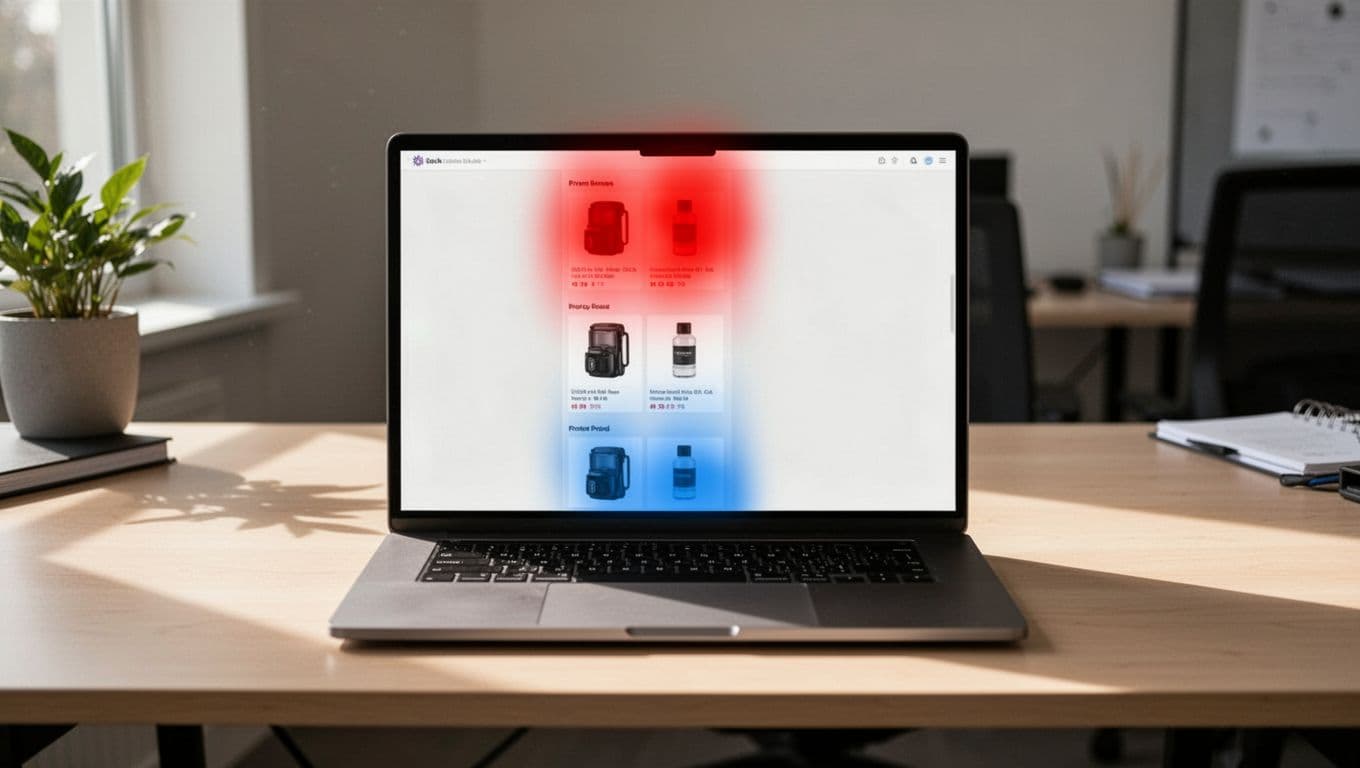
That position bias affects every downstream metric. A higher top-slot click rate lifts CTR. However, if that product converts poorly or pays less, your EPC can fall. Page RPM then suffers, even if the page looks busy.
A simple example makes this clear. Say 1,000 pageviews hit your list post.
Order A gets a 20% CTR, which means 200 clicks. If EPC is $0.90, the page earns $180, so RPM is $180.
Order B gets a 16% CTR, which means 160 clicks. If EPC is $1.40, the page earns $224, so RPM jumps to $224.
The second order loses clicks but wins revenue. That is why the best affiliate product list order is not always the one with the highest CTR.
EPC deserves close attention because it blends click quality and payout into one number. If you want a clean refresher, this EPC tracking overview explains why affiliates rely on it when judging real profitability.
Six affiliate product list order tests worth running
Run one ranking rule at a time. Keep the same products, the same product cards, and the same CTA style. Otherwise, you will not know what changed the outcome.
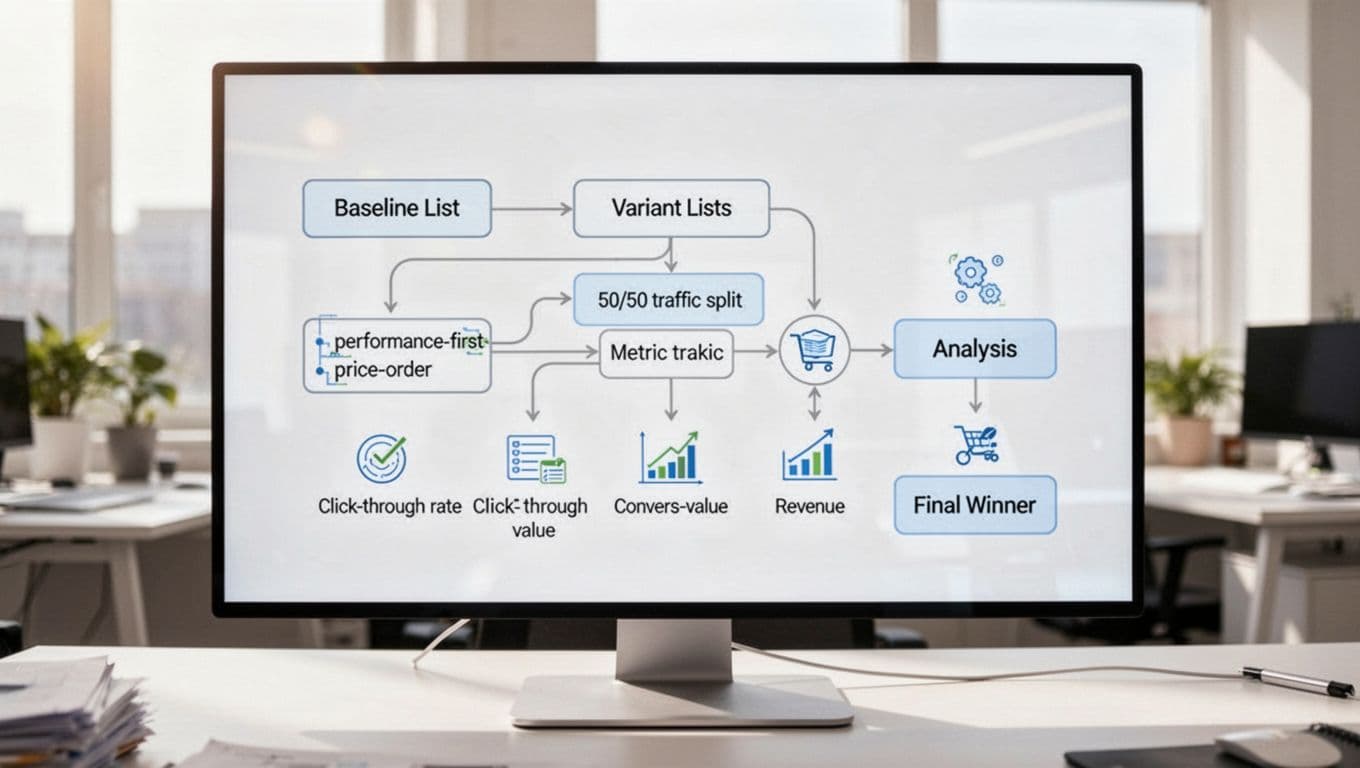
This table gives you a fast starting framework.
| Order test | What goes first | Watch first | When it tends to win |
|---|---|---|---|
| Highest EPC first | The offer with the best earnings per click | RPM, total revenue | When commission gaps are wide |
| Conversion-rate first | The product with the strongest CVR | Sales per 100 clicks | When readers arrive close to buying |
| Reader-intent first | The best match for the query and use case | CTR, CVR | When the page targets one clear need |
| Price-based order | Low to high, or value-first | CTR, AOV, EPC | When budget shock hurts clicks |
| Editorial-score order | Your best overall pick by review score | CTR, return visits, revenue | When trust is your edge |
| Alternating top positions | Rotate top 2 to 3 products | All core metrics | When products are close or traffic is limited |
Start with highest EPC first if your payouts vary a lot. This is common in software, finance, and high-ticket tools. A product that earns 60% more per click can outrun a slightly lower CTR.
Order by conversion rate when one product closes better than the rest. This often works on warmer traffic, such as comparison posts or brand-aware visitors.
Reader-intent ordering works best when the page answers one strong need. If the query is “best email tool for beginners,” place the easiest beginner fit first, not the richest payout.
Price-based ordering can be strong when readers have mixed budgets. In some niches, leading with a mid-priced “best value” option works better than cheapest-first. The logic is simple: cheap attracts clicks, but value often converts better. If that is a recurring issue on your site, review this guide on matching affiliate products to budgets.
Editorial-score ordering is the safest long-term test. You rank products by your own review rubric, then see whether trust-driven order beats pure payout order.
Alternating top positions is useful when you cannot split traffic cleanly. Rotate positions for fixed periods, not random days. For cleaner results, this affiliate A/B testing landing pages guide suggests giving each variation enough time and enough clicks to settle.
How to judge a winner without fooling yourself
Pick a control order first. Then change only the ranking logic. Do not rewrite intros, swap buttons, or add new proof while the test runs.

Track the metrics as a set. CTR shows whether your top slots pull interest. Conversion rate shows buyer fit after the click. EPC shows what each click is worth. RPM tells you if the page earns more per 1,000 visits. Total affiliate revenue is the final score.
A practical test might look like this. You move a mid-priced tool from #3 to #1 because it has the best conversion rate. CTR drops from 19% to 17%. Still, CVR rises from 4.2% to 6.1%, EPC climbs from $1.05 to $1.48, and RPM jumps 27%. That order wins, even though fewer people clicked.
Keep traffic sources stable while you test. A promo week, email blast, or ranking jump can skew results fast. If you cannot split traffic 50/50, alternate top positions for full weeks and compare equal time periods.
Trust has to stay ahead of revenue
Never move a poor-fit product to the top just because it pays more. Short-term lift is not worth long-term distrust.
A list order test should change visibility, not truth.
That is why editorial-score ordering often deserves a place in your rotation. Pair it with honest drawbacks, buyer-fit notes, and light evidence. These proof blocks in affiliate posts help readers see why a top-ranked product earned its spot.
The best affiliate product list order is the one that improves revenue without bending your recommendations. When order, intent, and trust line up, your CTR becomes cleaner, your EPC rises, and your RPM follows.