
A strong month can hide a fragile affiliate business. If one merchant, one network, or one traffic source pays most of your bills, a single policy shift can cut revenue fast. That risk is sharper in 2026 because AI search, privacy changes, and commission resets all move quickly.
The fix is not to chase every shiny channel. A better move is an affiliate revenue concentration audit that shows where the risk sits, then trims exposure without hurting the offers that already convert.
Why concentration risk is worse in 2026
Concentration risk shows up when too much performance depends on one partner or source. A clear breakdown is in this concentration risk overview. In 2026, that risk is easier to miss because the systems around affiliate traffic are less stable.
Platform dependency is the first issue. AI-driven search results, social feeds, and recommendation engines can shift clicks without warning. Merchant volatility is the second issue. Programs change terms faster now, from commission cuts to tighter approval rules and shorter cookies. Tracking privacy shifts are the third issue, and they make last-click data less reliable than it used to be.
If one merchant, one platform, or one traffic source can move your month, the mix is too tight.
Traffic-source concentration adds another layer. A site that leans too hard on SEO, or a brand that leans too hard on paid social, can look healthy right up until an algorithm turns. That is why a 2026 audit needs to look beyond revenue alone.
Run the audit on your current mix
Start with the top merchants, top pages, and top traffic sources. If you are reviewing new partners, use this affiliate program vetting checklist before you add more volume to a risky relationship.
Use a simple scorecard like this.
| Audit area | What to measure | Risk signal | Move now |
|---|---|---|---|
| Merchant mix | Revenue share by program | One program over 35% | Add a second offer in that category |
| Traffic mix | Share by source | One source over 50% | Build a new source before scaling more |
| Page mix | Revenue from top pages | One page over 30% | Create related pages and update links |
| Tracking quality | Reversals, click loss, attribution gaps | Reports jump around month to month | Test links and compare network data |
The table gives you a fast read. A healthy affiliate business still has winners, but no single winner should carry the whole year.

Matt McWilliams’ affiliate program audit guide is useful when you want to compare this month with the last quarter. That side-by-side view matters more than a single snapshot, because concentration often builds slowly.
Watch for the hidden traps that distort the numbers
The first trap is attribution. If a program uses strict last-click logic, it may undercount your content that starts the sale. Decoding attribution priority rules helps you check whether your top pages are really the best pages, or just the last ones in the path.
The second trap is a commission cut that lands without much warning. When that happens, use handling affiliate commission cuts to decide whether to renegotiate, replace the offer, or move traffic elsewhere. A rate drop hurts less when you already have another merchant in the queue.
The third trap is merchant program volatility hidden behind good current earnings. A category can look safe because it paid well last quarter. Then the payout drops, the cookie window shrinks, or the product line changes. That is why your audit should include policy dates, reversal trends, and payout thresholds.
Reduce risk without killing profit
The goal is not equal revenue across everything. That can waste time and money. The goal is to keep your best performers while lowering the chance that one problem wipes out the month.
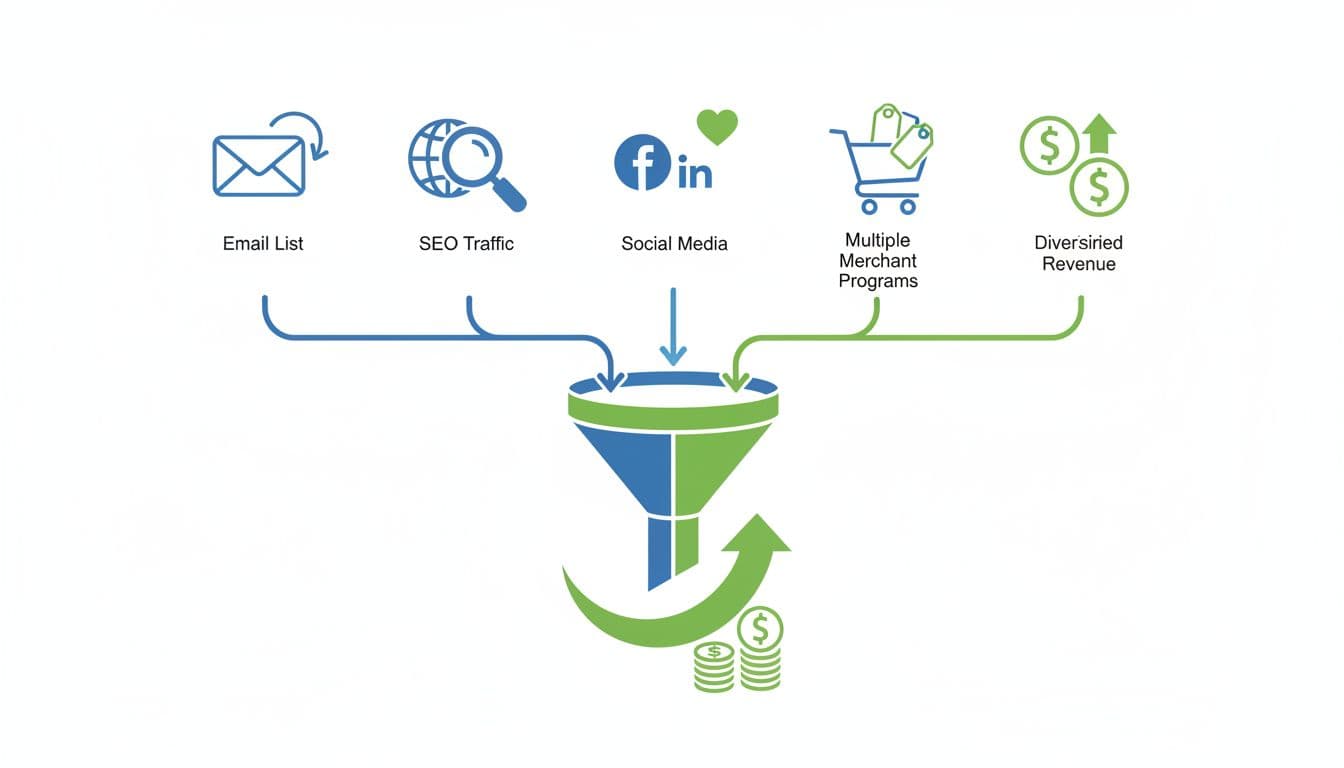
A practical benchmark appears in this concentration risk guide, which uses roughly 30% to 35% as a healthy upper range for one partner. Use that as a warning light, not a rigid law.
- Build a second merchant option for each core buying intent.
- Spread content across reviews, comparisons, and problem-solving pages.
- Grow email and direct traffic, since they are less exposed to one platform change.
- Review commissions, payout terms, and reversals on a fixed schedule.
- Keep top partners, but cap how much of the business they can control.
If you publish reviews, comparison pages, or merchant roundups, this is where traffic-source concentration gets practical. A single SEO page can still work well, but it should feed a broader system. One page earns today, while the rest of the site protects tomorrow.
Conclusion
An affiliate revenue concentration audit is less about fear and more about control. When you know which merchant, source, or page can hurt you, you can fix the weak spot before it turns into a bad quarter.
The strongest publishers in 2026 will still chase growth, but they will not let one partner write the whole story. Start with your top merchants and top sources, then tighten the mix one step at a time.