
A site can publish dozens of useful affiliate articles and still have no clear idea which topic earns the money. Page-level reports show fragments, while affiliate revenue tracking by content cluster shows the full commercial role of reviews, comparisons, tutorials, and supporting posts.
When related pages are grouped and measured together, you can spot clusters that attract qualified visitors, create assisted demand, or drive confirmed commissions. The goal is a practical system that separates reader behavior from money the affiliate network has approved.
Key Takeaways
- Content clusters should connect every article to one commercial topic, audience problem, or product category.
- Track clicks, conversions, commissions, and net affiliate revenue as separate measures because they answer different questions.
- GA4 is useful for sessions, traffic sources, and outbound click intent. Affiliate-network reports are the record for approved and paid commissions.
- SubIDs, click IDs, UTMs, and a consistent naming convention make cluster rollups more reliable.
- Compare the same time range across tools, then allow for approval delays, returns, and reversals before calling revenue final.
Build an Affiliate Revenue Tracking Model by Cluster
A content cluster is a connected group of pages built around one subject and commercial intent. An email marketing cluster, for example, might include a beginner guide, an “email marketing vs. social media” comparison, software reviews, pricing explainers, and a roundup of email tools.
Define the cluster before collecting data
Start with a simple cluster field in your content inventory. Give each page one primary cluster, even if the article touches other subjects. That rule keeps reporting readable.
Use the same cluster names in your spreadsheet, link tracker, dashboard, and content calendar. For instance, choose email-tools rather than switching between “email marketing software,” “email platforms,” and “newsletter tools.”
A cluster can contain both commercial and informational pages. Informational content may introduce readers to a problem, while comparison pages often attract people closer to choosing a product.
Separate the four revenue stages
These terms are often blended together, which creates misleading reports.
| Measure | What it records | What it tells you |
|---|---|---|
| Clicks | Outbound affiliate-link taps | Reader interest in an offer |
| Conversions | Sales, leads, or trials recorded after a click | Merchant-side action |
| Commissions | Amount assigned by the affiliate program | Potential or confirmed earnings |
| Net affiliate revenue | Approved commissions less reversals and adjustments | Income retained for the reporting period |
Clicks are not sales. A conversion is not always an approved commission. Pending commissions can reverse because of refunds, duplicate orders, fraud reviews, invalid leads, or program rules.
Keep separate columns for reported, pending, reversed, approved, and paid commissions. Paid commission is the cleanest cash-based number, while approved commission is usually more useful for recent content performance reviews.
Create a Naming System That Survives Reporting
Messy labels turn one partner or cluster into several rows. A publisher called “PartnerOne” in one report, “partner-one” in another, and a domain name elsewhere becomes difficult to analyze.
Tag pages, placements, and offers
Each tracked affiliate link needs identifiers that answer three questions: Which page sent the visitor? Where was the link placed? Which offer did it promote?
A practical SubID structure might include the cluster, article slug, placement, and offer. For an illustrative example, a link on a “best email tools” post could carry a value such as email_tools-best_email_tools-top_button-tool_a.
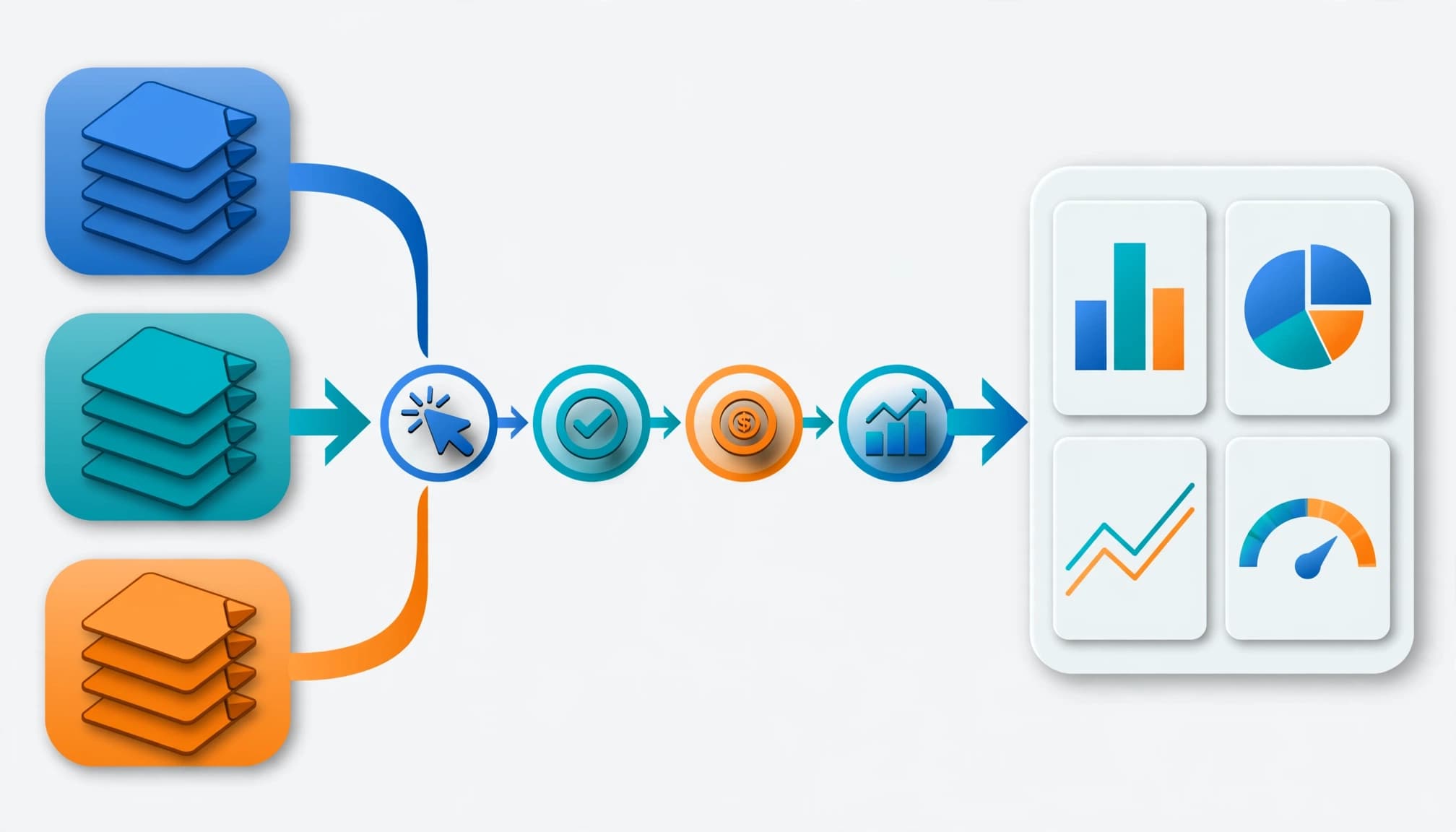
With affiliate SubID tracking, a network or tracking platform can connect a reported sale back to a post or button when it supports click IDs and postbacks. One illustrative case could show a $42 commission reported three days after a tracked click. That is a traceable event, not a performance benchmark.
Use UTMs for traffic context
UTM parameters tell GA4 where a session originated. They are especially helpful when email, social posts, paid campaigns, and partner placements all promote content within the same cluster.
Keep source, medium, campaign, term, and content values consistent. For example, use one medium value such as affiliate rather than rotating among aff, partner, and referral. CXL’s UTM parameter guide explains why a naming plan matters more than adding tags at random.
Your affiliate links also need a dedicated outbound-click event, such as affiliate_click. Record the destination, program, offer, cluster, page, and placement where possible. The affiliate link tracking guide can help you tie those fields to a repeatable tagging system.
Reconcile GA4 and Affiliate-Network Reports
Affiliate revenue tracking needs at least two views of the journey. GA4 records what people did before leaving your site. The affiliate network records whether its own rules credited a commission.
Match dates, IDs, and commission status
Export GA4, link-tracker, affiliate-network, and payment data for the same date range and time zone. Then match transaction IDs, network click IDs, SubIDs, and timestamps when those fields exist.
GA4 may show many outbound clicks but cannot normally confirm a merchant-site purchase. A network may report a commission without a clean GA4 match because of consent choices, browser limits, redirects, time zones, or its tracking rules. Commission Factory’s GA4 affiliate guidance also stresses correct UTM use for affiliate reporting.
Track approval lag as:
Conversion-to-approval lag = approval timestamp minus attributed conversion timestamp
Review the median lag and the 75th or 90th percentile. This tells you how long you should wait before judging a new cluster’s recent commissions.

Treat attribution as a rule set, not proof
GA4 can assign credit using the attribution model selected in its settings. Affiliate programs often use their own last-click, cookie, promo-code, click-ID, or de-duplication rules. Therefore, the same customer journey can produce different numbers in each system.
Compare GA4’s data-driven attribution and Paid and organic last click for the same key event and date range. Third-party explainers describe GA4 attribution differently, including a data-driven view and a last-click claim, so verify the settings in your own property before building a trend line.
GA4 is the behavior and path-analysis layer. The affiliate network or merchant report is the financial record for payout decisions.
Roll Up the Metrics That Matter
Cluster reporting should make decisions easier, not bury your team in a dashboard full of vanity metrics. Start with a short group of measures that connects traffic to approved income.
Use EPC to compare unequal traffic
Earnings per click, or EPC, is:
Approved commissions divided by tracked affiliate clicks
A cluster with 300 clicks and $180 in approved commissions has a $0.60 EPC. Another cluster can earn more total revenue with far more clicks but have a weaker EPC. That difference helps you separate high-intent content from content that only generates curiosity.
Also track sessions, affiliate click-through rate, conversions, conversion rate, approved commission rate, and net affiliate revenue. For paid traffic, add ad spend and ROAS. Revenue without cost cannot tell you whether a campaign earned its place.
An affiliate revenue dashboard template can bring sessions, clicks, EPC, commissions, and top traffic sources into one GA4 and Looker Studio view.
Keep the drilldown beneath the cluster total
A cluster total can hide weak pages. Preserve page-level rows so you can see which review, comparison, or tutorial produces the best EPC.
Also retain placement-level data. A top comparison-table link can perform differently from an in-paragraph link or a sidebar recommendation, even on the same page. That detail gives editors something concrete to test without guessing.
Digistore24’s GA4 guide for affiliates is a useful reminder that on-site interaction data and affiliate income reports need to work together rather than replace each other.
Find the Content Problems Behind Weak Revenue
A cluster with low revenue isn’t always a failed topic. The problem may sit in the offer, page intent, link placement, device experience, or tracking setup.
Investigate high clicks and low EPC
High clicks with poor EPC usually mean readers show interest but don’t complete the merchant’s desired action. Check whether the product matches the query, whether the offer is still competitive, and whether the landing page works well on mobile.
Review the merchant’s cookie window, approval rules, and reversal rate before rewriting the article. A high commission rate can still produce weak net affiliate revenue if the program credits another channel at checkout.
Use an audit for high-click affiliate posts to compare clicks, EPC, traffic source, device, and offer performance before you change copy or add more calls to action.
Flag uncertainty instead of hiding it
Tag rows as confirmed, pending, reversed, or unmatched. Don’t fold unmatched sales into confirmed cluster revenue because the numbers happen to look plausible.
A monthly affiliate revenue audit should compare exports rather than screenshots. Look for missing SubIDs, stripped UTMs, duplicate click events, redirect changes, and mismatched date windows.
Keep affiliate disclosures visible before or near recommendations. Clear disclosure protects readers and keeps commercial content honest while you improve measurement.
Frequently Asked Questions
Should a cluster include only money pages?
No. A strong cluster often includes guides and problem-solving articles that introduce readers to the topic before they reach a review or comparison page. Track the cluster total, then separate informational and commercial page types in the drilldown.
What should count as net affiliate revenue?
Define it in writing and use that definition every month. A practical approach is approved commissions minus reversals and adjustments assigned to the reporting period. Keep paid commissions in a separate field for cash-flow reporting.
How long should I wait before judging a new cluster?
Use your own conversion-to-approval lag data. If many commissions remain pending for weeks, a seven-day report will understate the cluster’s value. Compare mature date ranges and label recent results as preliminary.
Build Reports Around Confirmed Earnings
The strongest content cluster is not always the one with the most traffic or clicks. It is the one that produces qualified actions and retains the most approved affiliate revenue after the network applies its rules.
Keep cluster names stable, capture page and placement identifiers, and reconcile GA4 behavior with network commission data. That discipline turns affiliate reporting into a useful guide for content updates, offer decisions, and realistic growth.