
Big commission screenshots can fool you. For a review site, the better question is how much each 1,000 pageviews earns.
That number, your affiliate RPM, cuts through noise. It helps you compare pages, spot weak offers, and decide when ads, affiliates, or a mix make more sense. Once you track it by page type, monetization gets less fuzzy.
What affiliate RPM measures, and how it differs from ad RPM
Affiliate RPM is simple: affiliate revenue divided by pageviews, then multiplied by 1,000.
If a review page earns $84 from 7,000 pageviews, its affiliate RPM is $12. Some publishers use sessions instead of pageviews. That’s okay, but stay consistent, because changing the denominator makes comparisons messy.
Many site owners confuse affiliate RPM with ad RPM, EPC, or conversion rate. They connect, but they are not the same thing.
A quick comparison helps:
| Metric | Basic formula | What it tells you | | | | | | Affiliate RPM | revenue / pageviews x 1,000 | earnings per 1,000 views | | Ad RPM | ad revenue / sessions x 1,000 | ad yield from traffic | | EPC | revenue / clicks | offer strength after the click | | Conversion rate | sales / clicks | how well clicks turn into sales |
A page can have strong EPC and weak RPM if almost nobody clicks. Meanwhile, a modest EPC can still produce a healthy RPM when the page matches strong buyer intent.
Keep one more number in mind: blended page RPM. That combines affiliate, ad, and other revenue on the same traffic base. It’s useful for business planning. Still, when you want to diagnose a weak review page, isolate affiliate RPM first.
How to calculate it on reviews, comparisons, and best-of lists
Review sites should track RPM by template, because page intent changes the number more than sitewide averages do.

These simple examples show why:
| Page type | Monthly views | Affiliate revenue | RPM | | | | | | | Single-product review | 5,000 | $60 | $12 | | X vs Y comparison | 3,000 | $54 | $18 | | Best-of list | 8,000 | $96 | $12 |
The comparison page wins with fewer views because readers are closer to a decision. A best-of list often earns more total dollars, but it can spread clicks across many offers. Single-product reviews usually sit in the middle, unless the keyword is branded and the offer converts well.
This is why page-level tracking matters. If you only watch total commissions, you may keep feeding traffic to pages that earn less per visit.
Track RPM by page type first. A sitewide average hides your best pages and your weakest ones.
When you refresh older reviews with stronger tables, better CTA placement, or newer proof, recheck RPM after 30 days. If you’re editing established pages, use a workflow that helps you add affiliate links safely without creating ranking problems.
What a good affiliate RPM looks like in 2026
Across review sites, current 2026 data puts average affiliate RPM around $8 to $15 per 1,000 views. Finance reviews often land near the top of that band. Book review content sits around $9. Tech, VPN, and SaaS pages can go higher when payouts recur or programs use hybrid deals.
Benchmarks only help when the content and offer match. A kitchen gadget roundup and a B2B software comparison should never share the same target. The spread in commission benchmarks across 150 programs shows how wide payout ranges are in 2026.
Also, don’t assume affiliates always beat ads. In some high-value niches, display ads can produce ad RPM in the mid-teens or better. However, compare both models on the same traffic basis before shifting strategy. Pageviews, sessions, and impressions are not interchangeable.
Traffic quality also matters more this year. According to 2026 affiliate marketing statistics from IREV, traffic sources are more fragmented, and purchase completion can drop even when clicks rise. So higher traffic does not always lift affiliate RPM.
Content quality is also separating winners from everyone else. Recent 2026 performance data on affiliate sites found that comparison posts with original visuals, scoring tables, and video elements beat thin text-only reviews. That lines up with Goho Money’s view on why brands still invest in affiliates, especially when commissions recur over months.
How to raise affiliate RPM without hurting trust
More clicks won’t fix a weak review page. Better intent matching usually will.
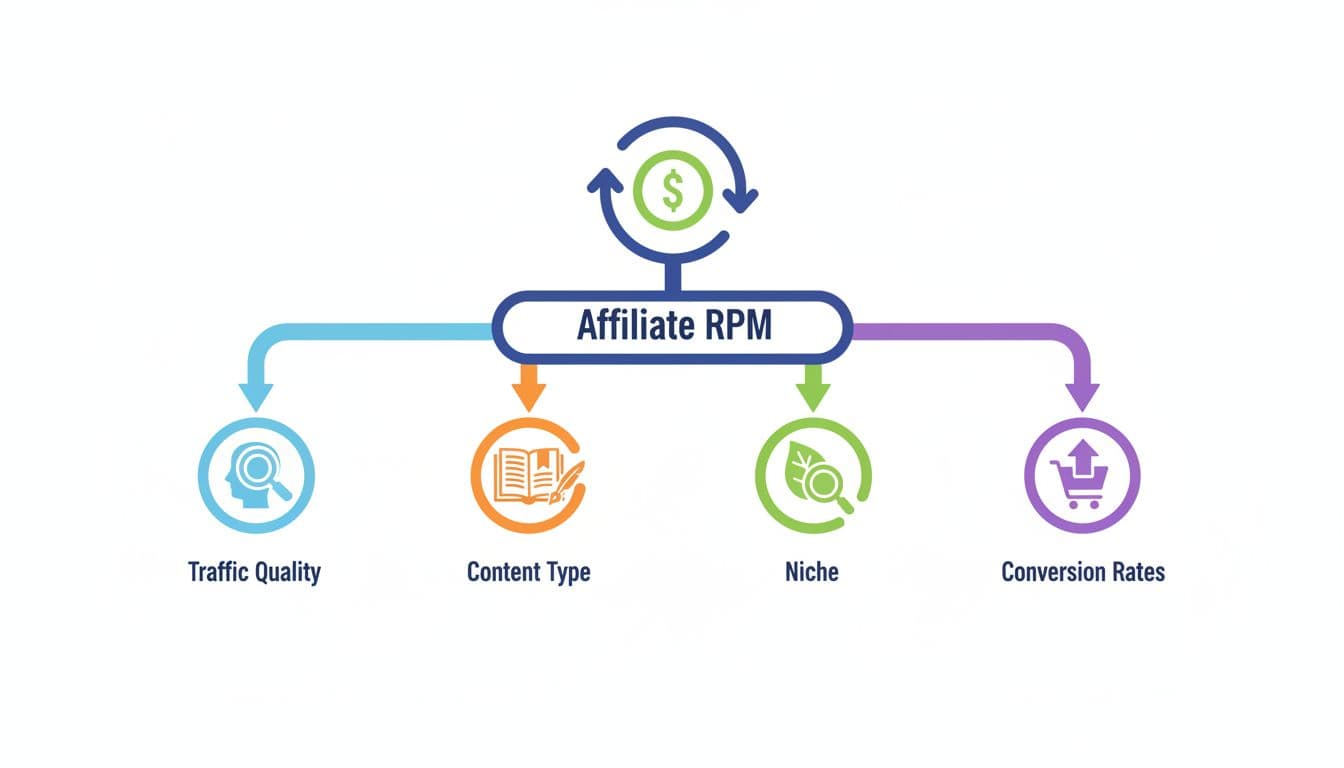
A few changes move the number more than most publishers expect:
- Put the main affiliate link near the decision point, not only at the top.
- Match the offer to the page intent. Budget-focused pages should not push premium plans first.
- Review cookie length, reversal rate, and payout rules before changing programs. This affiliate program checklist helps.
- Test comparison tables, button text, and mobile layouts. Clear pages often beat aggressive ones.
- Keep proof fresh. Old pricing, dated screenshots, and stale pros and cons lower trust fast.
Mobile UX deserves extra attention. Many review pages lose RPM because tables break on small screens or the first useful CTA appears too late.
Source-level tracking helps, too. Organic visitors from “best” and “vs” keywords usually behave differently from email subscribers or social traffic. When you separate those segments, you see whether the page has a conversion problem or the traffic simply lacks buying intent.
Conclusion
Raw commissions can flatter a page that gets too much traffic for too little return. Affiliate RPM fixes that by tying earnings to attention.
Once you track it by page type, compare it against ad revenue, and improve offer fit, the next move gets clearer. Review sites in 2026 win when they publish proof, match intent, and choose programs that keep paying after the first click.