
New affiliate sites do not need the hardest keywords on the web. Low-competition keywords are ideal for pages that can rank before the site has much trust, links, or history.
That means your first job is to find low-authority keywords that match real buying intent and fit your niche. If you pick the right low-competition keywords, a small site can get organic traffic without fighting giant brands on day one.
Key Takeaways
- Target low-authority keywords with clear buying intent like “best for X,” “vs,” “alternatives,” or problem-solving terms, where top results are thin, outdated, or from small sites.
- Use a repeatable process: start with a narrow niche, collect seed keywords from real buyer problems (autocomplete, Reddit, reviews), add modifiers, and validate via manual SERP analysis over tool scores.
- Prioritize specific intent and content gaps in SERPs; modest volume with transactional potential beats high-volume broad terms for new sites.
- Organize keywords by page type (comparison, best-for, etc.) to build topical clusters that boost authority and rankings over time.
- Set realistic expectations: secure small wins first, monitor in Search Console, and expand around what gains traction.
What low-competition keywords look like in practice
Low-competition keywords are search terms where the current results are weak enough for a new site to compete. In plain language, the top pages are often thin, outdated, off-topic, or from small sites with low domain authority.
For affiliate sites, the best opportunities usually have two traits. They are easy enough to rank for, and they connect to a product or buying decision with specific user intent and distinct search intent.
That second part matters a lot. A term can be easy, but if it has no commercial intent, it won’t help much. A beginner site needs pages that answer questions people ask right before they buy, compare, or choose.
In 2026, that matters even more because search results are crowded. Google often shows AI overviews, Reddit threads, product blocks, videos, and forum posts from high-authority websites. So your page needs a clear angle and a real reason to exist, especially when competing against those established players.
If you want a simple framework for choosing between broader and narrower angles, this breakdown on choosing best overall vs best for X keywords is useful. It helps you pick the version of a topic that a new site can actually win.
The kind of terms worth targeting
The best early targets usually include words like “best,” “vs,” “alternative,” “for beginners,” “under $X,” or “problem” terms like “how to fix…” These phrases narrow the search and make intent easier to read.
A good example is “best standing desk for short people” instead of “standing desk.” Another is “Pipedrive alternatives for freelancers” instead of “CRM software.”
The narrower version is easier because it speaks to a specific need, which is why these low-competition keywords work well. That makes the page more relevant, and relevance matters as much as raw keyword difficulty.
A repeatable process for finding them
Start with a process you can repeat. Random keyword hunting wastes time and leads to scattered content.

1. Start with one narrow niche
Pick a niche you can cover deeply. Not “fitness,” but “home workout gear for small spaces.” Not “software,” but “tools for solo service businesses.”
A tight niche gives you more useful keyword ideas because the problems repeat. That repetition is what helps a new affiliate site build topical relevance.
If you’re still sorting pages and topics, an affiliate keyword mapping spreadsheet helps a lot. It keeps pages grouped by topic and stops you from publishing random posts that compete with each other.
2. Collect seed keywords from real buyer problems
Begin with the questions people ask before they buy. Look at Google autocomplete, People Also Ask, Reddit threads, YouTube comments, Amazon reviews, and product FAQ pages.
You do not need fancy software for this first pass. You need raw language from real people.
A helpful cue is to look for pain points. People search things like “best protein powder for sensitive stomach,” “alternative to X,” or “X vs Y for beginners.” These are the queries that often lead to an affiliate click.
3. Expand each seed with modifiers
Take each seed keyword and add modifiers that reduce competition and sharpen intent. These modifiers also help capture transactional intent. Common modifiers include:
- Best for: best espresso machine for small kitchens
- Versus: Notion vs ClickUp for freelancers
- Alternative: Mailchimp alternatives for beginners
- Problem-solving: how to fix laptop battery drain
- Price or budget: best LED lights under $50
For a practical 2026 view on buying-intent terms, this guide on affiliate keyword research for buyer-intent keywords gives a solid example of why commercial intent matters more than raw search volume.
4. Check volume, but do not worship it
Search volume is useful, but it is not the whole story. A keyword with a monthly search volume of 70 can still be worth writing if it leads to a sale. A keyword with 8,000 searches a month can be useless if huge brands own the page one results.
A good beginner filter is simple. Look for modest monthly search volume, clear intent, a low keyword difficulty score, and weak search results in your keyword research tool. That combo is far more useful than chasing bigger numbers.
5. Sort by page type before you write
Not every keyword deserves the same kind of page. Some terms want a comparison post. Others want a review, a list, or an alternative page.
Organizing keywords this way helps build topic clusters to improve ranking potential. If you want to narrow that choice quickly, affiliate keyword selection strategies can help you decide whether a topic should become a broad “best overall” page or a tighter “best for X” page. New sites usually do better when the angle is clear.
If a low-competition keyword looks good in a tool but the top results are all huge brands, skip it. The search results page tells the truth faster than any score.
How to validate ranking difficulty by hand
Tools can save time, but they can also mislead you. A keyword difficulty score is a clue, not a verdict.
Start with SERP analysis itself. Type the keyword into Google and read the top results carefully. Ask a few simple questions.
- Are the top pages from big brands, or small niche sites with low domain authority?
- Do the titles match the exact query, or are they only loosely related?
- Are the pages fresh, or are they old and stale?
- Do the results look thin, generic, or copied from each other?
- Are forums, Reddit threads, or YouTube videos ranking high?
- What is the domain rating of the top sites, and how do their referring domains and backlink profile compare?
If small sites are already on page one, that is a strong sign. If the page is full of giant domains with strong brand names, move on.
A quick rule helps here. If you can find a weak page from a smaller site, and your page can be more useful, the keyword may be worth targeting. If the top results are polished, broad, and heavily linked, the fight is probably too expensive for a new site.
You can also inspect the content itself. Read the top three pages and compare them with your planned article. If they miss a common question, use an awkward title, or fail to explain the buying decision, you may have an opening.
A few things matter more than a single keyword difficulty score in 2026:
- Topical fit: Does your site already cover this subject well?
- Intent match: Does the page type match what searchers want?
- Content gap: Can you answer the query more clearly than the current results?
- Authority gap: Are the pages ranking there from stronger sites than yours?
This is where a lot of beginners go wrong. They look at one number and stop. Better keyword research compares the score, SERP analysis, and the site fit together. This manual validation process uncovers low-competition keywords that tools might overlook.
If you want a broader checklist for spotting weak results, this 2026 low-competition guide is a useful reference. It backs up the same idea, weak results matter more than a single difficulty metric.
Affiliate-friendly keyword types that work best
Some long-tail keyword patterns fit affiliate sites better than others. They usually match a clear search intent, and that decision often leads to a click.
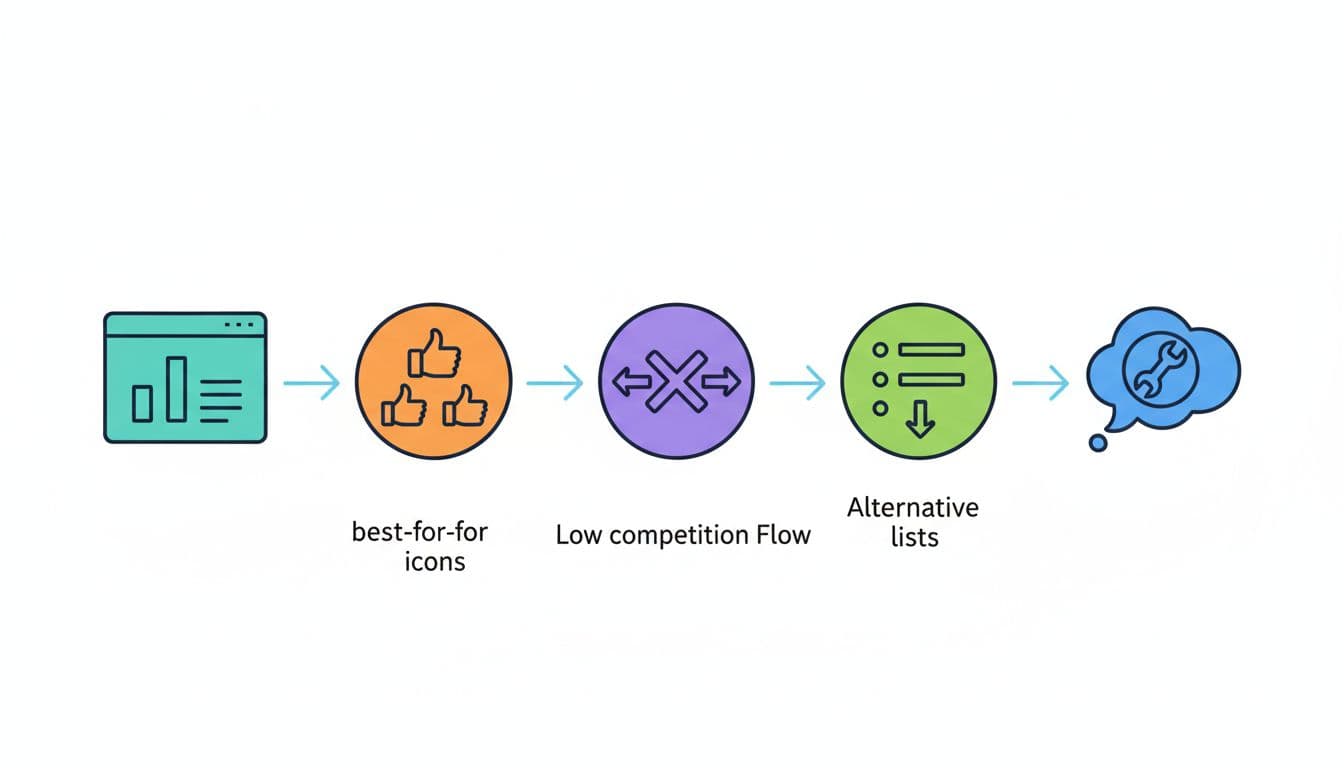
| Keyword type | Example | Why it works for new sites |
|---|---|---|
| Comparison | “X vs Y for small teams” | Searchers already want to choose, showing transactional intent |
| Best-for | “best running shoes for wide feet” | Clear intent and narrow audience |
| Alternative | “Notion alternatives for students” | Buyers are looking for options |
| Problem-solving | “how to fix slow WordPress dashboard” | Good for tool or service recommendations, often starting with informational intent |
These low-competition keywords make up some of the best long-tail keywords for new affiliate sites. Comparison terms are often the easiest to turn into affiliate content because the reader is already weighing options. “Versus” keywords work the same way.
Best-for terms are powerful too, especially when the use case is narrow. A page about “best desk chair for back pain under $200” is easier to rank than a generic “best desk chair” article.
Alternative terms catch readers who are unhappy with a known product. They often convert well because the visitor is already open to change.
Problem-solving terms are a little different. They may not look commercial at first, but they can lead into software, tools, or products that solve the issue. That makes them valuable when the fix naturally involves a recommendation.
You do not need all four types on day one. Pick the formats that fit your niche, then repeat them with related topics.
Set realistic expectations for a new site
A new affiliate site is not going to outrank Amazon, Forbes, or major niche publishers on broad terms. That is normal.

What a new site can do is collect small wins. A few pages can rank for narrow terms, pull in organic traffic, and build trust over time. Those pages then create a base for bigger topics later. This approach helps secure rankable keywords for a brand new site.
That is why topical authority matters so much. When your site stays close to one niche, Google gets a cleaner signal about what you know. A scattered site sends a weaker signal and makes every page harder to rank.
The same idea shows up in 2026 search behavior. Google wants content that looks useful, specific, and grounded in experience. Thin articles with no real point don’t last long.
So keep your expectations practical:
- First, aim for low-competition keywords with clear intent.
- Next, build several related pages around one topic.
- Then, watch which pages get impressions in Search Console.
- After that, expand around what already shows signs of life.
That order matters. It keeps you from chasing huge keywords before the site is ready.
You also need patience. A new page can rank fast for one query and slowly for another, even inside the same niche. Search is messy like that. Your job is to gauge personal keyword difficulty by looking at your own site’s strength versus the competition and keep testing better terms instead of rewriting the same page over and over.
Keep your research organized so you can publish with purpose
Keyword research only helps if you use it. A lot of beginners collect ideas, then never turn them into pages.
The fix is simple and forms the foundation of your long-term content strategy. Keep one document or spreadsheet with the keyword, search intent, page type, and target URL. Add a note on whether the page is a comparison, best-for post, alternative page, or problem solver.
That kind of system does two things. It stops you from publishing the same idea twice, and it helps you spot clusters. Once you see a cluster, use a keyword research tool to find related terms, then build supporting content around a main page.
The pillar and cluster structure also helps with internal links. When one post supports another, readers move through the site more easily, and the topic feels more complete. That is useful for both users and search engines.
When you have a group of pages, ask one question: what is the main decision the reader is trying to make? If you can answer that clearly, your keyword set is probably strong. Once pages are live, use a rank tracker to monitor performance and refine your approach.
Frequently Asked Questions
What are low-competition keywords for new affiliate sites?
Low-competition keywords are search terms where top results come from small, low-authority sites with thin, outdated, or off-topic content. They match real buying intent, like “best standing desk for short people” or “Pipedrive alternatives for freelancers,” making them ideal for new sites to rank quickly without battling giants.
How do I start finding low-competition keywords?
Pick a narrow niche like “home workout gear for small spaces,” then gather seed keywords from Google autocomplete, People Also Ask, Reddit, and reviews. Expand with modifiers such as “best for,” “vs,” “under $X,” or “how to fix,” and filter for modest volume with clear intent.
Why is manual SERP analysis more important than keyword difficulty scores?
Tool scores are clues, but SERPs reveal the truth: check if top pages are from low-DA sites, fresh, relevant, or have content gaps your page can fill. In 2026, with AI overviews and forums crowding results, spotting weak competition manually uncovers winnable terms tools might miss.
What keyword types work best for affiliates?
Comparison (“X vs Y”), best-for (“best for beginners”), alternatives, and problem-solving terms shine because they align with transactional intent and convert well. New sites rank easier on these narrow long-tails than broad generics, especially when building topic clusters.
How long does it take for a new site to rank on low-competition keywords?
Small wins can happen fast on weak SERPs, but expect variation—some pages rank in weeks, others take months. Focus on topical authority through related pages, monitor Search Console impressions, and refine based on performance rather than rewriting endlessly.
Conclusion
Finding low-competition keywords is mostly about restraint. You skip the giant terms, focus on specific buying problems, and choose pages your site can actually win.
The best results come from a simple habit; use a keyword research tool as a starting point, research the SERP by hand, trust intent more than a single score, and build around one clear niche. Do that well, and your first affiliate pages have a real shot at ranking before your site is old or well known.
If you keep your research narrow and your pages useful, those early wins add up faster than most beginners expect.