
A post can collect likes without sending a single buyer to your website. For small publishers, X affiliate marketing needs a clear path between useful advice and a relevant purchase decision.
Start with one audience, one strong article, and qualified clicks as your goal. Affiliate marketing earns commissions when someone completes a merchant’s qualifying action, so followers alone don’t determine income.
Build that path before increasing your posting volume.
Key Takeaways
- Choose one audience, a relevant offer, and a useful article before increasing your posting volume. Compare program terms such as qualifying actions, commissions, attribution windows, reversals, and social traffic rules.
- Publish helpful posts that answer questions on X, then use promotional posts to direct readers to a relevant comparison or tutorial. Give the main post value even if readers don’t click.
- Test link placements, including first replies and profile links, with tracked visits and merchant clicks. Buffer’s link-post findings describe a sample and don’t predict results for every account.
- Disclose affiliate relationships near recommendations on X and on your website. A disclosure in a profile or footer doesn’t replace notice beside each endorsement.
- Track website visits, merchant clicks, approved commissions, reversals, and time spent. Use a focused 30-day test to decide which topics and placements to repeat.
1. Choose one audience for X affiliate marketing
You don’t join X itself as an affiliate to promote other companies’ products. Instead, you join merchant or network affiliate programs and use X to introduce relevant readers to your content.
Match products to a specific problem
Choose an audience you can help repeatedly. Bloggers comparing email software, freelancers choosing invoicing tools, and home-office buyers researching equipment each have distinct purchasing questions.
SaaS and digital tools can fit X because tutorials and product discussions give you useful material to share. Some programs also pay recurring commissions while referred customers remain subscribed.
However, recurring doesn’t always mean lifetime payments. A program might pay for only 12 months, and a free trial might generate no commission until the customer pays.
Compare the offer’s economics
Amazon Associates covers retail products. CJ Affiliate, Rakuten Advertising, and Awin provide access to merchant programs; ShareASale is now part of Awin. ClickBank includes digital offers, while the Shopify Affiliate Program targets referrals suited to its commerce platform.
No platform is universally the highest-paying choice. Compare the qualifying action, commission, attribution window, payment threshold, refund reversals, and recurring-payment duration.
Also document restrictions on social traffic, email promotion, trademarks, and tracking links. A generous payout means little when the product doesn’t suit your readers or your promotional method isn’t permitted.
2. Build a profile that earns the click
Your profile should help new followers quickly understand who you help and what they can learn from you.
Use a recognizable photo or publisher logo. Then write a bio that names your audience and subject rather than listing broad interests. Describe the problems your articles solve, without claiming guaranteed earnings or results.

Point the website field toward a useful starting page, not an unrelated homepage. A focused comparison, beginner tutorial, or resource page gives visitors a clear next step.
Next, pin a post that introduces your strongest resource. Explain its practical value, such as comparing automation limits or identifying equipment suitable for a small workspace.
Make the destination readable on mobile. Keep the promised answer visible, explain who the product suits, and avoid covering it with pop-ups. Our guide to writing trustworthy affiliate recommendations shows how benefits and drawbacks can support a clearer buying decision.
3. Publish useful content before promoting
Start with five original posts per week: four helpful posts and one promotional post. This is a manageable starting schedule, not a proven formula for every account.
The familiar 80/20 balance means roughly 80% useful content and 20% promotion. Don’t turn the helpful portion into disguised advertising.
Answer questions without requiring a click
Give readers something complete inside the post. Explain a software limitation, outline a setup step, or identify a mistake that affects product selection.
Standard X posts allow 280 characters, so focus each post on one point. Use a short thread when an explanation needs several steps, but make the opening useful on its own.
If every answer requires leaving X, readers have little reason to follow you. Our guide to balancing informational and commercial content also helps organize the articles behind your posts.
Turn existing articles into distinct posts
Extract separate ideas from a strong article instead of reposting its headline daily. A comparison can supply a feature explanation, a purchasing caution, and a recommendation for a particular use case.
Use original screenshots or demonstrations when you have them. If you haven’t personally tested a product, describe the available evidence without implying firsthand experience.
Then reserve the promotional post for readers who need the full comparison or tutorial.
4. Place links with suppression in mind
Buffer analyzed 18.8 million X posts. Reporting on that dataset found that non-Premium link posts had median engagement of zero since March 2025. The reported X Premium reach advantage was roughly tenfold on link posts.
Those findings describe a sample, not every account. They also measure attention, not affiliate commissions.
Put the link in your first reply
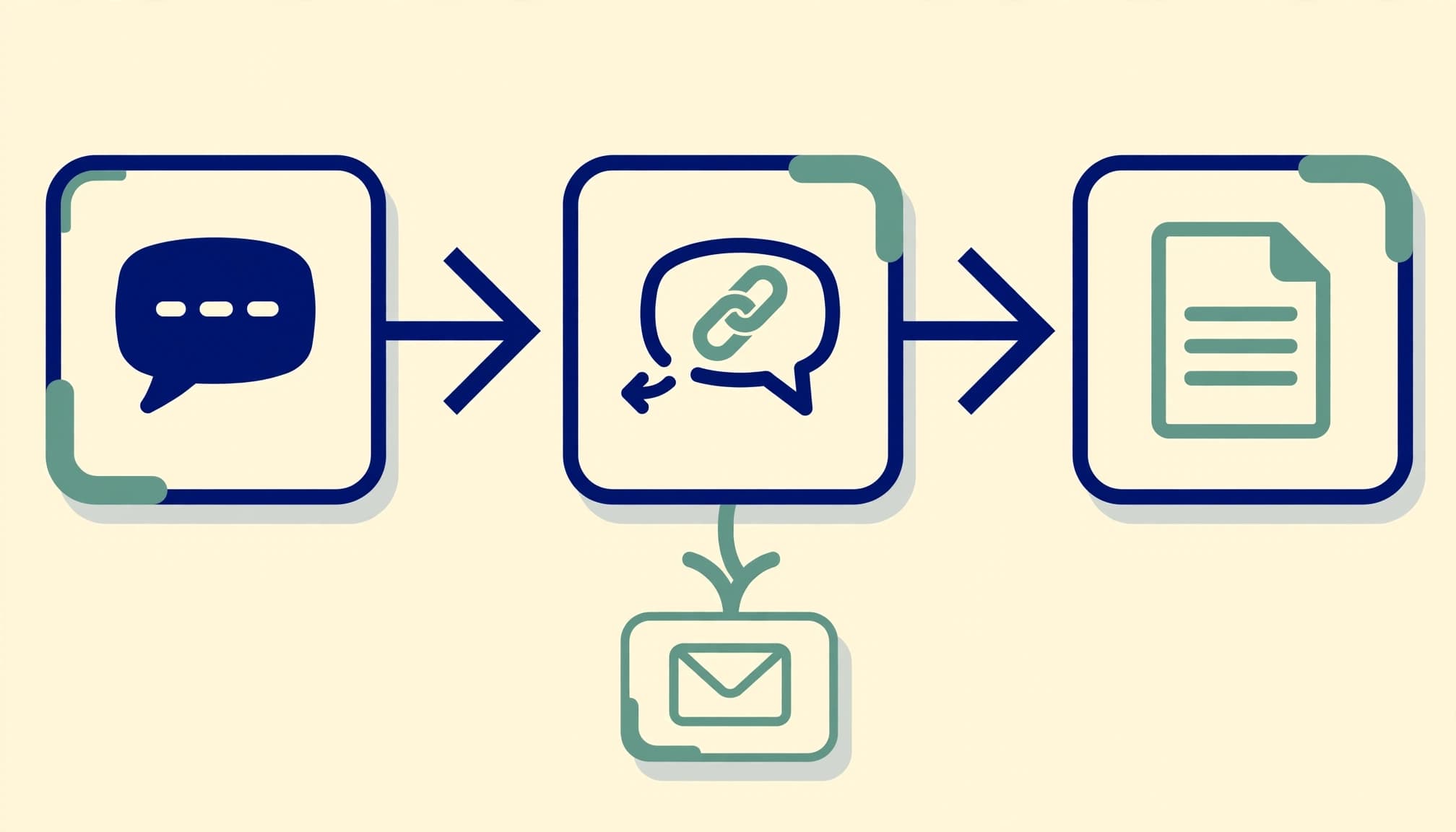
Publish a useful main post without an outbound URL. Then add the relevant article or affiliate link in your first reply, explaining what readers will find.
This is the main workaround for link suppression, but it doesn’t guarantee distribution. Readers must still notice and open the reply.
For small publishers, an article often provides more context than direct merchant links with affiliate links. Compare both paths using tracked clicks rather than assuming either wins. Keep the commercial disclosure in the recommendation itself, even when the URL appears below it.
Use bridge pages and auto-plugs carefully
An email-gated bridge page offers a free guide, collects an email address, and then redirects to an affiliate software offer. Before readers submit an email, the bridge page should explain what they’ll receive and where they’ll go next. The bridge page’s guide should deliver value on its own.
An auto-plug publishes a promotional reply after a thread reaches a threshold, such as 50 likes. Likes don’t establish buying intent, so relevance still matters. Never automate unrelated link drops or conceal the commercial relationship.
5. Make disclosure travel with the recommendation
Affiliate commissions create a material connection. Free products, complimentary access, and other incentives can also require disclosure.
The FTC’s standard remains clear and conspicuous disclosure. Its Endorsement Guides FAQ explains why readers need to understand the relationship alongside the endorsement.
Disclose in the X post and linked reply
Place a disclosure near the beginning of a promotional post, before readers encounter the recommendation. A usable opening is: “Ad: I may receive a commission when you purchase through my link.”
You can use #ad directly in the text. X also offers a Paid Partnership toggle through Content Disclosure. A platform label doesn’t remove your responsibility to make the financial relationship understandable.
If you share affiliate links in a reply, explain the relationship there too because people may encounter the reply independently.
A link in a reply doesn’t remove the need to disclose the relationship in the main post.
Repeat it on your website
Place a plain-language notice before or beside the first relevant affiliate recommendation. A footer, legal page, or profile bio doesn’t give readers adequate notice for every separate endorsement.
Readers who jump to a comparison table or purchase button should also see a nearby notice. Amazon Associates adds its own required Associate identification wording.
Keep product claims supportable. Disclosure doesn’t excuse invented testing, fake testimonials, or unsupported income promises.
6. Engage where your audience already asks questions
On publishing days, spend 15 minutes reading conversations in your niche to build meaningful engagement. Look for questions your articles answer and offer a useful response before sharing a link.
Mention a relevant limitation or explain a practical step. If someone asks for more detail, share the appropriate resource with disclosure when it contains a commercial recommendation.
Avoid posting affiliate links beneath unrelated viral posts. It looks spammy, reaches poorly matched readers, and can lead to account restrictions.
Use one or two relevant hashtags when they help identify the topic, with three as a maximum. Hashtags can’t repair a vague post or make an unrelated offer relevant.
Also answer comments on your own posts. Reader questions can reveal missing information in your articles, such as compatibility requirements or differences between free and paid plans.
7. Measure website visits and approved commissions
Track the whole path: X impressions, website visits, merchant clicks, and approved commissions. Engagement alone can’t tell you whether X affiliate marketing is paying for your time.
Add UTM parameters to links pointing to your own website. Use X as the source, social as the medium, and a distinct campaign name for each placement test.
For direct merchant links, use the affiliate program’s supported tracking IDs. Don’t append parameters that could break attribution.
These measures answer different questions:
| Measure | Calculation | What it reveals |
|---|---|---|
| Post-to-site rate | Tracked visits divided by post impressions | Traffic generated relative to exposure |
| Article-to-merchant rate | Merchant clicks divided by article visits | Whether the page supports a decision |
| Earnings per click | Approved commissions divided by merchant clicks | Revenue from referred visitors |
| Reversal rate | Reversed transactions divided by tracked transactions | How much recorded activity survives approval |
Treat small samples cautiously. One sale can distort a short test, while attribution delays can make recent posts look unproductive.
Compare first-reply links, profile links, and main-post links across similar topics. There isn’t a reliable universal click-rate benchmark that proves one placement always wins.
Finally, separate pending commissions from approved earnings. Include reversals and your time costs when deciding what to repeat.
8. Run a 30-day traffic test
Keep the first month narrow enough to learn something useful. One audience, a small selection of offers, and one primary article are sufficient for an initial test.
- During week one, improve your profile, choose the destination article, add disclosures, and establish tracking.
- In week two, publish four helpful posts and one promotional post. Use the first-reply link approach and answer relevant comments.
- During week three, test another placement on a similar topic. Change one major variable rather than rewriting everything.
- In week four, compare website visits, merchant clicks, approved commissions, and time spent. Repeat the strongest topic or improve the weakest step.
Our 30-day affiliate content sprint can organize the supporting articles. Treat the schedule as a publishing framework, not a promise of commissions.
Frequently Asked Questions
Do followers determine affiliate income on X?
No. Affiliate income depends on whether referred readers complete the merchant’s qualifying action, so followers and engagement alone don’t show whether your promotion is earning commissions.
Where should I put an affiliate link on X?
You can test a relevant link in the first reply, in your profile, or in the main post. Track the results across similar topics, and keep the disclosure near the recommendation even when the link is in a reply.
How should I disclose affiliate links?
Place a clear disclosure near the recommendation in the X post and repeat it in a reply if that reply contains an affiliate link. On your website, put a plain-language notice before or beside the first relevant recommendation.
What should I track in an X affiliate marketing test?
Track impressions, website visits, merchant clicks, approved commissions, reversals, and the time you spend. Compare placements and topics over a focused 30-day test, and treat small samples cautiously.
Build traffic you can measure
A smaller X account can pursue affiliate traffic without chasing unrelated viral reach. Useful posts, relevant destinations, and visible disclosures give readers a clearer route to a purchase decision.
Use engagement and followers as context, but judge progress by qualified visits and approved commissions. Start with a manageable test, then use the results to decide which content and link placements deserve more time.