
Affiliate marketing usually requires less startup cash and customer support. Print on demand gives you control over product designs and prices, but adds production costs and responsibility for customer orders.
When comparing affiliate marketing vs print on demand, the biggest difference is ongoing responsibility, especially after someone buys. Start with the costs, then consider which workload fits your budget and schedule.
Key Takeaways
- Affiliate marketing earns commissions on qualifying referrals; print on demand earns sales revenue that must cover fulfillment and selling expenses.
- Neither requires buying bulk inventory, but both need marketing, maintenance, and financial discipline.
- Compare approved earnings after expenses, rather than commission percentages or store revenue alone.
- Affiliate marketing favors content-focused beginners. Print on demand suits creators willing to manage merchandise and customer issues.
Affiliate Marketing vs Print on Demand at a Glance
Both models avoid storing boxes at home. However, only one makes you responsible for selling and delivering your own merchandise.
| Factor | Affiliate marketing | Print on demand |
|---|---|---|
| Your role | Recommend another business’s products | Sell products carrying your designs |
| Revenue | Approved referral commissions | Customer sales |
| Main expenses | Content, website, tools, promotion | Production, shipping, fees, promotion |
| Price control | Merchant sets prices | You set retail prices |
| Product support | Merchant handles orders and returns | You manage customer resolutions |
| Main dependency | Merchant terms and attribution | Supplier quality and delivery |
| Growth workload | More content and qualified referrals | More marketing and order support |
Affiliate marketing reduces order-related work. Print on demand offers more control over your brand, but that control comes with more decisions.

Startup and Ongoing Costs: What You Actually Fund
A low entry price doesn’t reveal the full cost of operating either business. Separate initial purchases, recurring subscriptions, and expenses triggered by each sale.
Affiliate marketing starts with content and distribution
Many affiliate programs don’t charge publishers to join. You also don’t buy the products customers purchase through your links.
However, publishing can involve domain registration, hosting, email software, product access, and content production. Paid advertising adds another expense before you know whether referrals will convert.
Our guide to starting with a free website explains how to reduce website spending. Free publishing still requires time and useful content.
Also, earnings aren’t immediately available cash. For example, Amazon Associates payment timing generally runs 60 days after the earning month ends.
Print on demand adds samples, selling fees, and fulfillment
Printful Free costs $0 per month, with no setup fee or order minimum. You pay for fulfillment when orders arrive.
Your storefront creates separate costs. As of November 2026, Shopify Basic costs $39 monthly, or $29 per month with annual billing. Etsy charges listing and transaction fees instead of requiring that Shopify subscription.
Samples are also a sensible startup expense because photographs can’t establish print quality, fit, or packaging.
Finally, keep money available for supplier charges and refunds. A customer payment may remain in your platform balance when the fulfillment provider charges your card.
Profit Margins Need Different Calculations
Affiliate commissions and store sales use different revenue bases. Comparing their percentages directly can make one model look artificially attractive.
Affiliate profit begins with approved commissions
Your affiliate revenue is the commission, not the customer’s entire purchase.
MacPaw advertises a starting commission of 35%. At that rate, $100 in eligible sales produces $35 before reversals and publisher expenses.
Subtract hosting, content costs, subscriptions, and advertising to calculate operating profit. A 35% commission therefore isn’t a 35% net profit margin.
Physical and digital offers can also have different approval rules, renewal payments, and reversal risks. Our comparison of physical and digital affiliate products explains those differences.
Print-on-demand profit starts with the order total
Consider an illustrative Etsy order priced at $25 plus $5 shipping. Using U.S. fees, its basic calculation is:
| Item | Amount |
|---|---|
| Customer payment | $30.00 |
| Printful Gildan 5000 starting fulfillment price | $9.44 |
| Etsy transaction fee, 6.5% | $1.95 |
| U.S. payment processing, 3% plus $0.25 | $1.15 |
| Listing fee | $0.20 |
| Remaining before other costs | $17.26 |
The remaining $17.26 must still cover actual shipping, advertising, applicable taxes, refunds, and overhead. Additional platform charges can also apply.
The $9.44 catalog price includes the shirt, one print placement, and fulfillment. Variants or additional printing can change production costs.
Charging customers for shipping doesn’t make delivery cost-free. Etsy’s transaction fee also applies to the shipping amount you collect.
Day-to-Day Work: Publishing Versus Running a Shop
Neither model becomes hands-off because software handles part of the process. The practical difference is how much work follows a purchase.
Affiliate work centers on useful recommendations
Most affiliate work involves researching buyer questions, publishing comparisons or tutorials, and attracting relevant visitors. You then maintain links, update recommendations, and review conversion reports.
You don’t process product refunds. However, inaccurate claims and outdated recommendations can still damage reader trust.
U.S. affiliates also need clear disclosure of their financial relationship. Affiliate disclosure guidance explains why readers should understand that relationship near relevant recommendations.
This work often fits scheduled sessions. You can research one evening and publish later, although program changes still require attention.
Print-on-demand work includes customer-facing operations
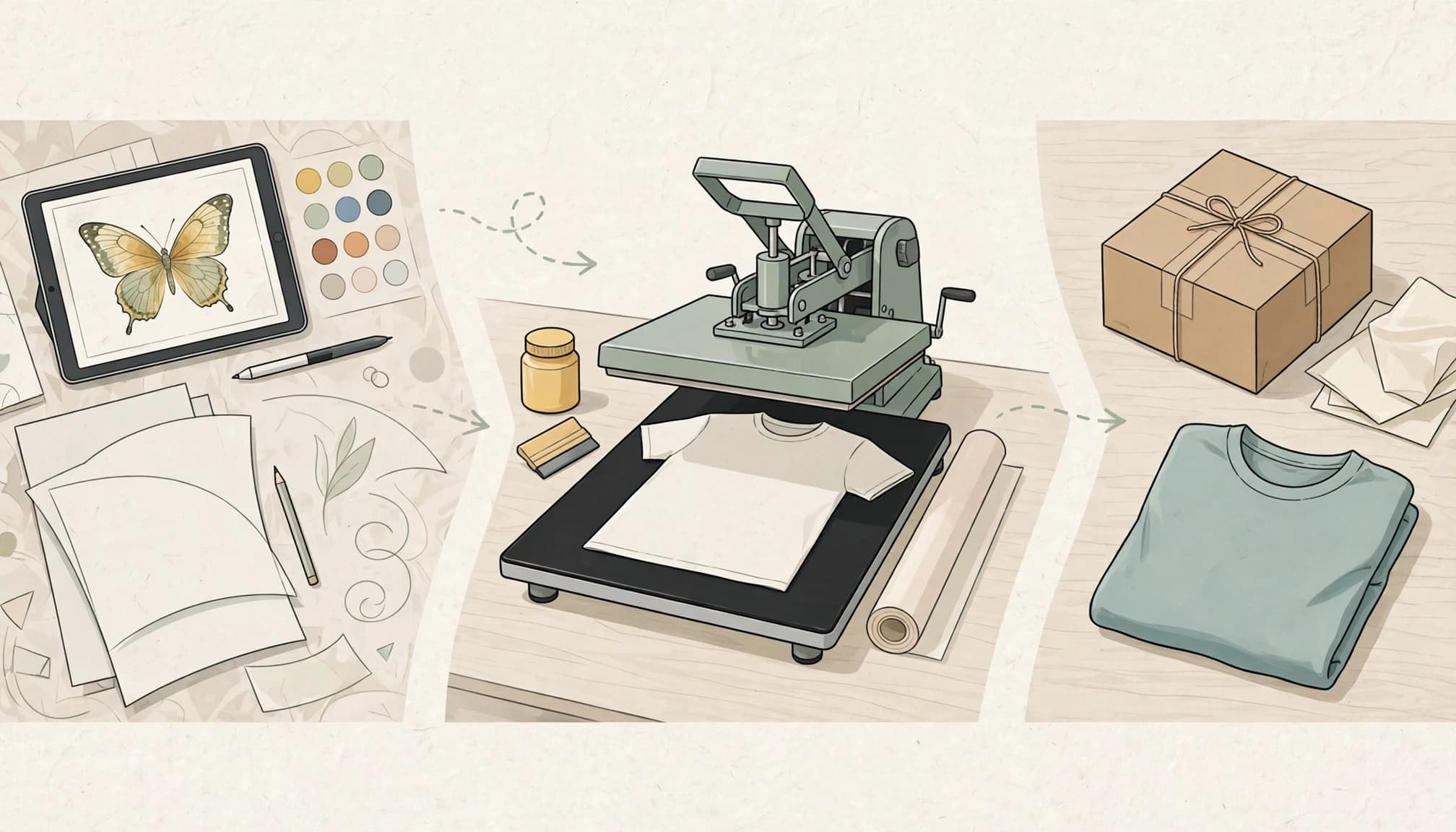
POD sellers create designs, prepare print files, build listings, and promote products. After checkout, they also answer sizing questions, handle delivery problems, and coordinate replacements.
Printful’s fulfillment process covers production and shipping, but your shop still needs a customer-facing resolution process.
A damaged item creates work even when the supplier caused the problem. Likewise, a supplier’s reimbursement policy may not cover every refund you offer customers.
Order messages can arrive between planned work sessions. That makes regular availability more important than it usually is for affiliate publishing.
What Determines Whether Either Model Is Profitable
Audience fit matters more than an attractive commission or fashionable design. Visitors need a reason to trust the recommendation or want the merchandise.
Acquisition costs can consume your earnings
For affiliates, calculate approved earnings per click: approved commissions divided by outbound affiliate clicks. Use matching reporting periods and allow time for approval.
That figure accounts for conversion performance better than the advertised commission rate alone. Attribution rules, returns, and ineligible purchases can all reduce payments.
For POD, calculate contribution per order after production, shipping, selling fees, and expected refunds. That contribution must cover advertising and fixed expenses before you have profit.
Because paid traffic can exceed either amount, begin with a small test rather than scaling based on sales volume.
Quality, rights, and dependence affect durability
Affiliate publishers depend on merchant terms. A commission cut, discontinued product, or attribution change can reduce earnings without reducing your workload.
POD sellers depend on product quality and delivery. Samples help reveal problems before buyers experience them, while accurate size information can reduce avoidable complaints.
Design ownership also matters. Logos, characters, and protected artwork require appropriate rights. Original merchandise gives you more control than copying popular designs.
Both models also face traffic risk. Search rankings, marketplace visibility, and social reach can change, so one successful channel doesn’t guarantee lasting demand.
Which Model Fits Different Beginners?
Your existing strengths matter, but your available time and cash should shape the decision first.
Choose affiliate marketing for content-focused work
Affiliate marketing is usually the more manageable starting point if you enjoy explaining products and prefer scheduled work. It also suits people who can’t respond regularly to order problems.
Start with a narrow subject you can explain accurately. Then create content that helps people make decisions rather than filling pages with referral links.
A prebuilt website can reduce setup work, but traffic and useful recommendations remain your responsibility. Our website setup comparison covers that distinction.
Choose print on demand for merchandise-focused work
POD fits creators with original designs, a clear audience, and interest in running a retail business. Existing followers can provide an initial audience, although attention doesn’t guarantee purchases.
Begin with a small product range so you can assess samples and understand each item’s economics. Expanding too early adds listings, variations, and support work.
You can eventually combine the models around one audience. Keep affiliate commissions and merchandise revenue separate so each model’s results remain clear.
Frequently Asked Questions
Which model produces income faster?
Neither has a dependable time-to-income. An established audience can shorten the route to first sales, but beginners still need traffic and a suitable offer. Store setup speed doesn’t predict profitability.
Can I start affiliate marketing without a website?
Yes. Some programs accept approved social accounts, video channels, or newsletters. Others require a website. Your promotional channel must meet the individual program’s eligibility and placement rules.
Does print on demand eliminate inventory risk?
It removes the need to buy bulk finished stock upfront. However, you still face sample expenses, supplier charges, refunds, and cash-flow gaps. Low inventory exposure doesn’t eliminate business risk.
Can either become passive income?
Both can generate sales after content or listings go live. However, affiliate recommendations need updates, while POD shops need order support. Automation reduces tasks without removing accountability.
Choose the Workload You Can Maintain
Affiliate marketing generally offers the simpler operational starting point. Print on demand gives you more product and pricing control, alongside fulfillment costs and customer-service duties.
Choose based on your available time and cash, then measure what remains after expenses. Helpful content creators may prefer referrals; merchandise-focused creators may prefer POD. Either choice needs a workable marketing process before expansion.