
Physical products fit websites that help readers choose tangible goods. Digital products fit websites that help readers learn skills or use software. When comparing these product types, start with audience fit, then compare approved earnings rather than advertised commission rates.
Neither category always earns more. Your content, conversion rate, refund exposure, and program terms determine the result.
First, separate the product choice from the marketing model behind it.
Key Takeaways
- Physical offers suit shopping-focused content, but shipping and returns can affect commissions.
- Digital offers can pay higher percentages or recurring commissions, but retention and refund terms matter.
- Choose products your readers need, then measure approved earnings after reversals and promotion costs.
How Affiliate Marketing Fits Into Digital Marketing
Digital marketing attracts an audience
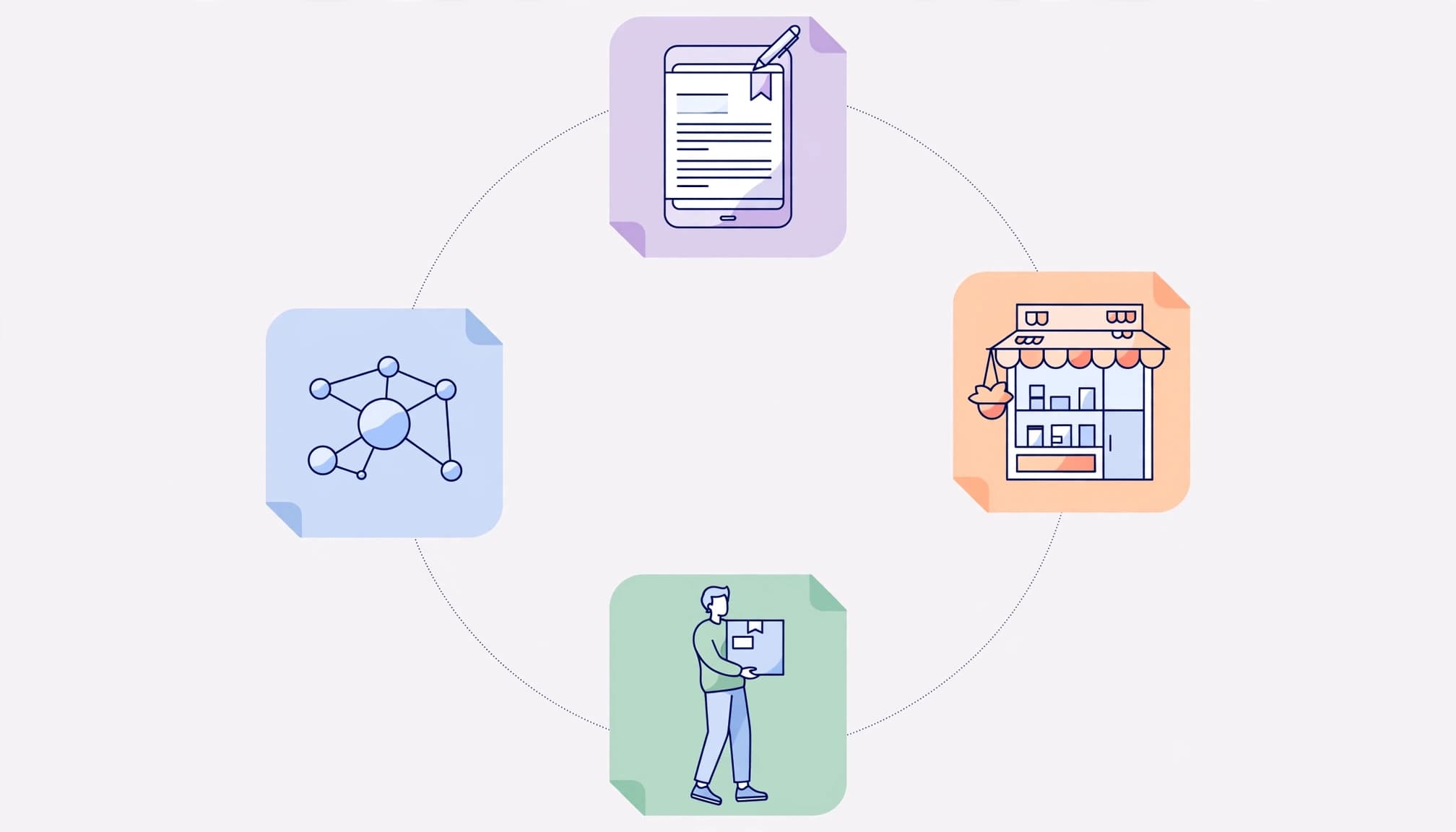
Digital marketing includes SEO, pay-per-click advertising, social media marketing, email marketing, and content marketing. Affiliate marketing is a performance-based model within that broader activity.
SEO covers on-page improvements, off-page signals such as links, and technical work that helps search engines access your website. With PPC, advertisers pay when someone clicks. Targeting can reach relevant buyers quickly, but profitability depends on acquisition costs.
A digital marketing strategy gives business owners a level of control over brand messaging through owned content and advertising. Digital marketing can also include affiliate partnerships and influencer marketing to extend reach through digital channels. Publishers choose their own presentation, and sales can fluctuate.
Affiliate marketing pays for qualifying referrals
In a pay-per-sale program, you earn commission when someone makes an eligible purchase through your unique referral link. Other programs reward accepted leads or different actions.
The four common participants are the merchant, affiliate network, affiliate publisher, and customer. However, direct programs operate without a network. A tracked affiliate referral link identifies the publisher responsible for a referral.
Merchants need tracking software and partnership management, while publishers invest in content and traffic. Paid marketing can produce traffic quickly, while organic marketing takes time; both require an upfront investment, and affiliate marketing isn’t free.
Physical vs Digital Affiliate Products at a Glance
The main differences affect what you publish and how commissions become payable.
| Factor | Physical products | Digital products |
|---|---|---|
| Examples | Furniture, appliances, fitness equipment | Software, courses, templates |
| Commission model | Usually a percentage or fixed amount per sale | One-time, recurring, or hybrid |
| Merchant costs | Inventory, shipping, fulfillment, returns | Development, hosting, support, refunds |
| Common buying concerns | Size, materials, delivery, compatibility | Features, licensing, access, skill level |
| Revenue risks | Returns, stock shortages, cancellations | Refunds, churn, failed renewals |
| Useful content | Reviews, demonstrations, buying guides | Tutorials, comparisons, walkthroughs |
Neither column has a universal payout schedule, cookie window, or commission rate. Those belong to the individual program.
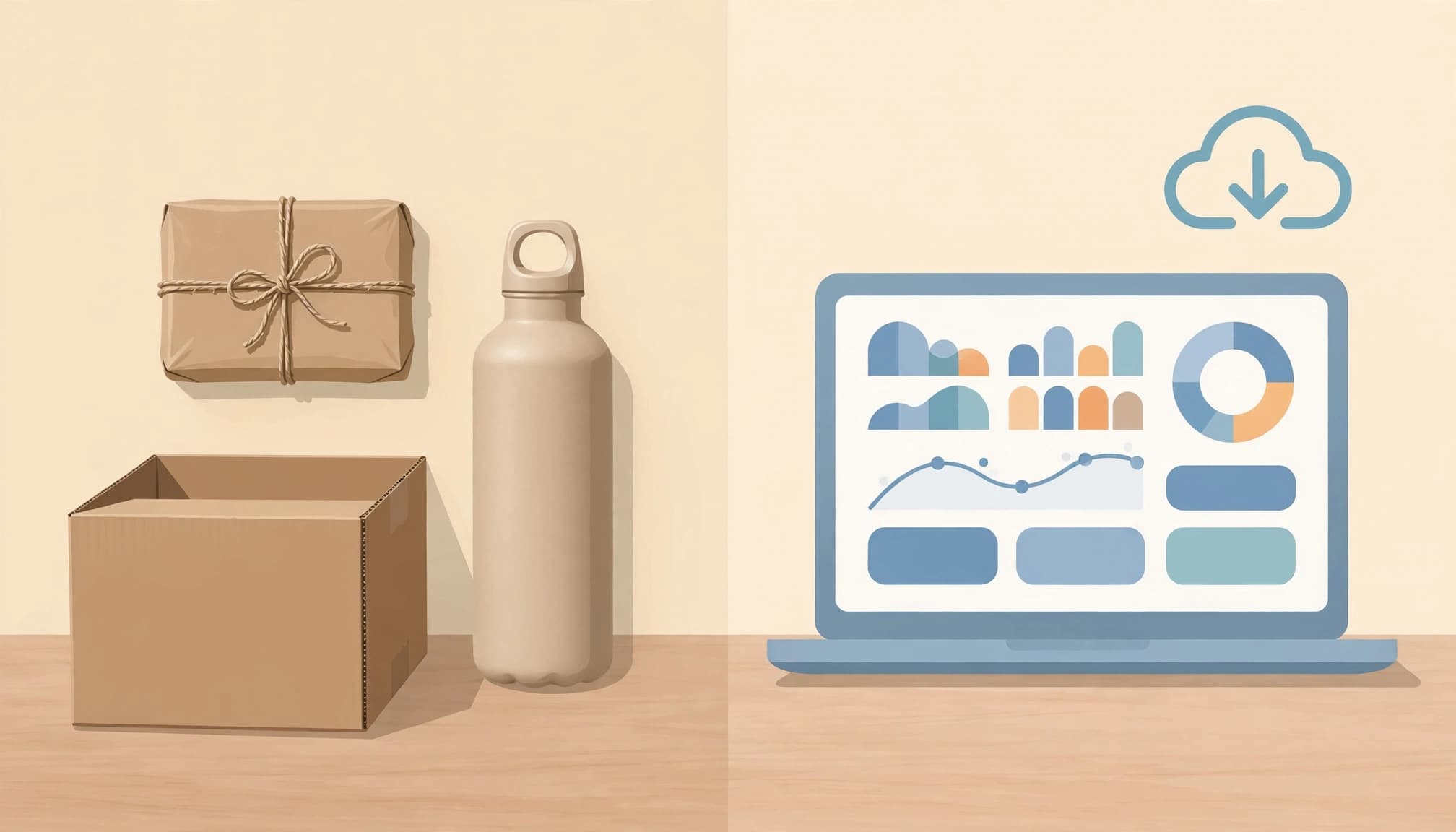
Physical goods often solve familiar shopping needs. Digital products usually require a clearer match between the buyer’s task and the offer.
However, a software tool can have mass appeal, while specialized physical equipment can serve a narrow audience. Product format alone doesn’t define your market.
Compare Commission Economics, Not Percentages Alone
Physical commissions depend on completed purchases
Physical-product commissions generally fall below 30%. Many Amazon Associates categories offer roughly 1% to 10%, although categories and qualifying actions differ.
Inventory and fulfillment costs help explain those lower percentages. Yet an expensive product with strong conversion can generate more revenue than a poorly matched digital offer.
Shipping, collected payment, return windows, and approval holds can affect when retail commissions become payable. Delivery doesn’t automatically mean immediate payment, and returns can reverse earnings.
For comparison, calculate:
Approved earnings per click = approved commissions ÷ outbound affiliate clicks
Our guide to calculating affiliate profit margin covers the next step: subtracting expenses to find what you keep.
Digital commissions depend on eligibility and retention
Digital offers may advertise commissions of 20% to 80%. Some pay 100% of the first qualifying payment, rather than every future payment.
Recurring offers need a different calculation:
Estimated affiliate lifetime value = commission per billing event × expected eligible billing events × (1 − reversal rate)
For trial-based offers, multiply that estimate by the trial-to-paid conversion rate. A free signup may earn nothing until payment.
A 10% commission on a $20 eligible domain renewal produces $2. Domains typically renew annually, so that isn’t automatically monthly income.
Also, recurring doesn’t always mean lifetime. Payments might stop after 12 months, customer cancellation, or another contractual limit. Some programs call this a lifetime commission, but current terms may limit its duration. The label doesn’t guarantee payments for a customer’s lifetime. Recurring commissions aren’t guaranteed passive income; they depend on eligible renewals, retention, and program rules.
A high recurring rate has little value when few trials convert or subscribers cancel before several eligible renewals.
Match the Product to Your Website’s Audience
Physical products suit purchase-focused content
A focused home-office niche can help its target audience compare chairs, monitors, and lighting. Readers need practical answers about dimensions, compatibility, and price before buying.
A gardening niche can connect tool recommendations to planting guides. The product helps readers complete a task already covered on the site.
However, useful reviews require evidence. Product access, documented specifications, and credible comparisons give readers more than rewritten sales descriptions. Don’t claim hands-on testing you haven’t performed.
Physical offers can suit beginners who understand the category and can publish helpful buying advice without expensive testing.
Digital products suit teaching and ongoing workflows
Software, courses, and templates fit audiences working toward a defined outcome. Blogging tutorials can introduce email software; design lessons can support relevant training recommendations.
These buyers often need setup help and a clear explanation of limitations. Build useful content and community around their task instead of repeatedly posting links.
Affiliates can be unattached, related, or involved. Unattached promotion has little personal connection to the product. Related affiliates have a relevant audience, while involved affiliates have used the product themselves.
Product experience can improve trust and conversions, but it doesn’t automatically increase the contractual commission. Our beginner affiliate network comparison helps match content types with suitable programs.
Understand Attribution, Refunds, and Promotion Rules
A cookie window doesn’t guarantee credit
Affiliate links track referrals, while a cookie window describes how long a purchase may qualify after a click. Attribution rules determine which eligible publisher receives credit.
A later referral can affect attribution, depending on the program. Likewise, a long cookie window doesn’t override an excluded product or prohibited traffic source.
Before choosing an offer, check the affiliate marketing program’s current terms for commission rates, cookies, returns, payment thresholds, and approval schedules. Rates and conditions vary by merchant, network, and offer.
Our affiliate program onboarding checklist helps organize account setup and tracking before promotion.
Digital delivery doesn’t eliminate risk
Digital products still have refunds, chargebacks, and support problems. Software recommendations should explain licensing limits, device compatibility, renewal pricing, and what happens when access ends.
For physical goods, stock shortages and delivery restrictions can make otherwise useful recommendations unsuitable.
Program agreements may also restrict email placement, paid search, trademark bidding, or incentive traffic. Fraudulent tactics, including fake clicks and cookie stuffing, can trigger rejected commissions or termination.
Disclose commercial relationships near recommendations. The FTC’s endorsement guidance explains why readers need clear notice of a material connection.
Pending commissions are provisional revenue. Approval holds, reversals, and payout minimums can separate a recorded sale from spendable cash.
Run a Small Test Before Expanding
Start with one audience problem and a manageable selection of offers. Amazon Associates covers retail products, while Awin, CJ Affiliate, and Impact provide merchant partnerships. PartnerStack includes software programs; ClickBank and Digistore24 include digital offers.
For a useful first test:
- Publish a focused tutorial or buying guide, then use SEO to bring readers to it.
- Use permitted tracking labels to distinguish social media marketing, email marketing, and other placements.
- Set up affiliate tracking and record outbound clicks, sales conversions, approved commissions, reversals, and promotion costs.
- Review results after the relevant approval and refund periods, then expand the stronger fit.
A 30-day test can reveal early interest, but recurring customer value takes longer to measure.
If you’re starting, choose the category you can explain credibly now. Established sites can test an adjacent category with audience overlap.
A hybrid approach works when both offers support the same task, such as home-office equipment alongside productivity software. Avoid adding unrelated offers simply to diversify.
Frequently Asked Questions
Which product type is better for beginner affiliates?
Choose the type you understand and can explain honestly. Physical goods suit shopping advice; digital offers suit tutorials and skill-based content. Neither guarantees faster earnings, and approval requirements vary.
Can physical products earn more despite lower commissions?
Yes. Price, conversion rate, order volume, and returns can outweigh the percentage. Compare approved earnings per click alongside content and traffic costs.
For recurring digital offers, include retention before comparing their value with one-time retail commissions.
Should a business prioritize brand awareness or affiliate sales?
Use owned content, email, social media, and advertising when brand awareness and audience engagement are the priority. Affiliate partnerships focus more directly on measurable referrals and conversions.
Combining them can build long-term trust while paid campaigns provide immediate reach. However, neither partnerships nor advertising guarantee fast sales.
Choose the Offer Your Content Can Support
The physical vs digital affiliate decision comes down to the reader’s task and the economics of a qualifying referral. A generous commission can’t compensate for an unsuitable recommendation.
Start with audience fit, publish useful decision-making content, and compare approved earnings after costs and reversals.
Expand when your results support it. The stronger category is the one your website can recommend credibly and profitably.