
A messy slug can make a money page look weak before anyone reads the copy. In 2026, that matters more than it used to, because readers judge faster and Google is less forgiving of thin affiliate pages.
Good affiliate URL structure is the foundation of a scalable site architecture that drives long-term passive income. It keeps the page clear for people and clean for crawlers. It also gives your site a shape that holds up when you add more reviews, comparisons, and best-product pages.
Key Takeaways
- Keep affiliate money page URLs short, lowercase, hyphenated, and directly descriptive of the page type like
/best-air-fryers/or/ninja-woodfire-review/to build trust and boost conversions. - Match URL patterns to page intent—reviews, best-of roundups, comparisons, or niche hubs—while avoiding dates, deep folders, underscores, and tracking parameters that clutter and age the page.
- Use WordPress ‘Post name’ permalinks with a flat or light folder structure, ensure consistency site-wide, and set 301 redirects for any slug changes to preserve traffic and authority.
- A clean URL frames the page for users and crawlers, supports scalable site architecture, and aligns with 2026 SEO emphasis on user experience and topical authority.
What a money-page URL should do in 2026
A money-page URL should do one job well, tell the visitor what the page is about. That sounds simple, but plenty of affiliate sites still bury reviews under date folders, blog paths, or extra words that add nothing.
The evergreen rule is short and readable. The 2026 part is the context around it. Google’s March 2026 core update put more weight on original content, author expertise, and topical authority, so the URL is no longer the main signal. It still matters because it frames the page, removes friction, and improves user experience, which directly influences conversion rates.
A clean path also supports trust. When a reader sees /best-wireless-earbuds/, they know what to expect. When they see /blog/2026/03/the-ultimate-guide-to-the-best-wireless-earbuds-for-everyone/, the page feels older, heavier, and less focused. Direct deep links like these to review content boost search visibility for your affiliate program.
A 2026 on-page SEO checklist for affiliate marketing websites makes the same point from another angle, keep the path short, readable, and consistent. If your page follows a review layout like product review post structure, the URL should feel just as direct.

URL patterns that fit review, best-of, and comparison pages
The best money pages are easy to classify. The URL should say what kind of page it is without stuffing in extra words.
| Page type | Clean URL pattern | Example | When to use it |
|---|---|---|---|
| Single review | /product-name-review/ | /ninja-woodfire-review/ | Use when one product is the main focus |
| Best-of roundup | /best-category/ | /best-air-fryers/ | Use when you compare several options |
| Head-to-head comparison | /product-a-vs-product-b/ | /semrush-vs-ahrefs/ | Use when the page is built around one matchup |
| Niche hub | /category-name/ | /home-office-tools/ | Use when the page groups related money content |
Custom affiliate slugs are the industry standard. The pattern is simple. Each slug tells the reader what kind of page waits on the other side. That makes the click feel safer, and it keeps your site map easier to manage.
When working with an affiliate network to promote various ecommerce brands, matching the URL to the affiliate program intent is vital. These clean slugs should eventually lead to optimized affiliate links.
For a tighter view on slug wording, this affiliate slug guide for 2026 covers the same basics, short, descriptive, and free of filler.
One rule matters most here. Match the URL to the intent of the page, not the calendar. If the content is timeless, skip dates. If the page is a review, make it read like a review. If it is a comparison, show the comparison.
WordPress setup that keeps affiliate URLs clean
WordPress makes it easy to create ugly URLs by accident, especially when you publish fast. The fix is to choose one structure and stick with it.
Set your permalink structure to Post name unless you have a clear reason not to. After that, decide whether your site uses a flat structure or a light folder structure. For most affiliate sites, flat wins because it supports a healthy site architecture; the important pages stay close to the root.
A flat example looks like /best-standing-desks/. A light niche structure might look like /sleep/best-mattresses/. What you want to avoid is a long path like /blog/2026/buying-guides/best-mattresses-review/. That version says too much and signals too little.
A guide to affiliate website structure and landing pages makes the same case. Keep your commercial pages easy to find, then support them with a strong internal linking strategy instead of extra folder depth.
A few practical WordPress habits help a lot:
- Keep the site on HTTPS.
- Use lowercase slugs only.
- Use hyphens between words, not underscores.
- Pick one category pattern and use it everywhere.
- Set 301 redirects any time a live money-page slug changes. Solid link management prevents losing traffic and authority from those shifts.
- Use link management plugins to handle affiliate links; these tools automatically apply the rel=”sponsored” attribute and keep your affiliate links compliant.
That last point matters more than many site owners think. If a review page starts getting links, social shares, or internal authority, changing the slug can cost you more than the old URL ever gave you back.
Keep the slug stable once the page starts circulating. A redirect can save the traffic, but a clean redirect is still extra work you could have avoided.
Common URL mistakes that hurt affiliate pages
Most URL problems are self-inflicted. They happen when the site grows faster than the structure.
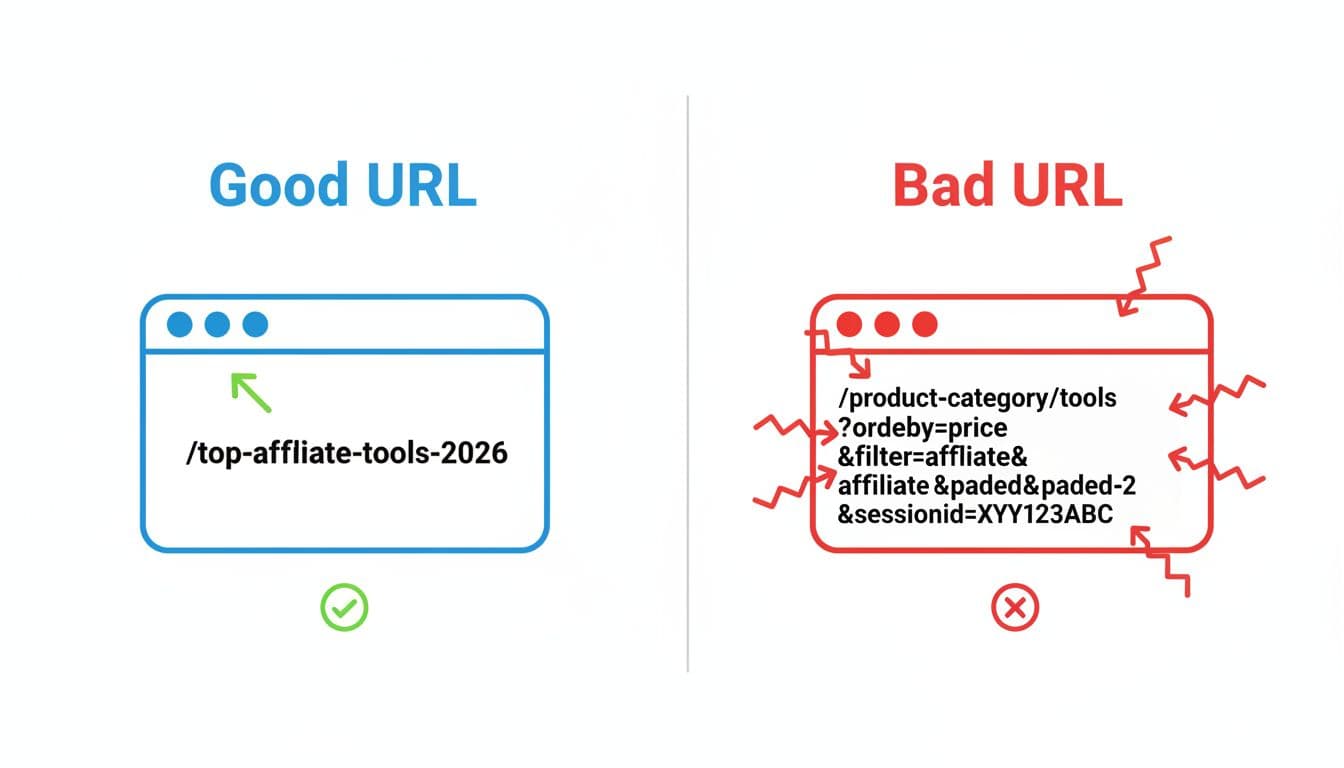
The biggest mistakes are easy to spot once you know where to look.
- Dates in the slug make a page age faster than it should.
/best-air-fryers-2026/can work in some cases, but most money pages age better without the year. - Too many folders turn a direct page into a maze. A commercial page should not sit three or four levels deep unless your site model truly needs it.
- Underscores and mixed case look sloppy. Use lowercase and hyphens, because they’re easier to read and share.
- Tracking parameters in the page URL create clutter. Tracking parameters like UTM parameters or an affiliate ID belong on outgoing links to the merchant, not in the money page slug itself (which search engines index). Use link cloaking on those outgoing redirects to hide a messy query string parameter instead of polluting the primary URL.
- Changing a slug after promotion breaks links and splits signals. If you must change it, set the redirect before the new version goes live.
- Duplicate paths to the same page confuse crawlers. Canonicals and redirects can help, but a cleaner structure is better than fixing a messy one later.
The core issue is usually not the individual word in the slug. It’s the pattern around it. Avoid tracking parameters such as UTM parameters or an affiliate ID in page URLs to keep things clean. If every page looks different, the site feels unstable. If every page follows the same logic, the site feels built with intent.
A simple rule set for your next money page
If you’re building a new money page now, use a simple rule set and stick to it.
First, decide the page type before you name the URL. A review page, a comparison page, and a best-of page should not share the same shape. Before locking the slug, check the affiliate network or affiliate program details first, including the commission structure and cookie duration, as these may influence which products get dedicated pages. If the offer is weak or unclear, run it through the affiliate program checklist before you lock the slug. A good URL should sit under a page worth promoting.
Next, keep the slug to three or four meaningful words when you can. Remove filler words like “the,” “for,” and “with” unless they make the meaning clearer. While the page slug stays clean, automated tracking via subids within a unique tracking URL should be handled separately. Then ask one practical question, would a stranger understand the page from the URL alone?
After that, choose the shallowest structure that still makes sense for your niche site. A strong commission structure from the affiliate network can justify a dedicated page, but keep the URL simple regardless.
- Use a flat path for most review and best-product pages.
- Use one light category folder only if it helps users and site organization.
- Avoid nesting money pages under dated blog archives.
- Keep similar page types grouped the same way across the site.
That consistency helps more than clever wording. It also makes internal linking easier, because each page sits in a predictable place inside your content map. For precise performance tracking, use a unique tracking URL with subids.
Frequently Asked Questions
What should a good affiliate money page URL look like in 2026?
A strong money-page URL is short, readable, and tells visitors exactly what to expect, like /best-wireless-earbuds/ for a roundup or /semrush-vs-ahrefs/ for a comparison. It uses lowercase letters, hyphens between words, and skips filler like dates or blog folders. This structure improves user trust, click-through rates, and search visibility by removing friction.
Should I include dates in my affiliate page slugs?
Skip dates in most money page slugs because they make evergreen content feel outdated faster, hurting long-term rankings and user perception. Exceptions are rare; timeless reviews and best-of pages age better without years. Focus on the product or category instead to keep the URL stable and focused.
What’s the best WordPress permalink structure for affiliate sites?
Set permalinks to Post name for clean, flat URLs like /best-standing-desks/, and use light category folders only if they aid organization, like /sleep/best-mattresses/. Avoid deep paths under /blog/ or dates, and enforce lowercase hyphens site-wide. This keeps commercial pages close to the root for better crawling and user navigation.
How do I handle changing a slug on a live money page?
Set a 301 redirect from the old slug to the new one before going live to preserve traffic, links, and authority signals. Changing slugs after promotion risks losing rankings, so plan the URL upfront and keep it stable once the page gains traction. Use link management plugins to track and maintain affiliate compliance during transitions.
Why avoid tracking parameters in page URLs?
Tracking params like UTM or affiliate IDs clutter the indexed page URL, confusing crawlers and looking sloppy to users. Handle them on outgoing affiliate links via cloaking or subids instead to keep the primary slug clean. This maintains a professional site structure while enabling precise performance tracking.
Conclusion
In 2026, a strong money-page URL is still simple. It should be short, lowercase, hyphenated, and honest about what the page is. Ecommerce brands with clean URLs for their affiliate links deliver better user experience and higher conversion rates.
The best affiliate sites treat URLs like labels, not decoration. If a visitor can guess the page before clicking, the structure is doing its job. A professional slug supports last-click attribution by ensuring the tracking cookie drops correctly when users click optimized anchor text containing your affiliate id, while keeping the tracking cookie active through checkout. If the slug looks clean and the content matches it, you’ve already removed one more reason for the reader to hesitate.
Always include an FTC disclosure near your affiliate links, fulfilling FTC disclosure requirements for transparency and compliance.